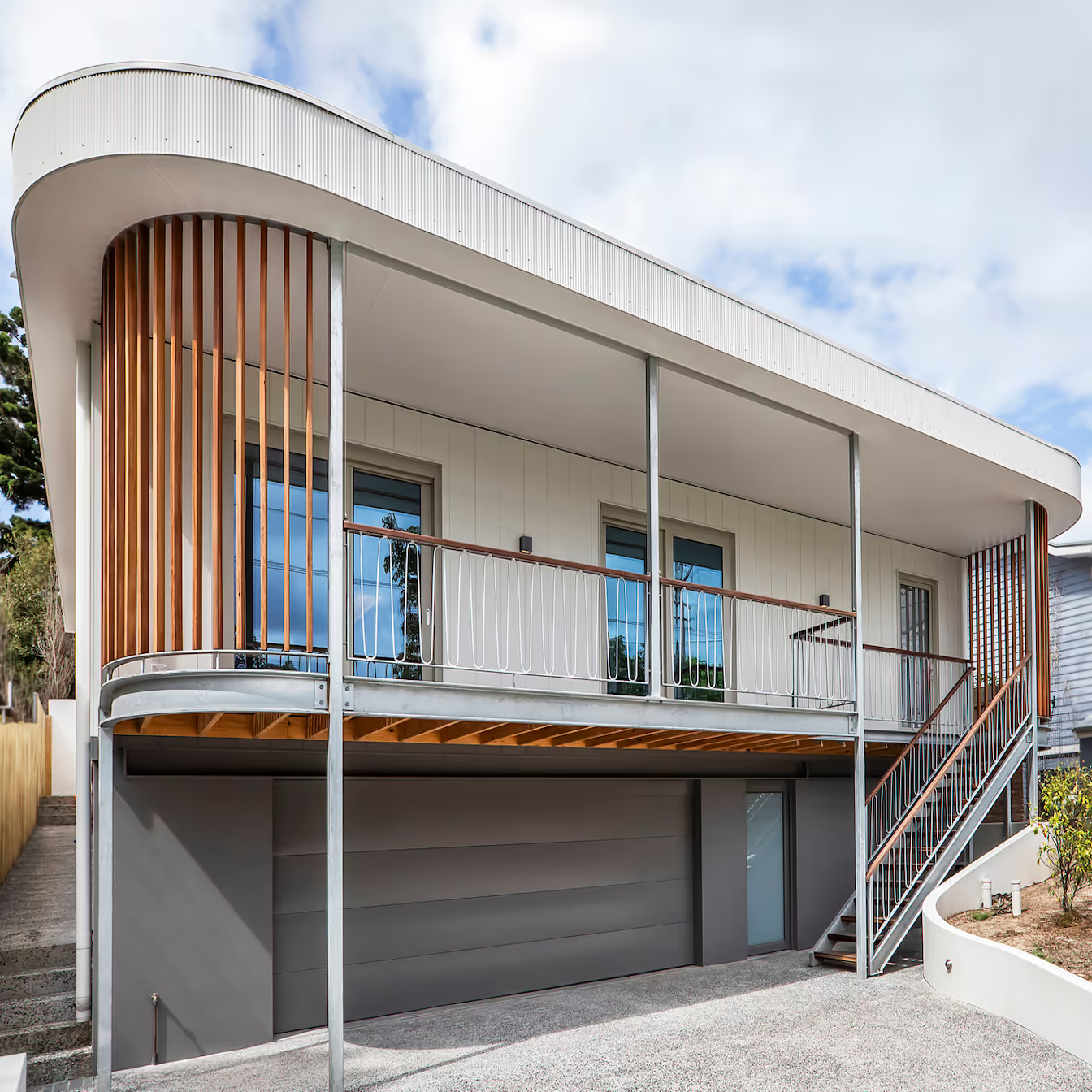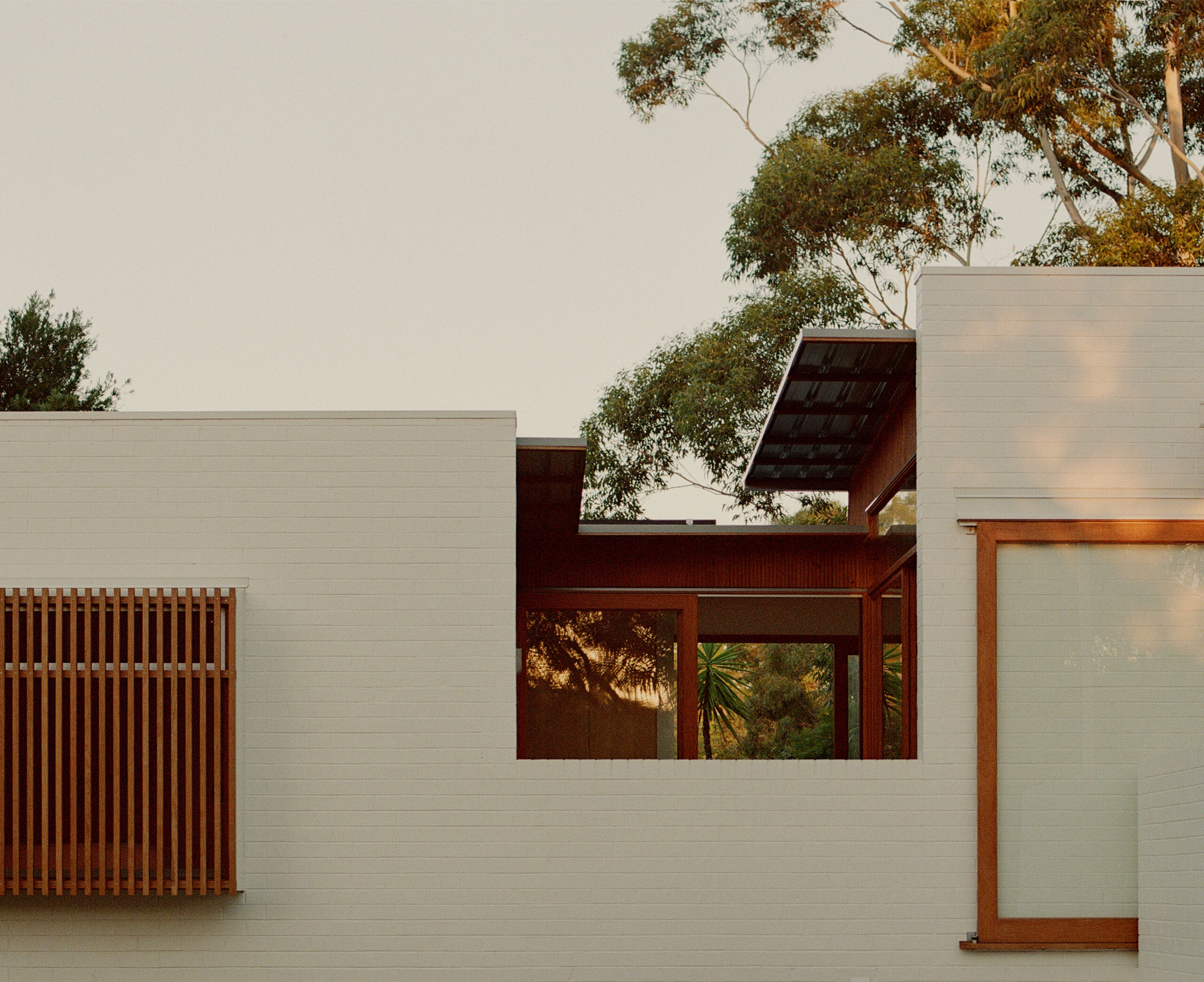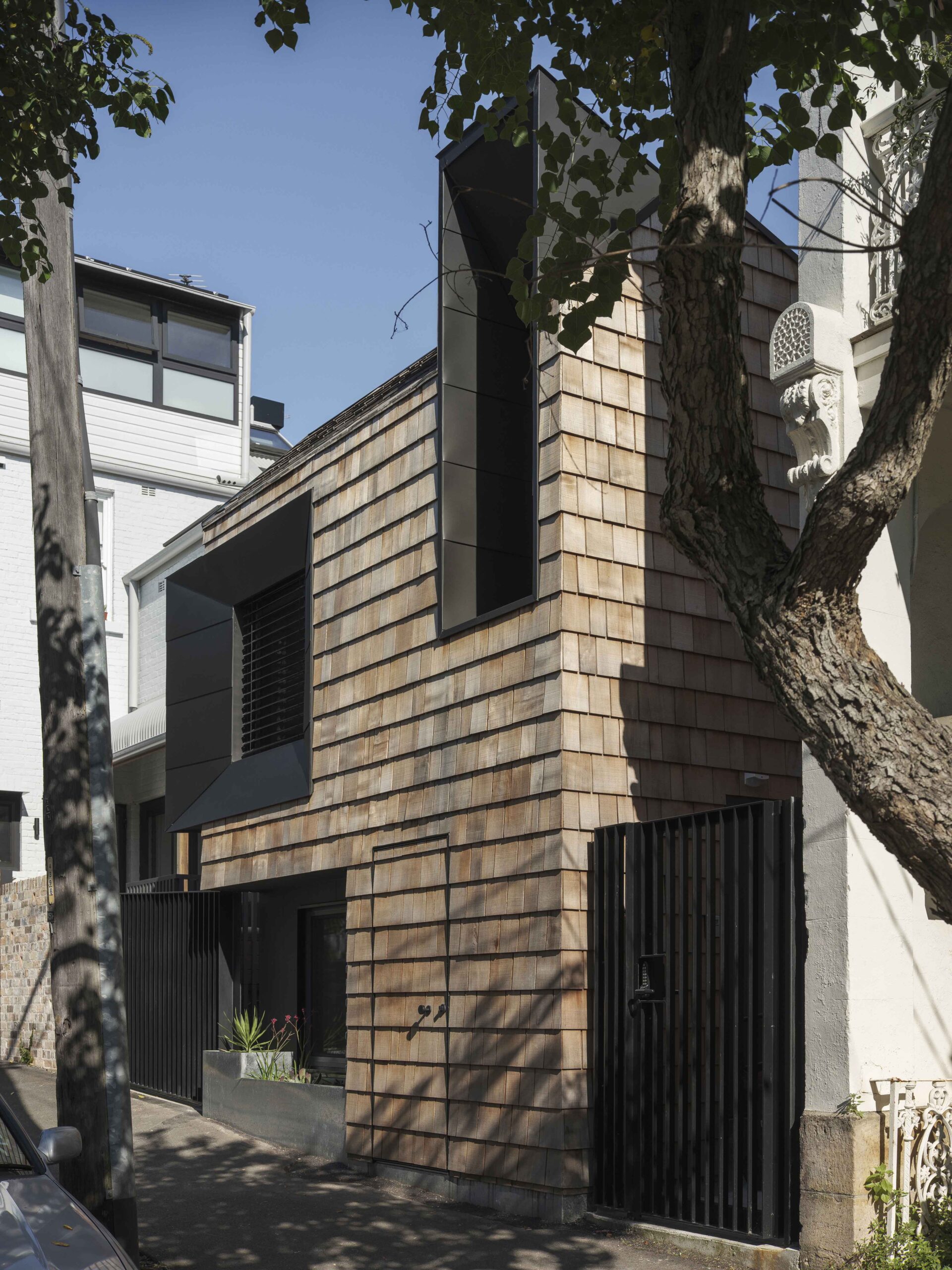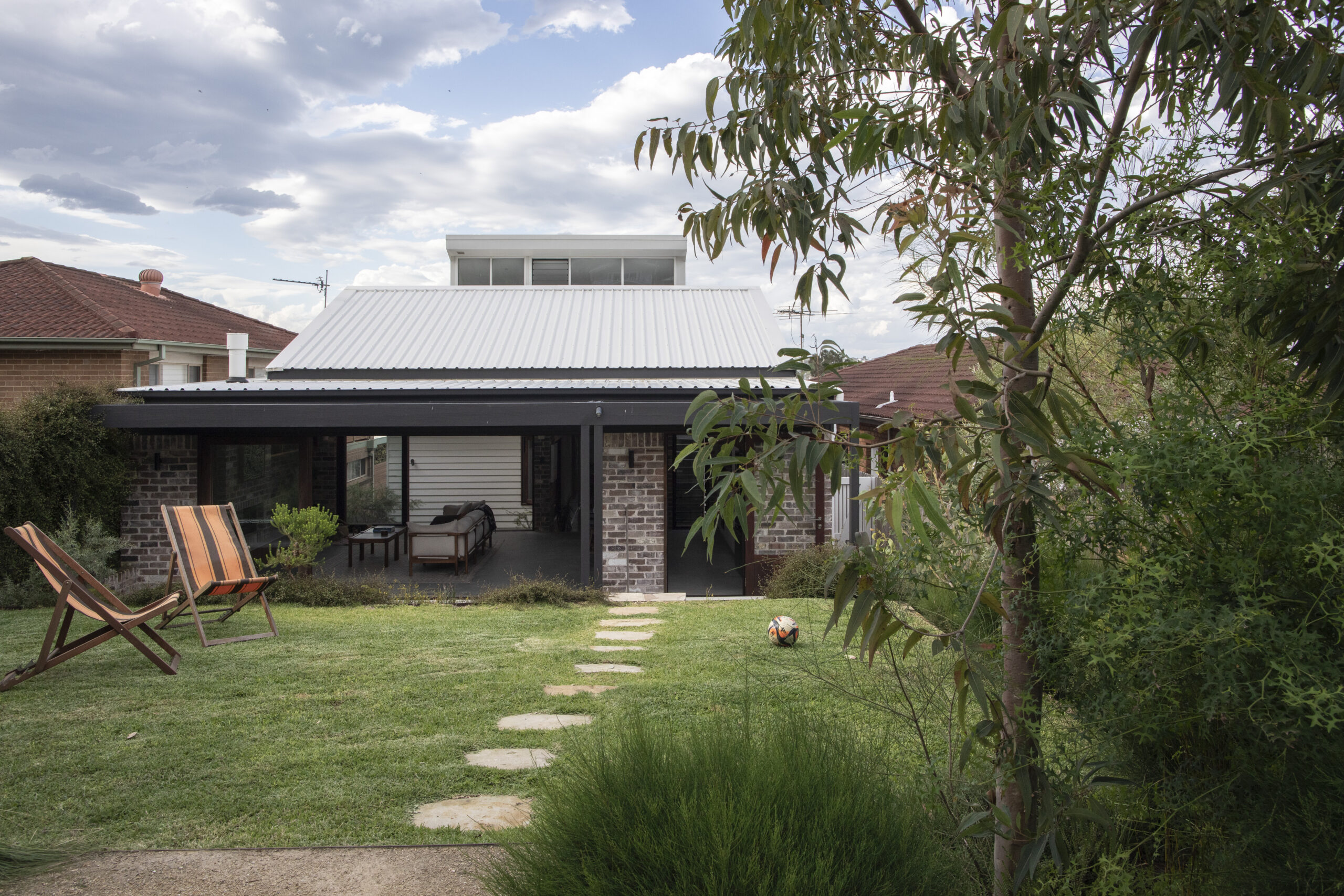
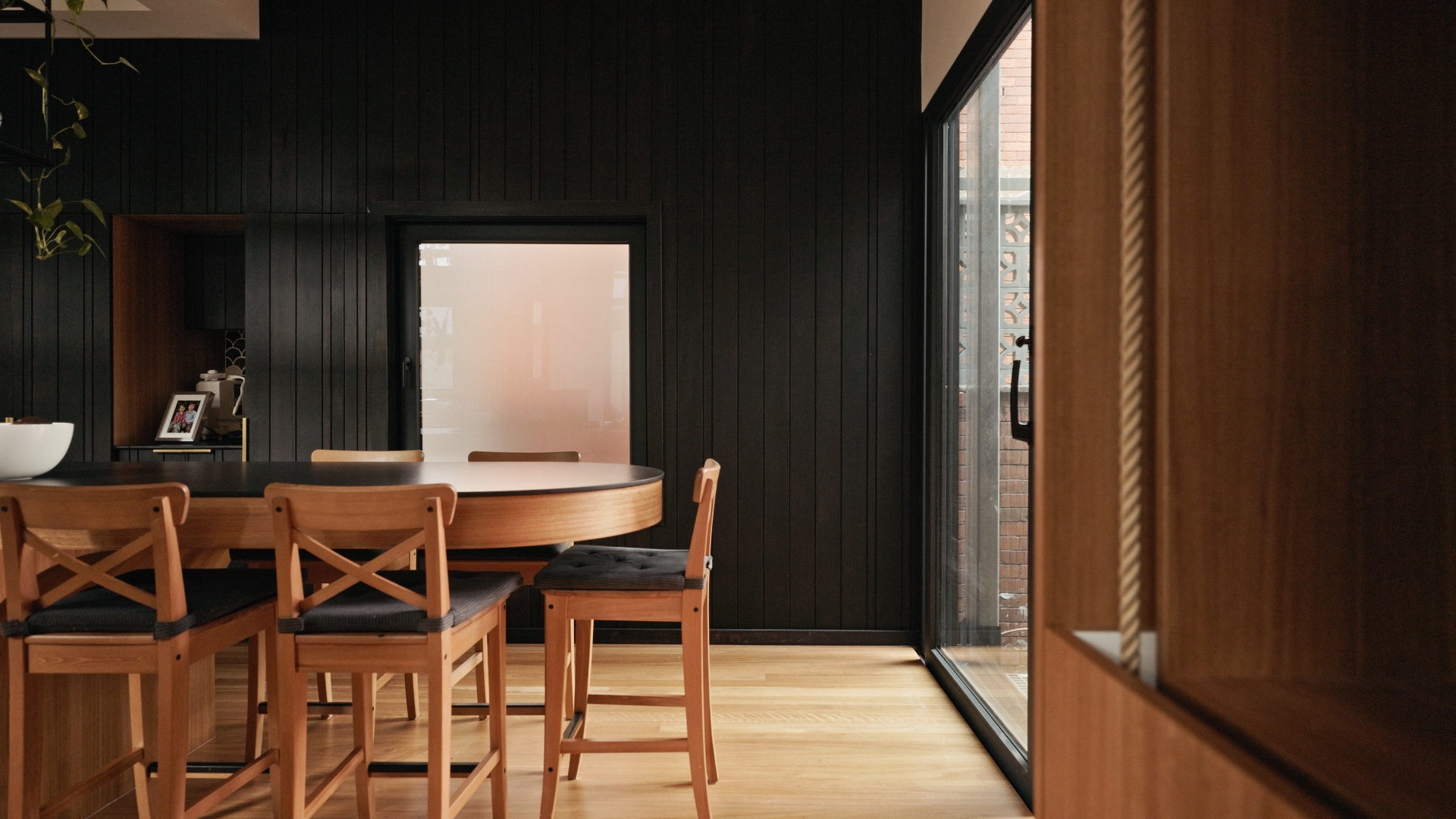
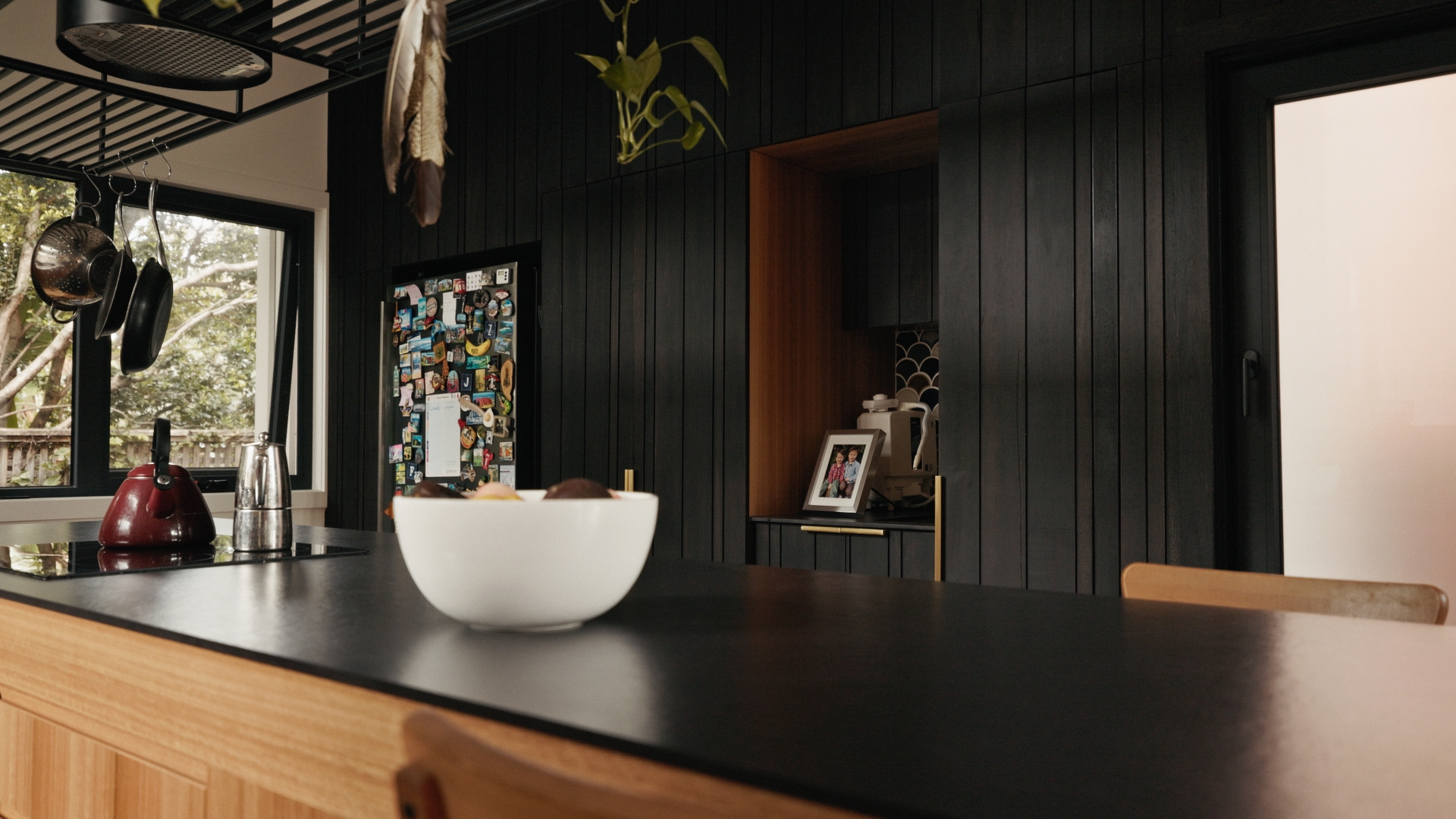
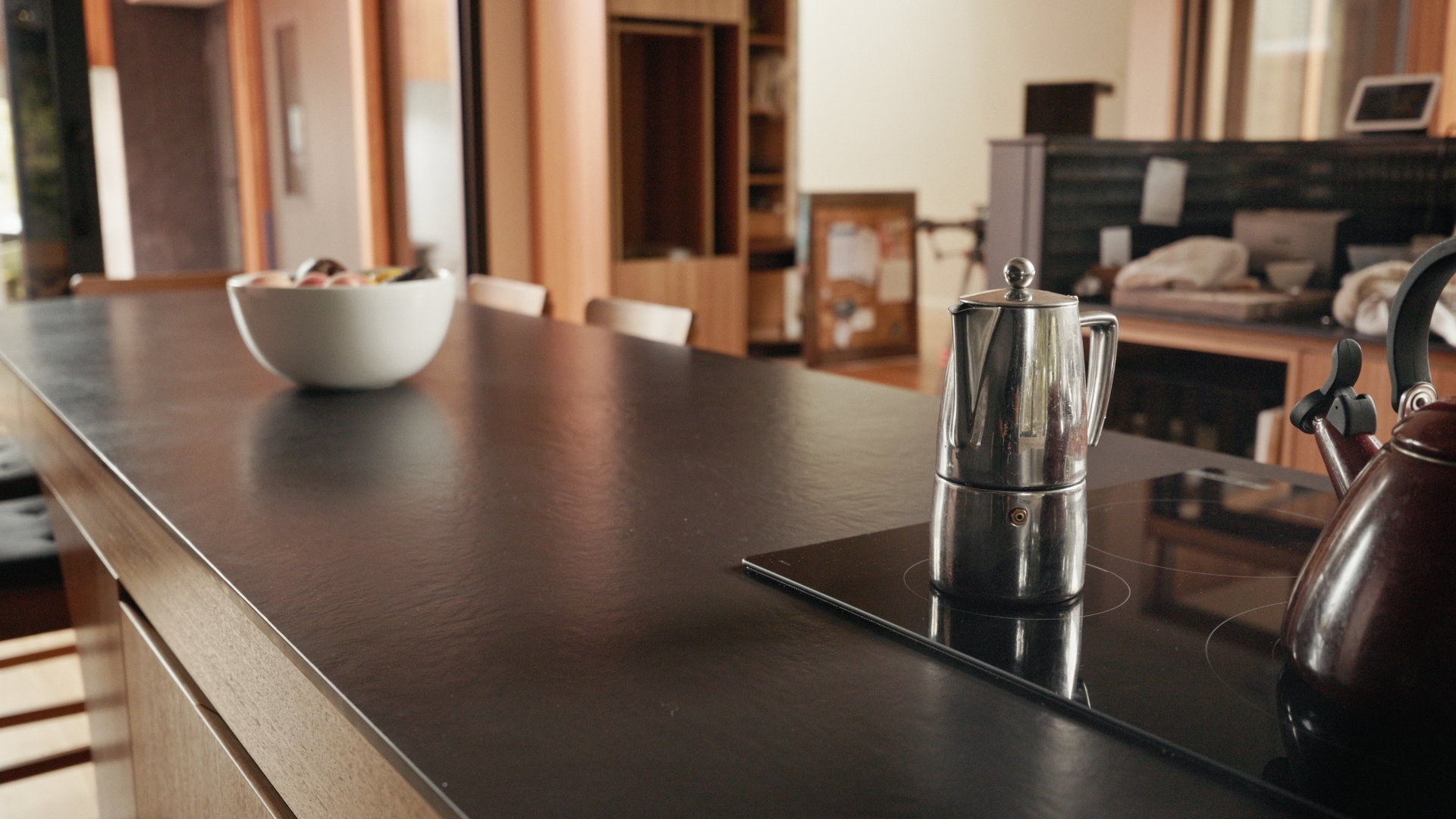
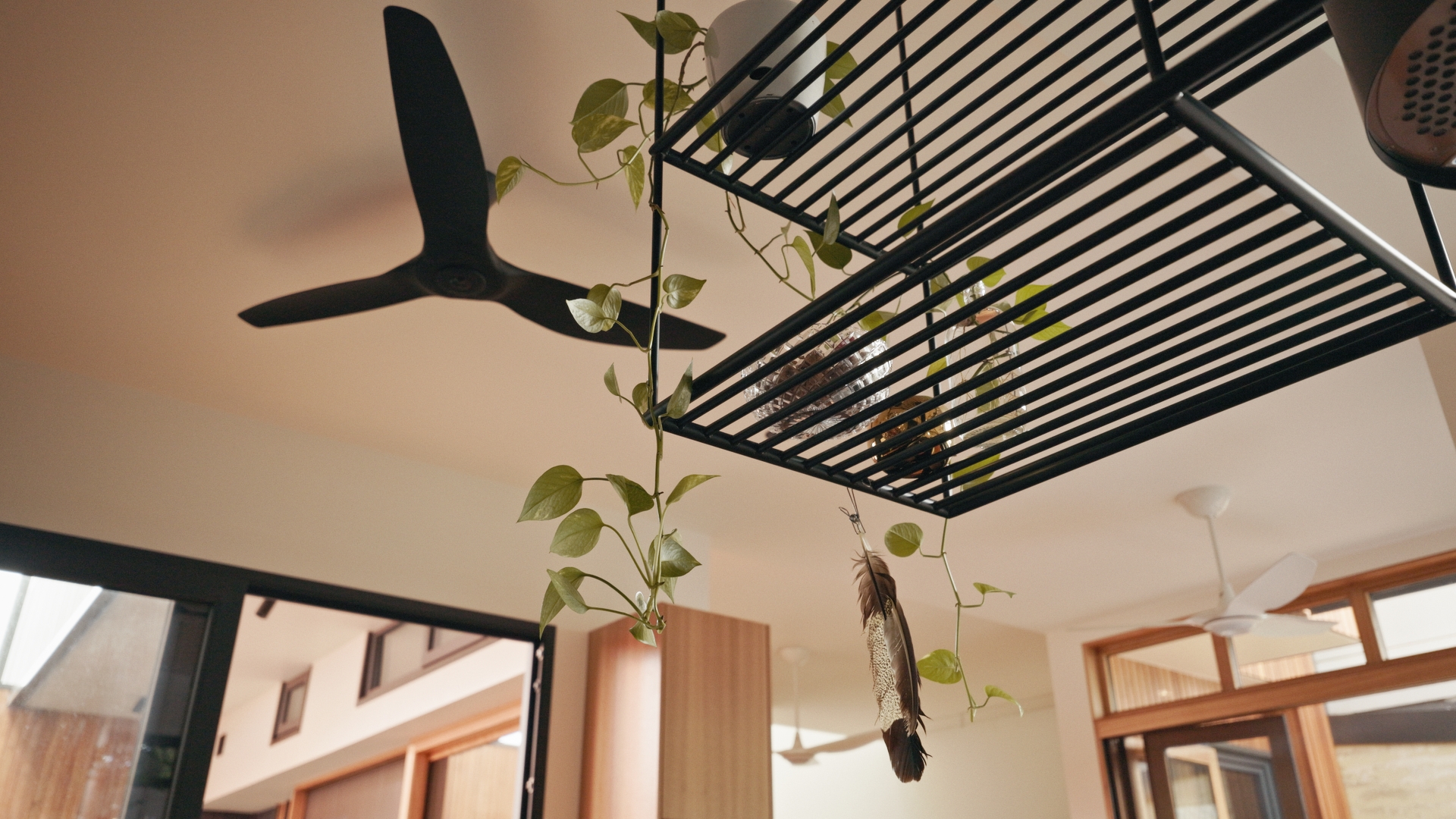
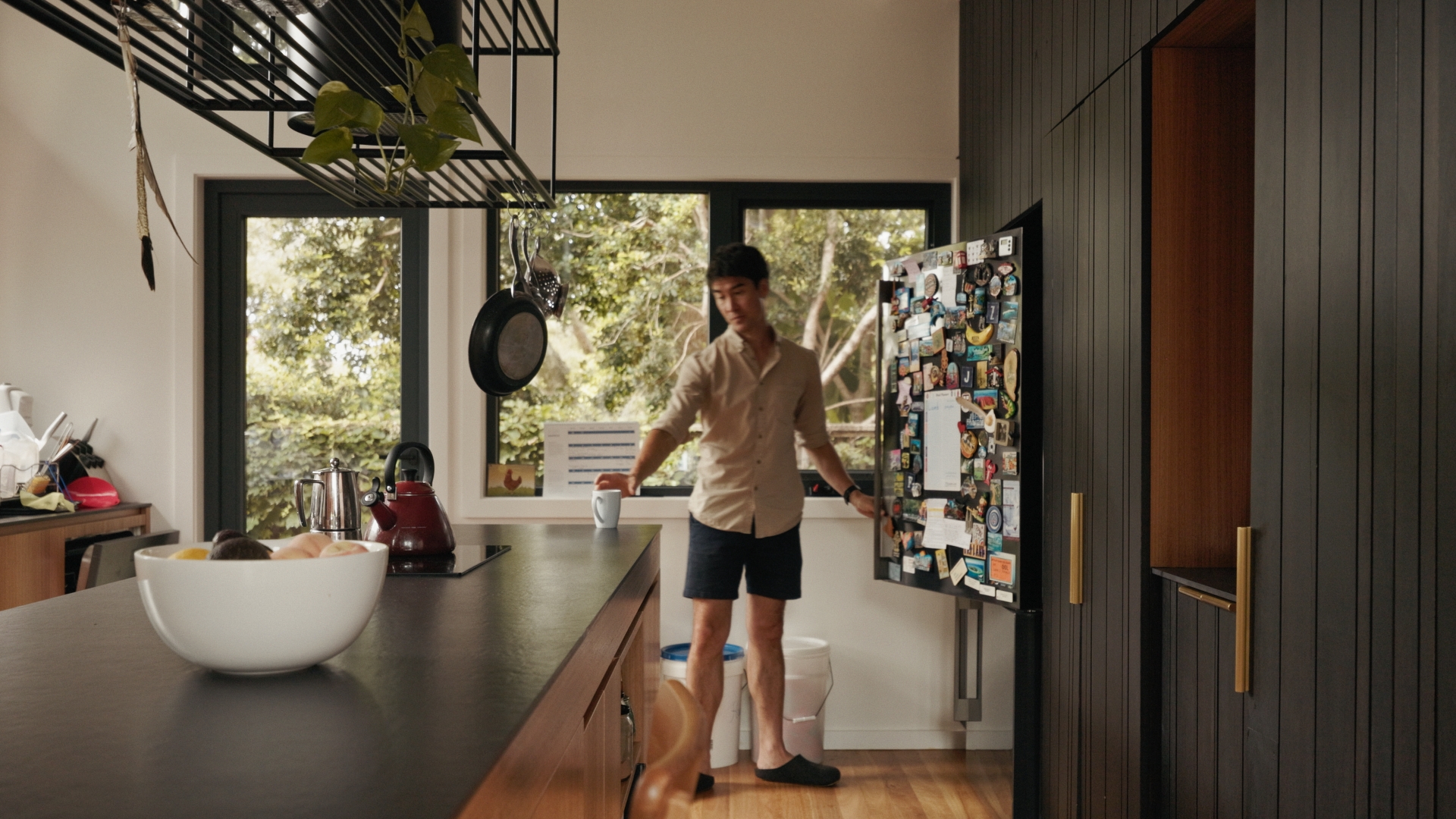
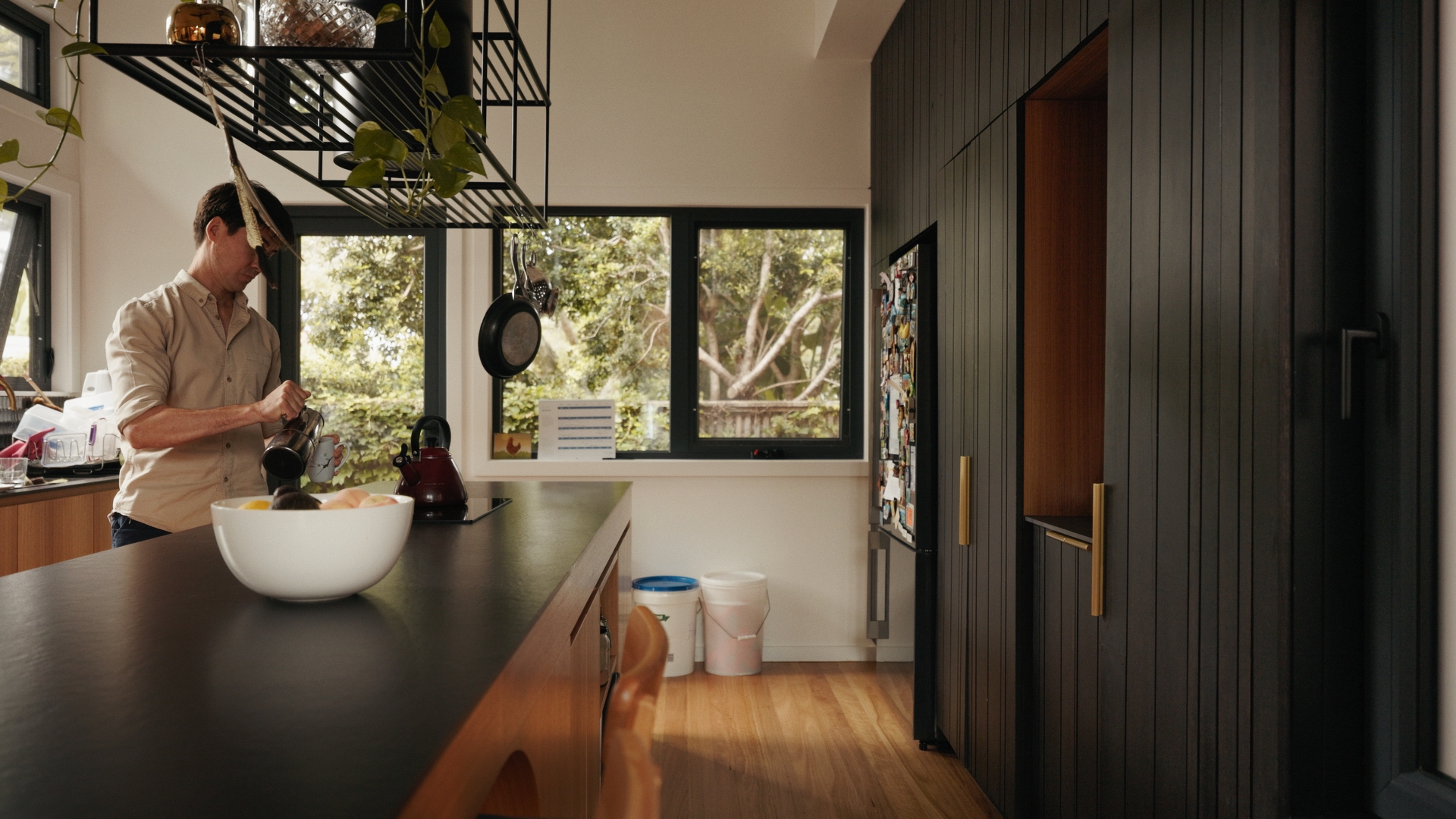
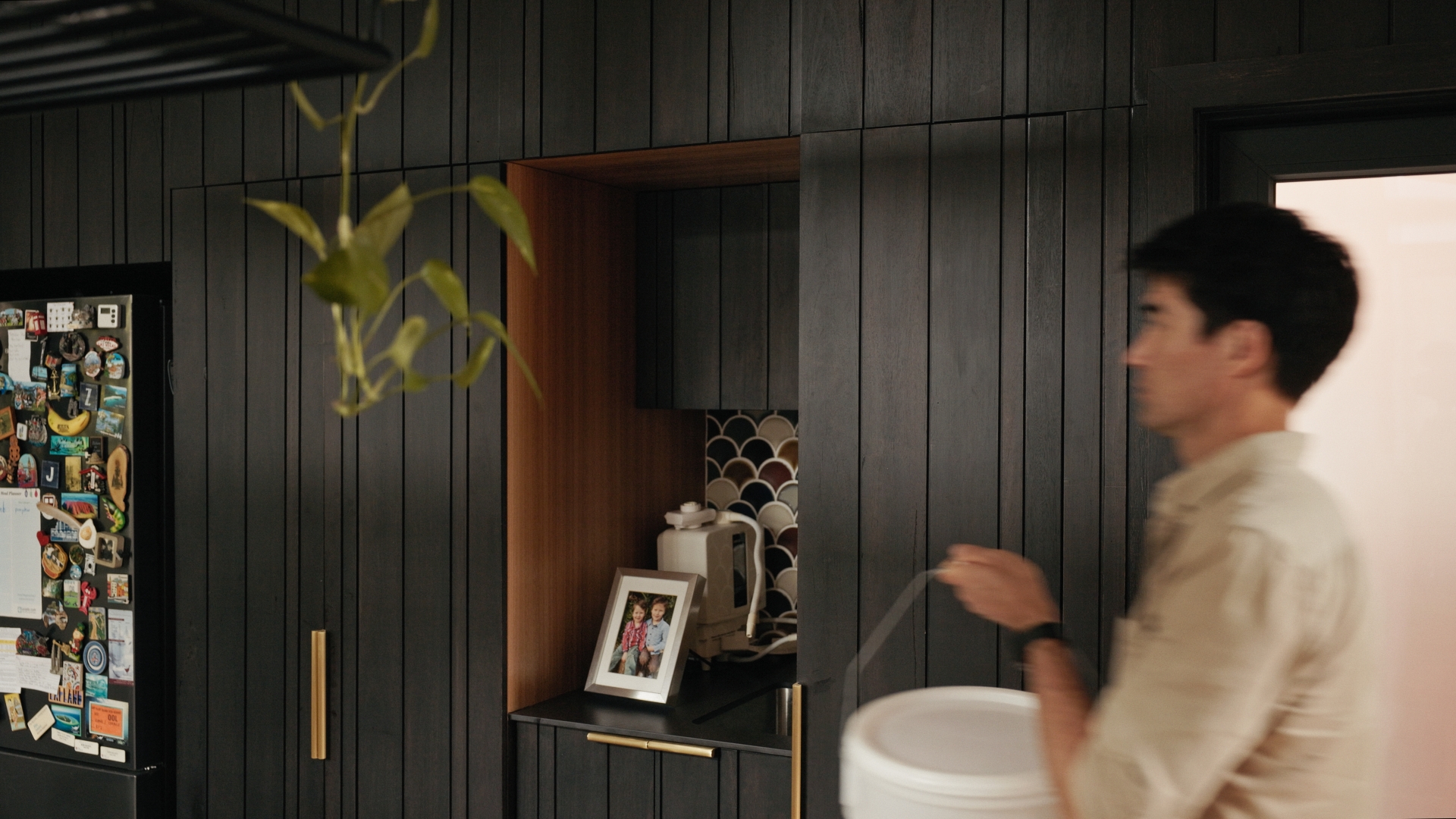
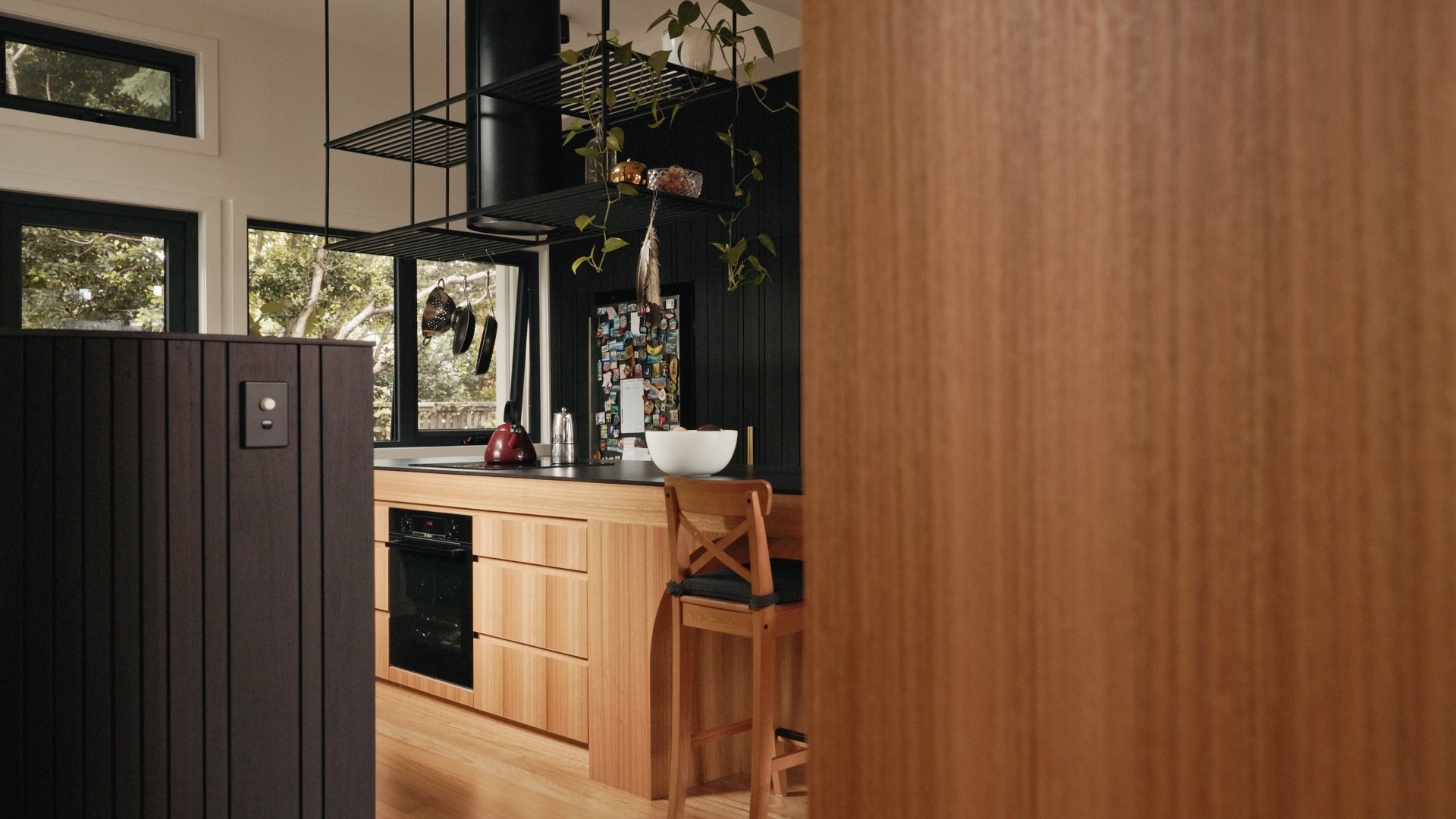
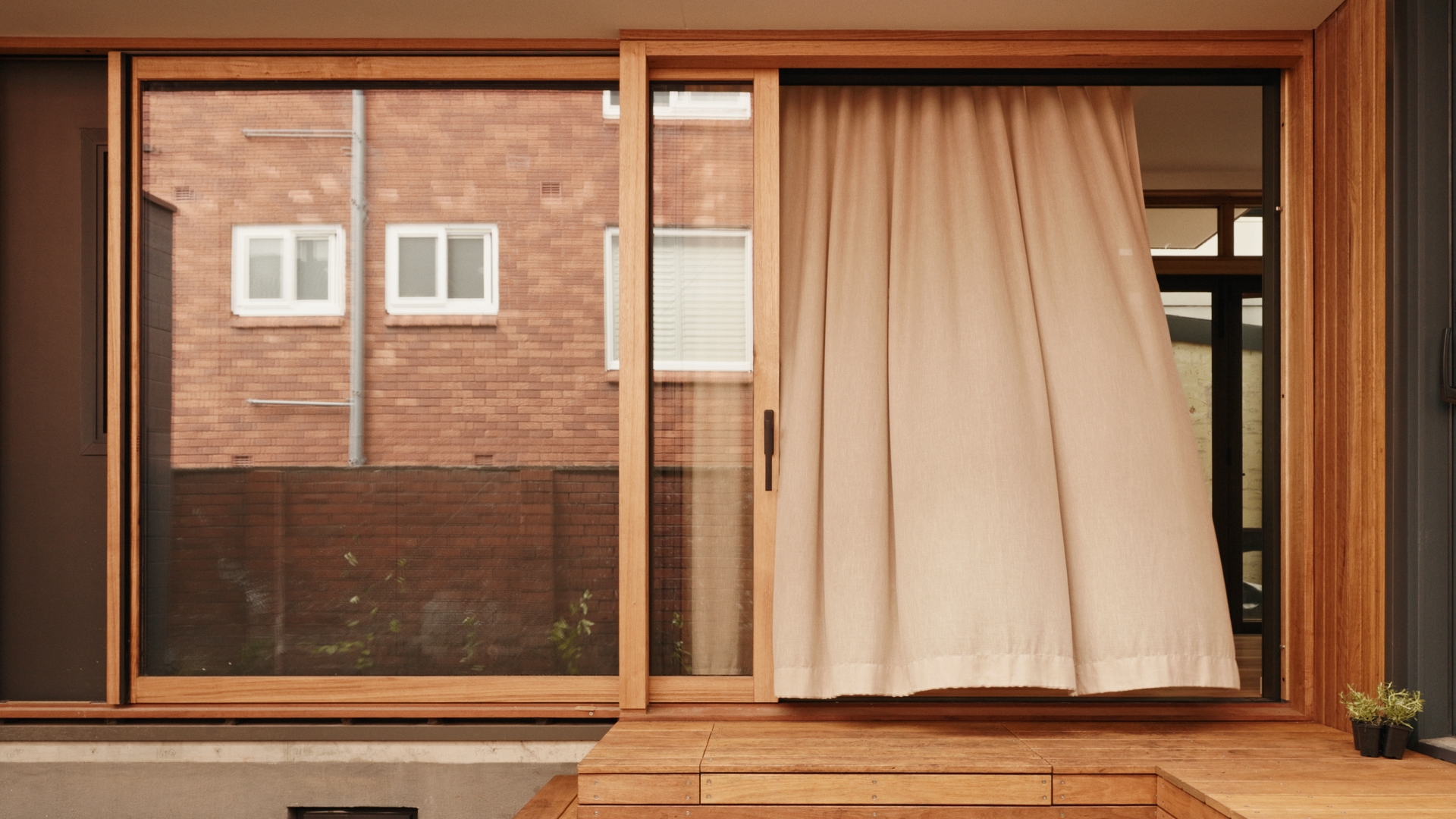
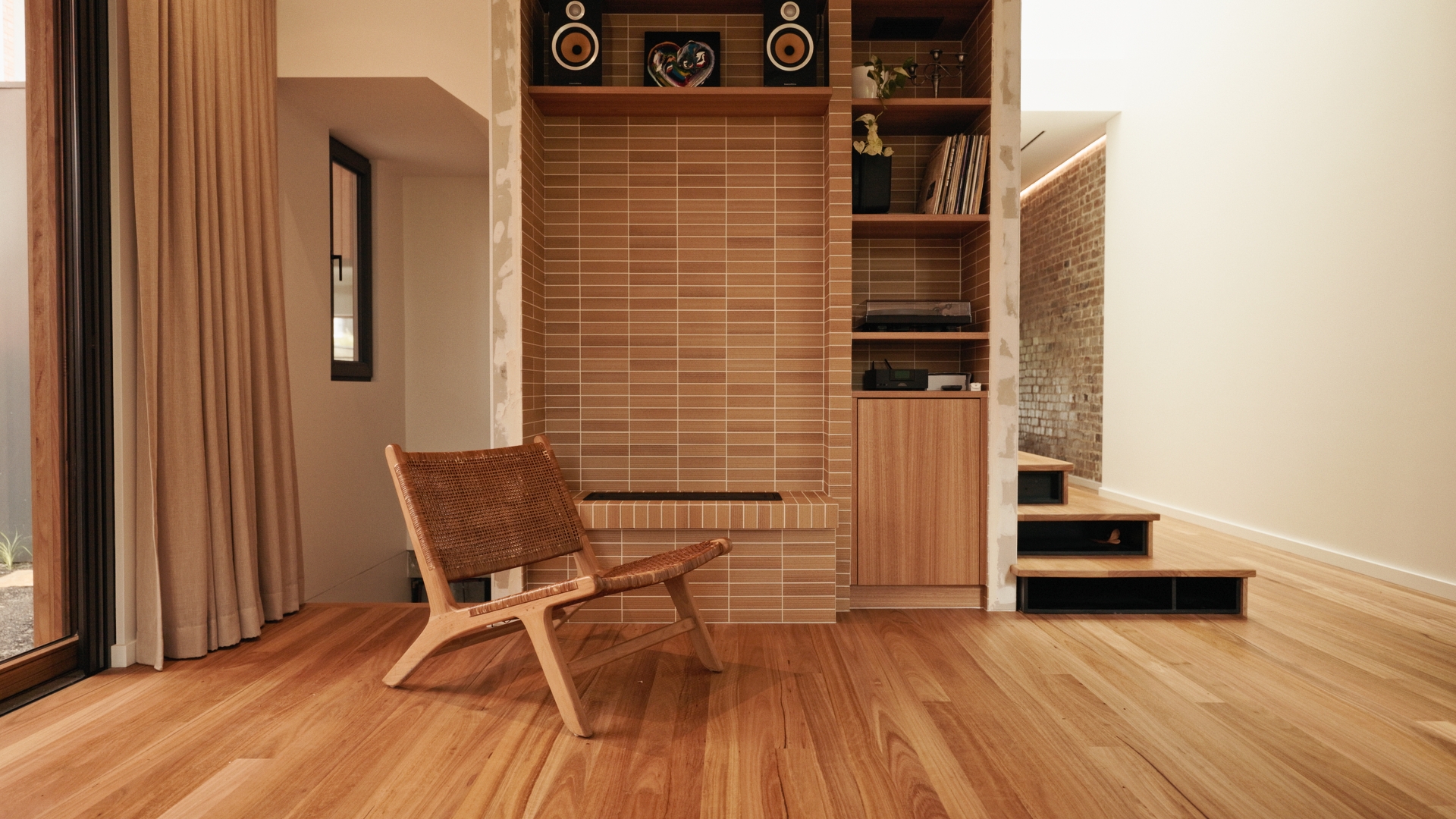
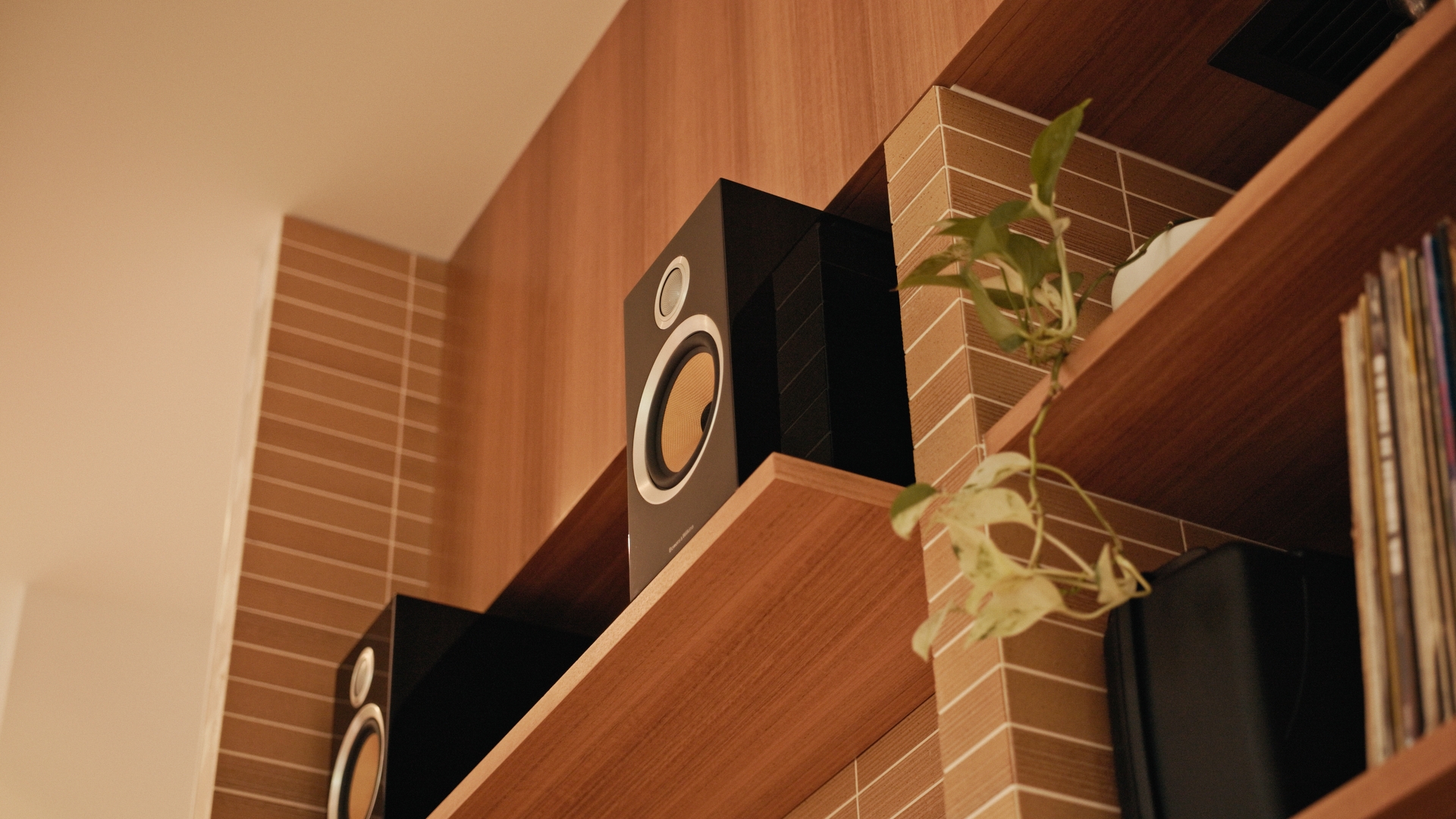
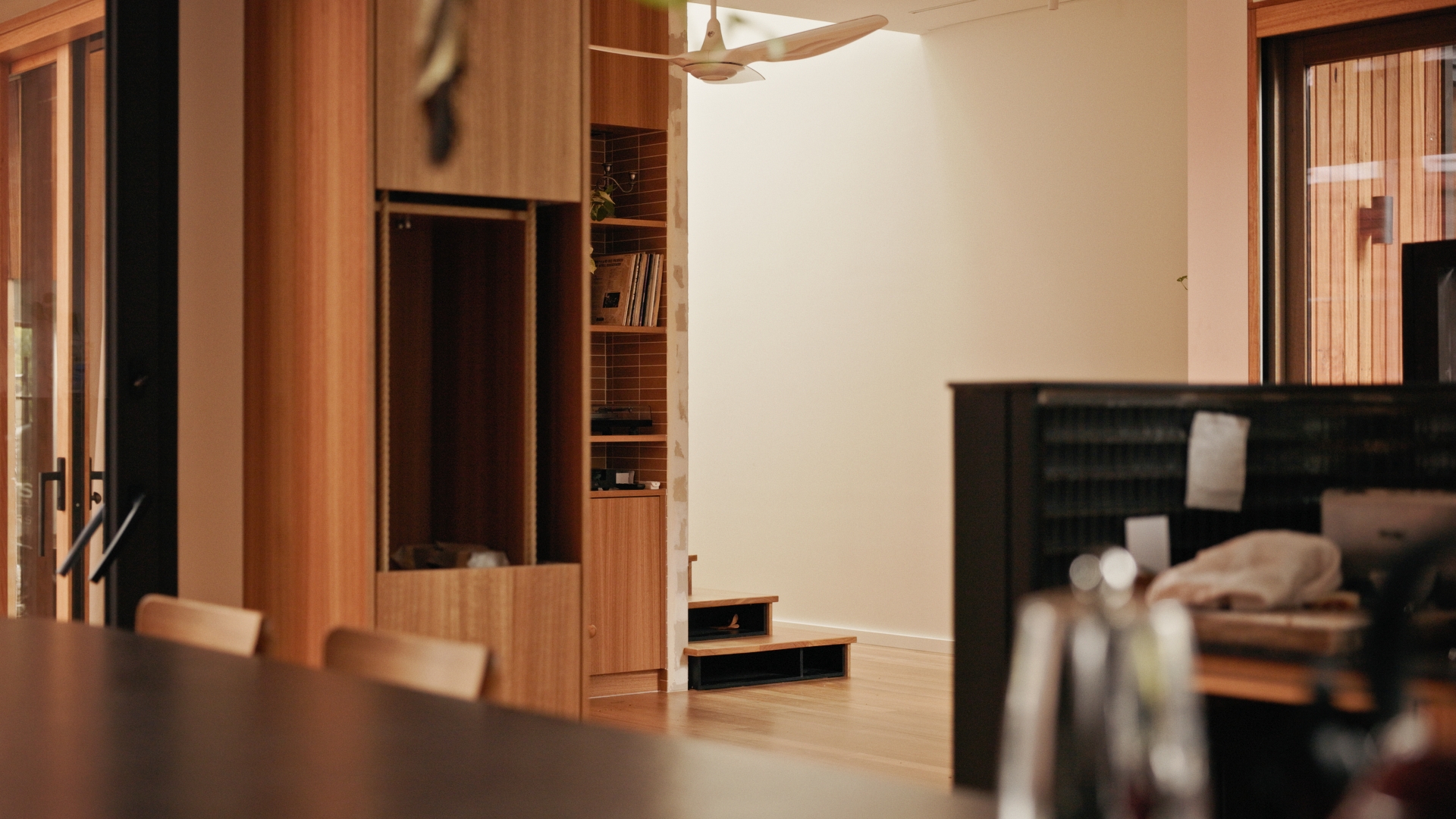
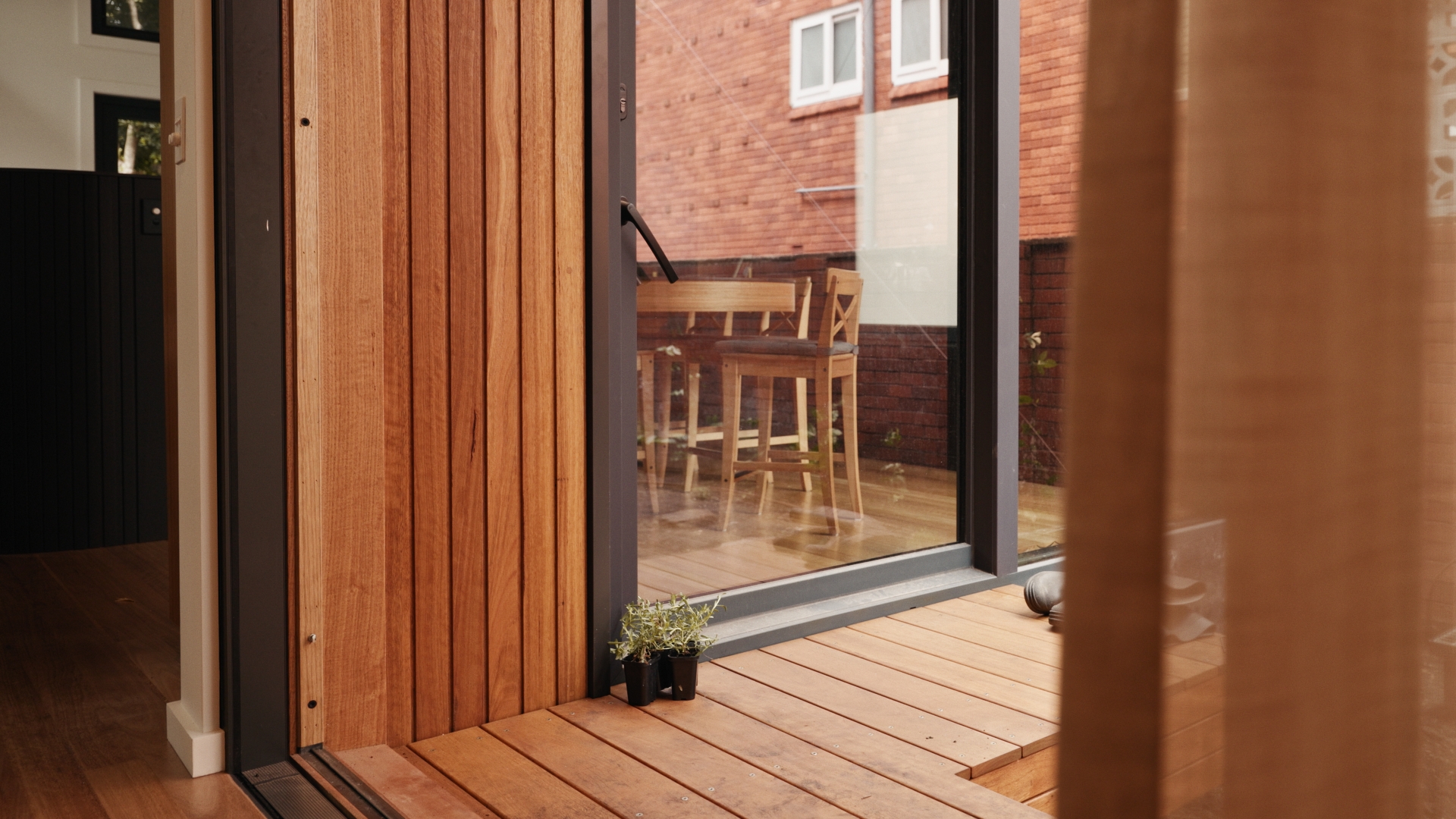
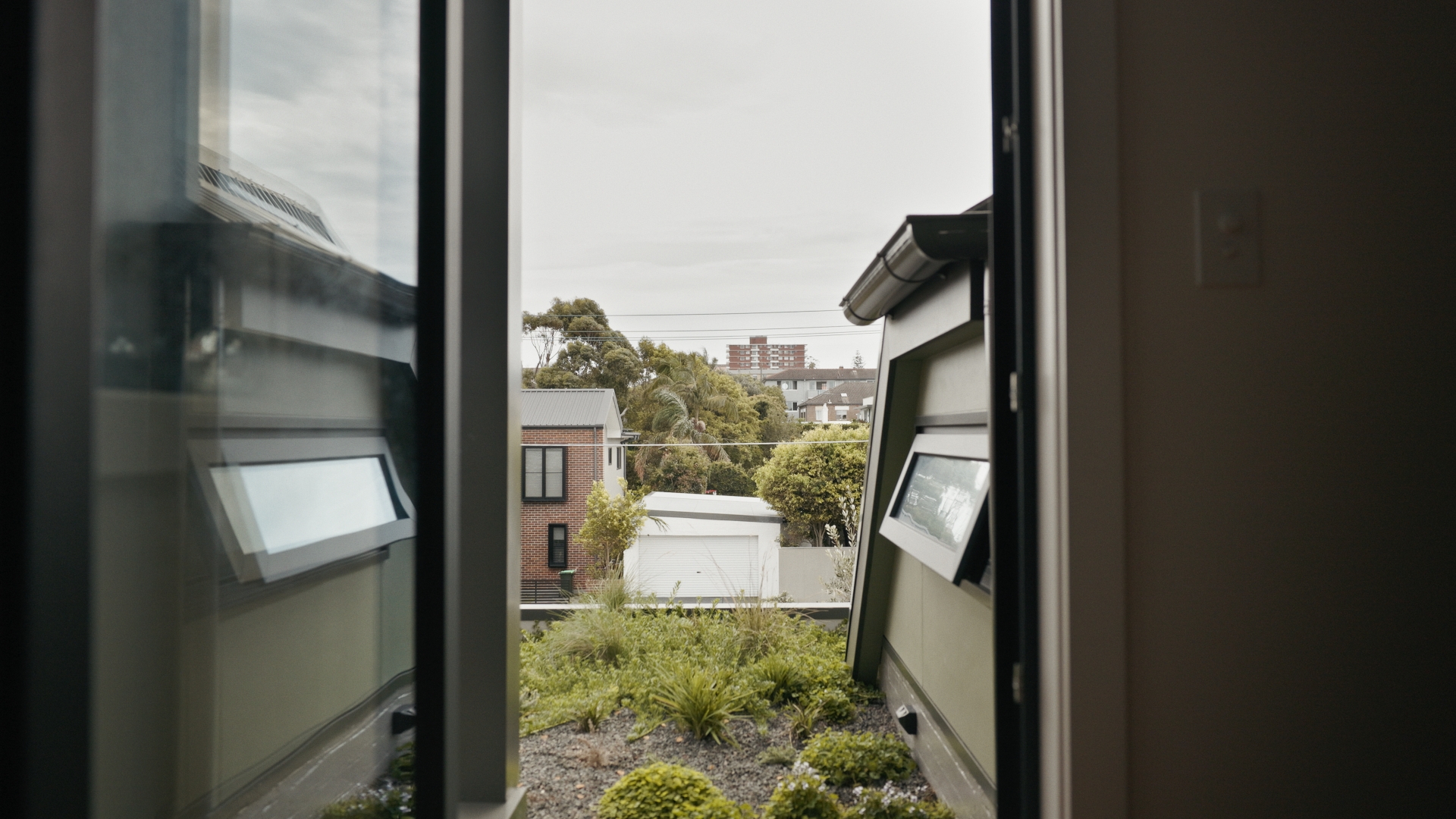
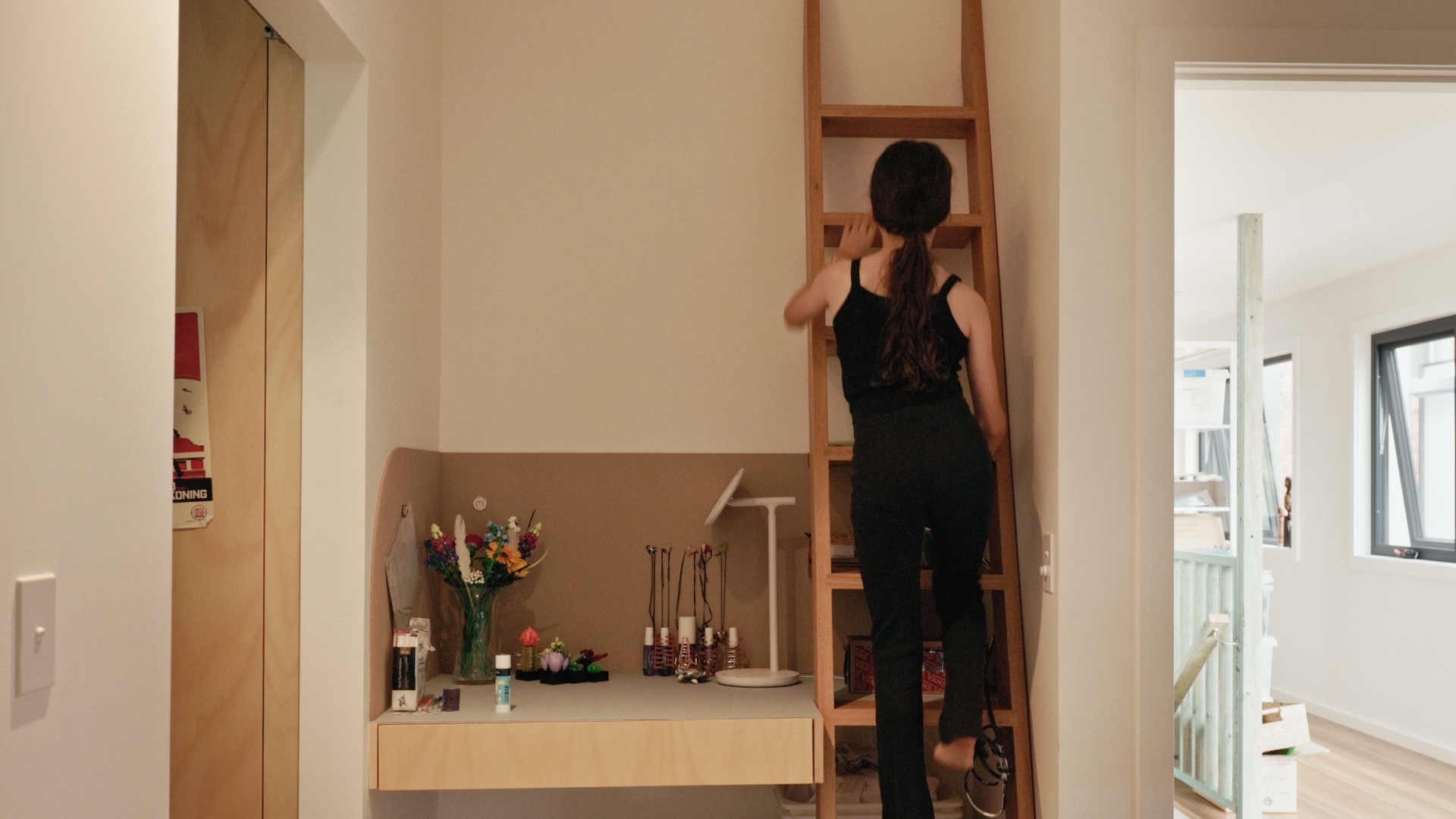
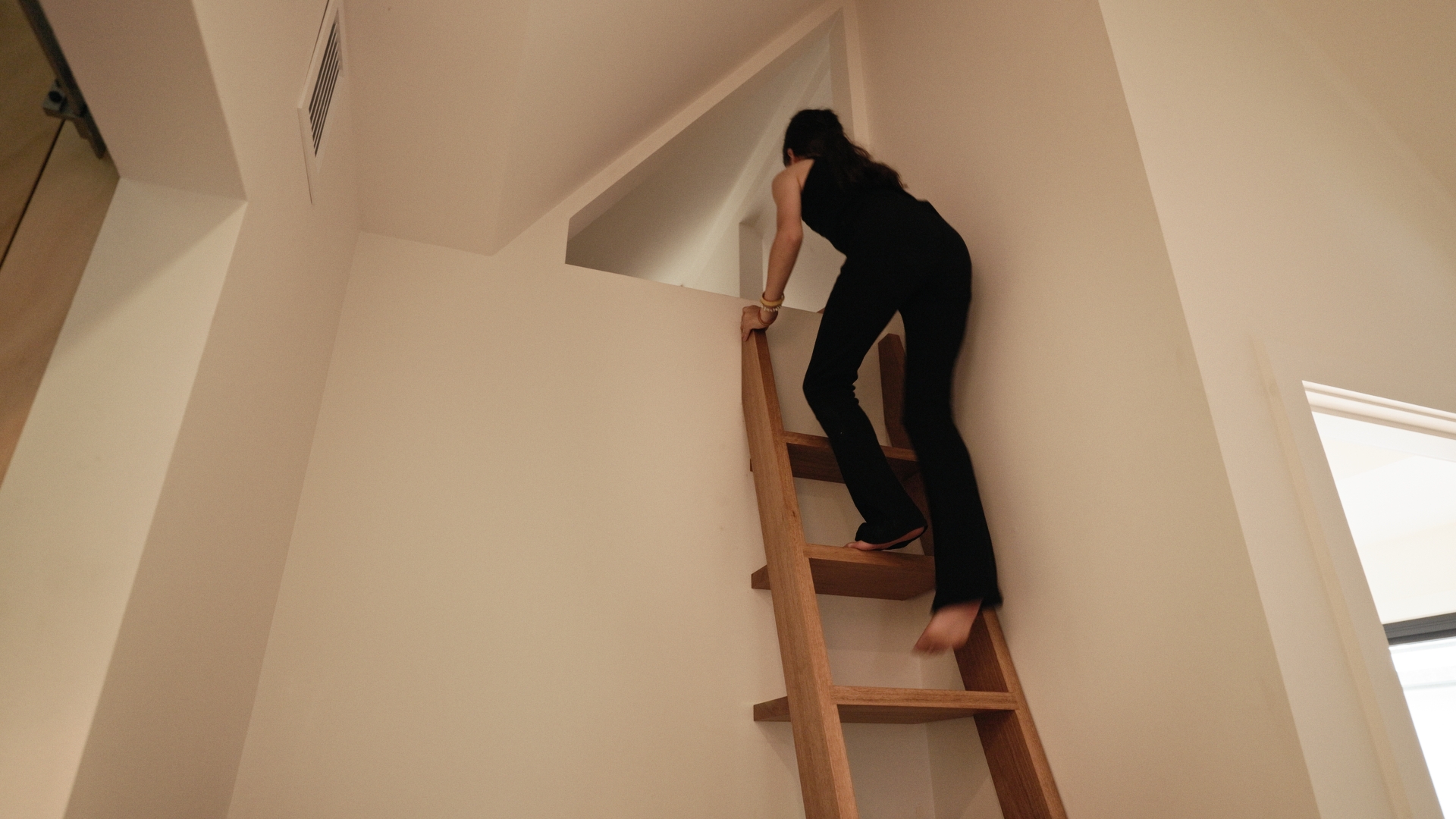
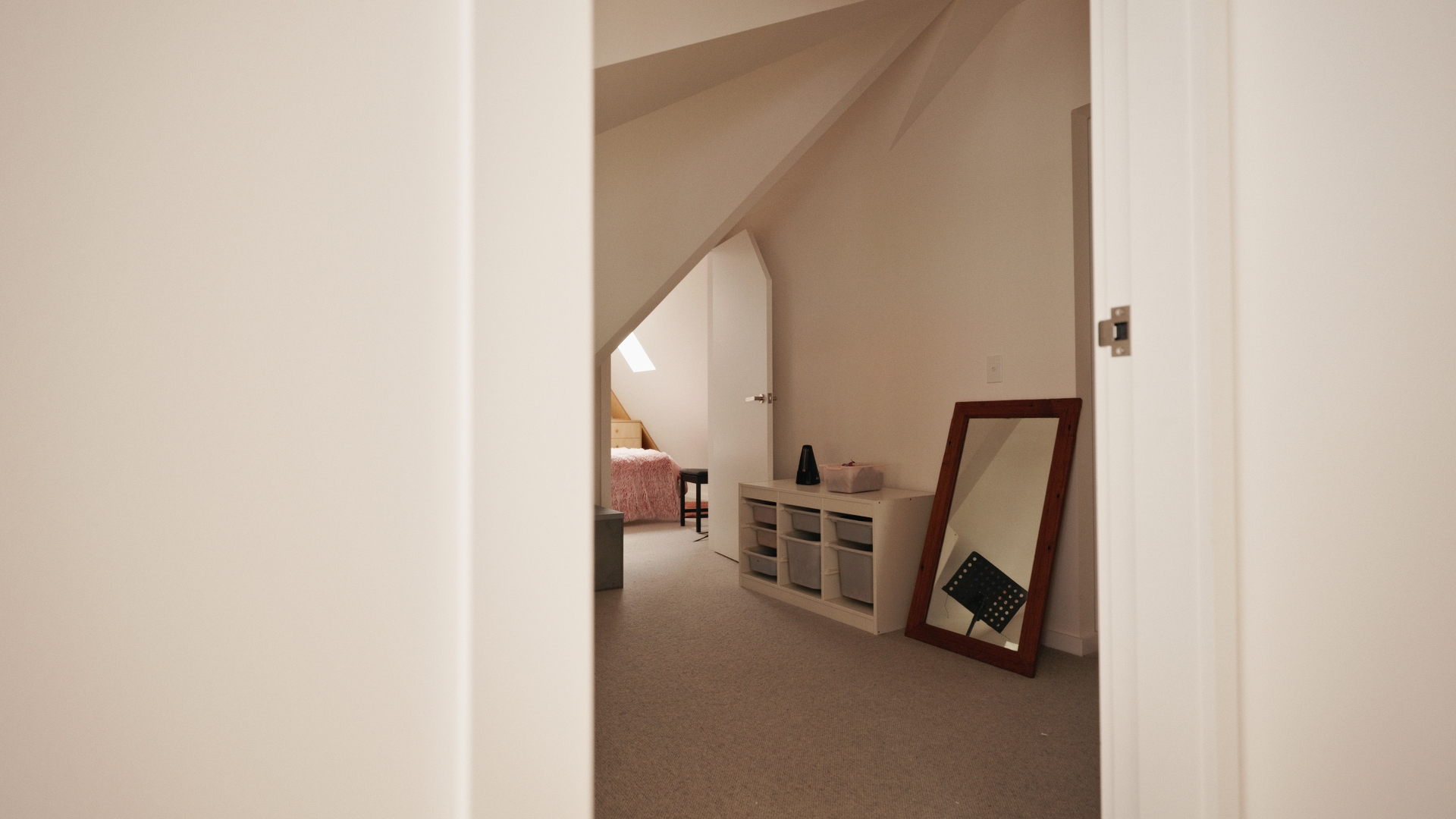
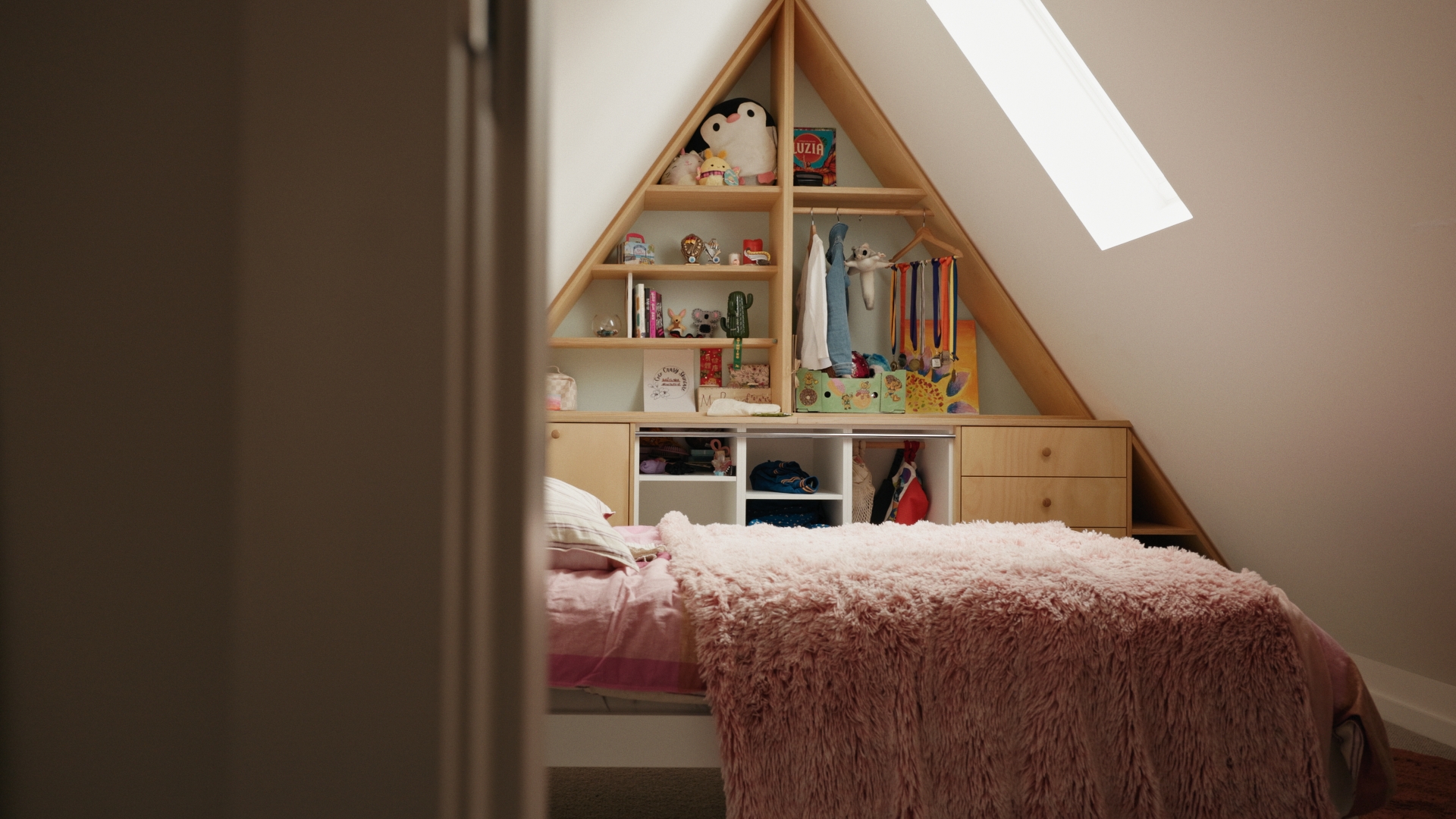
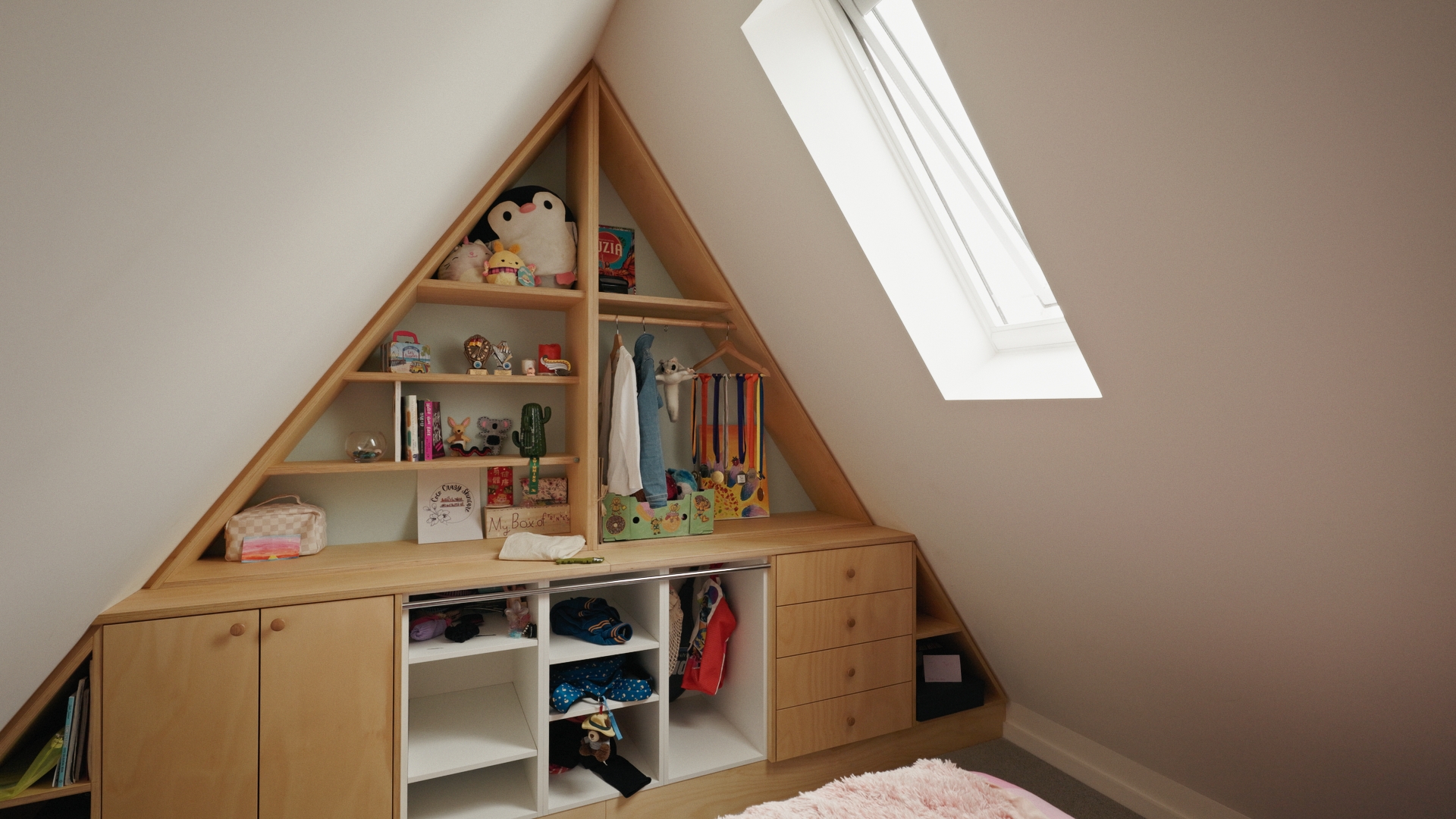
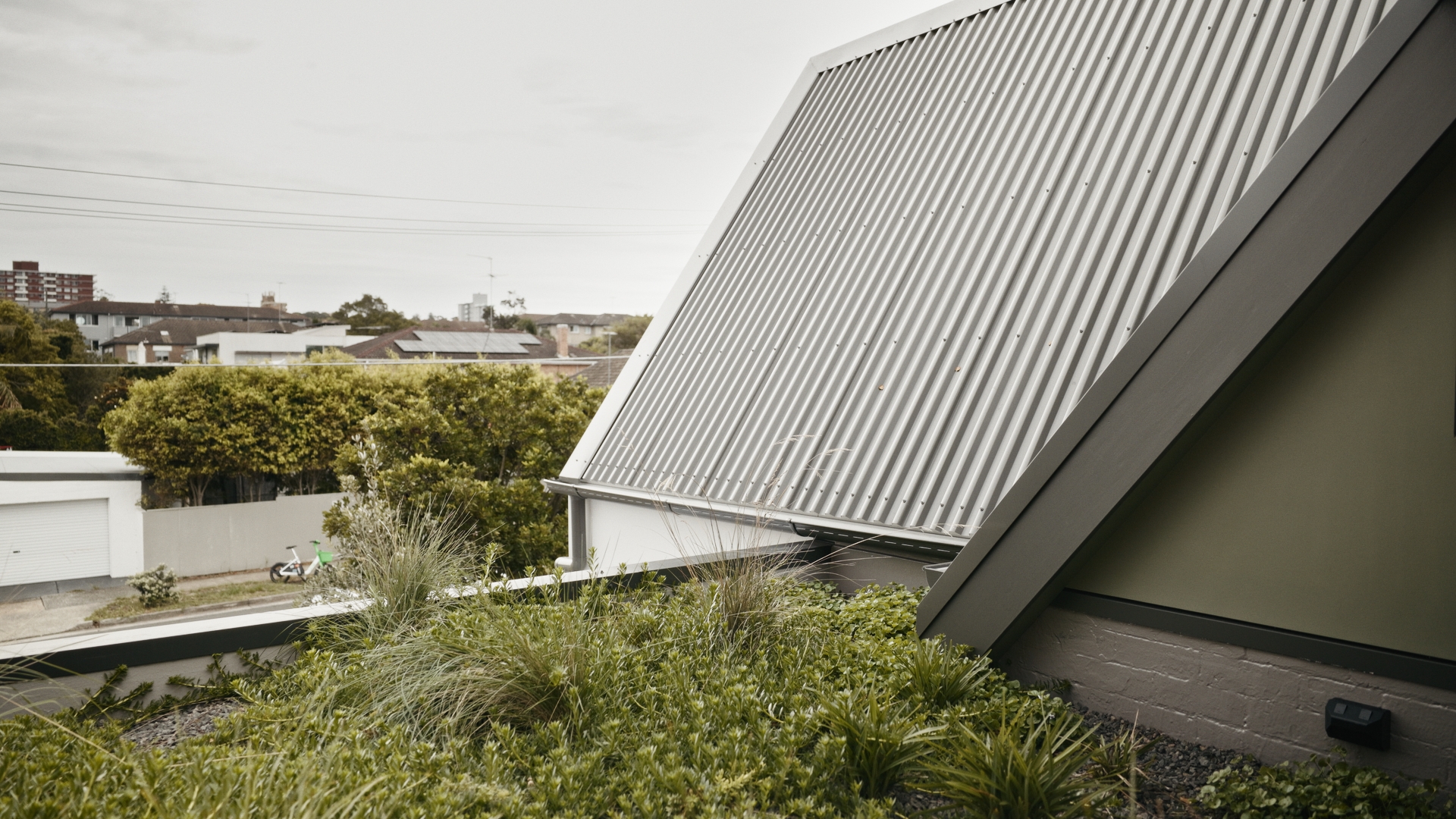
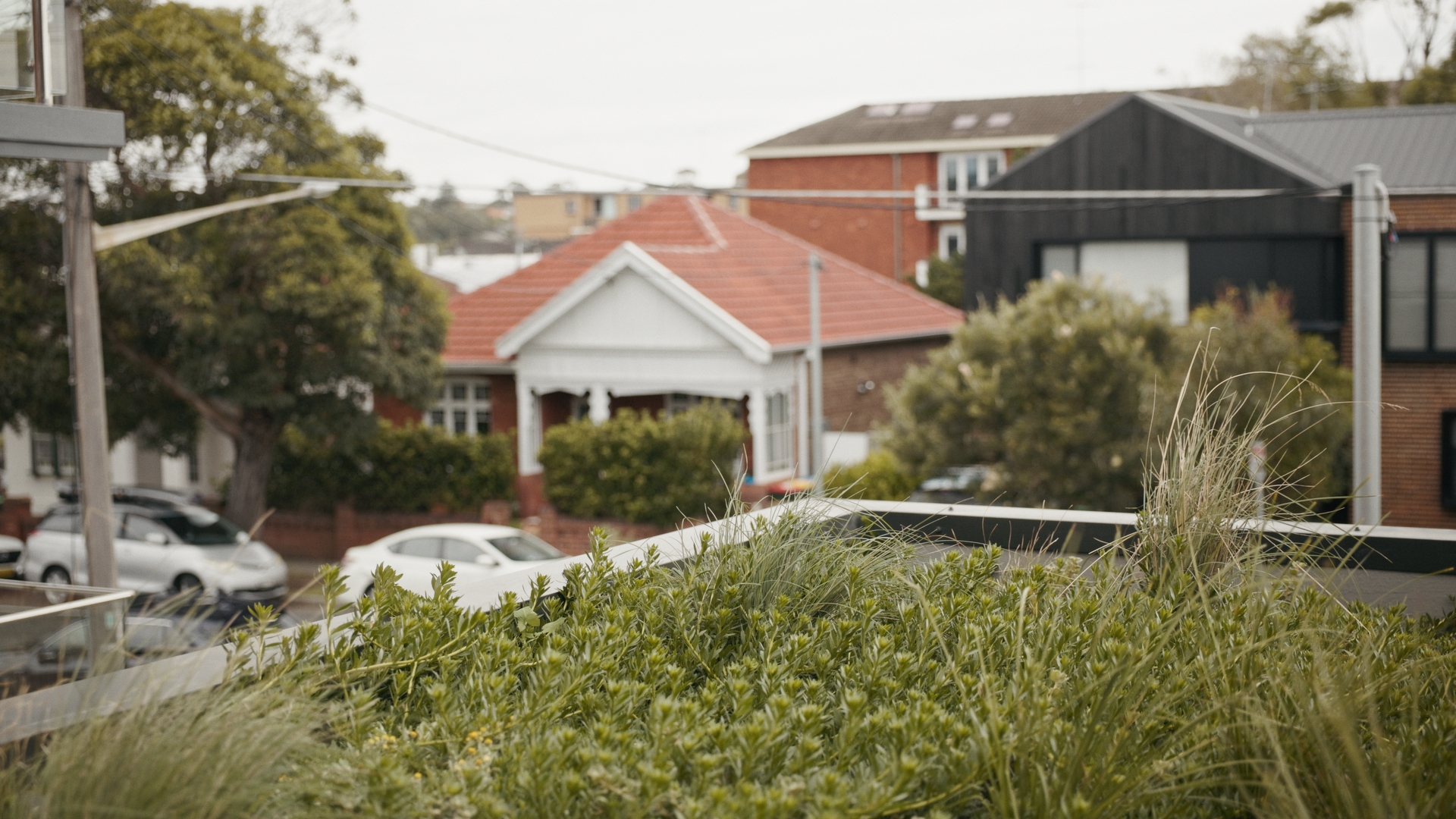
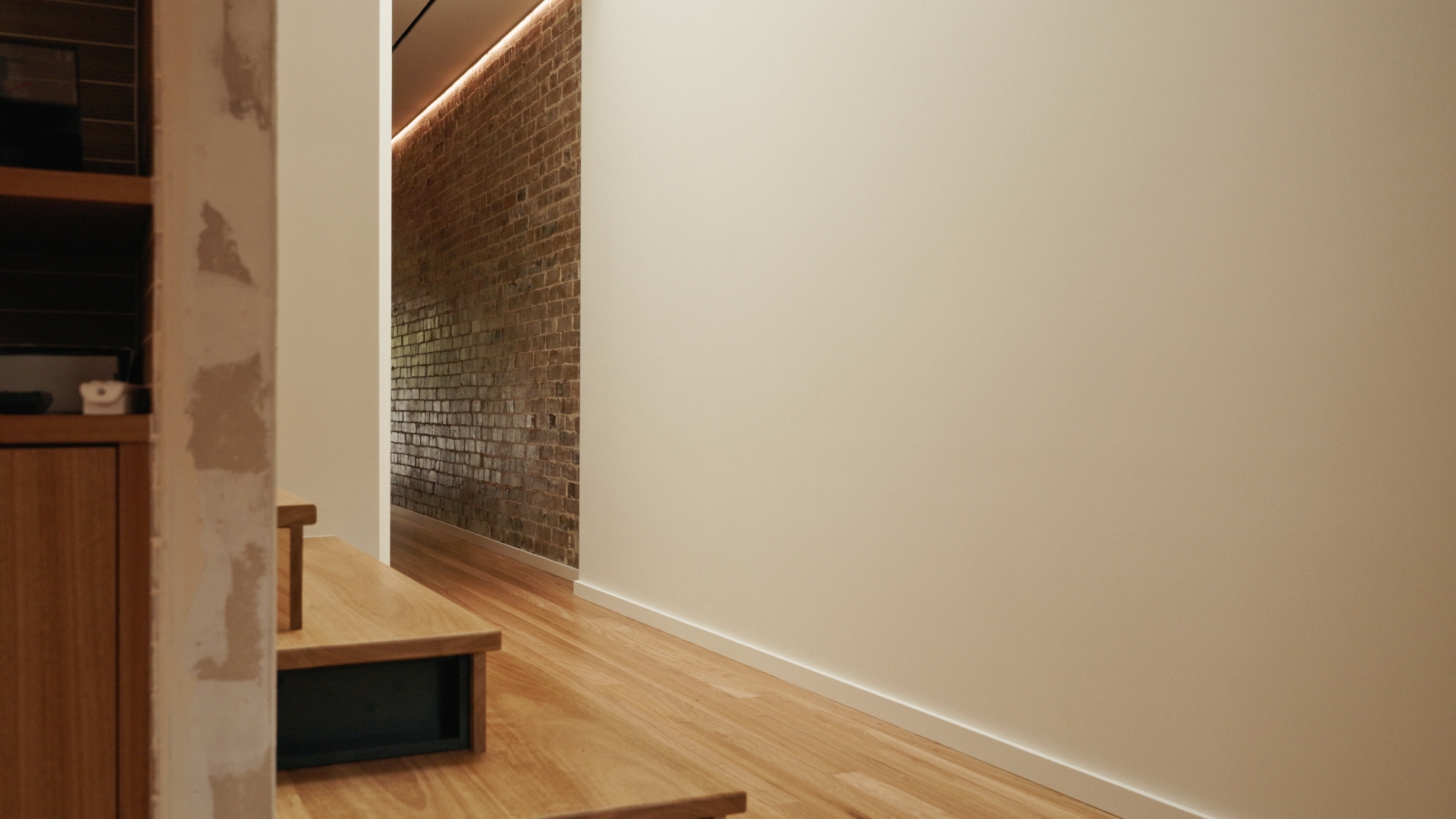
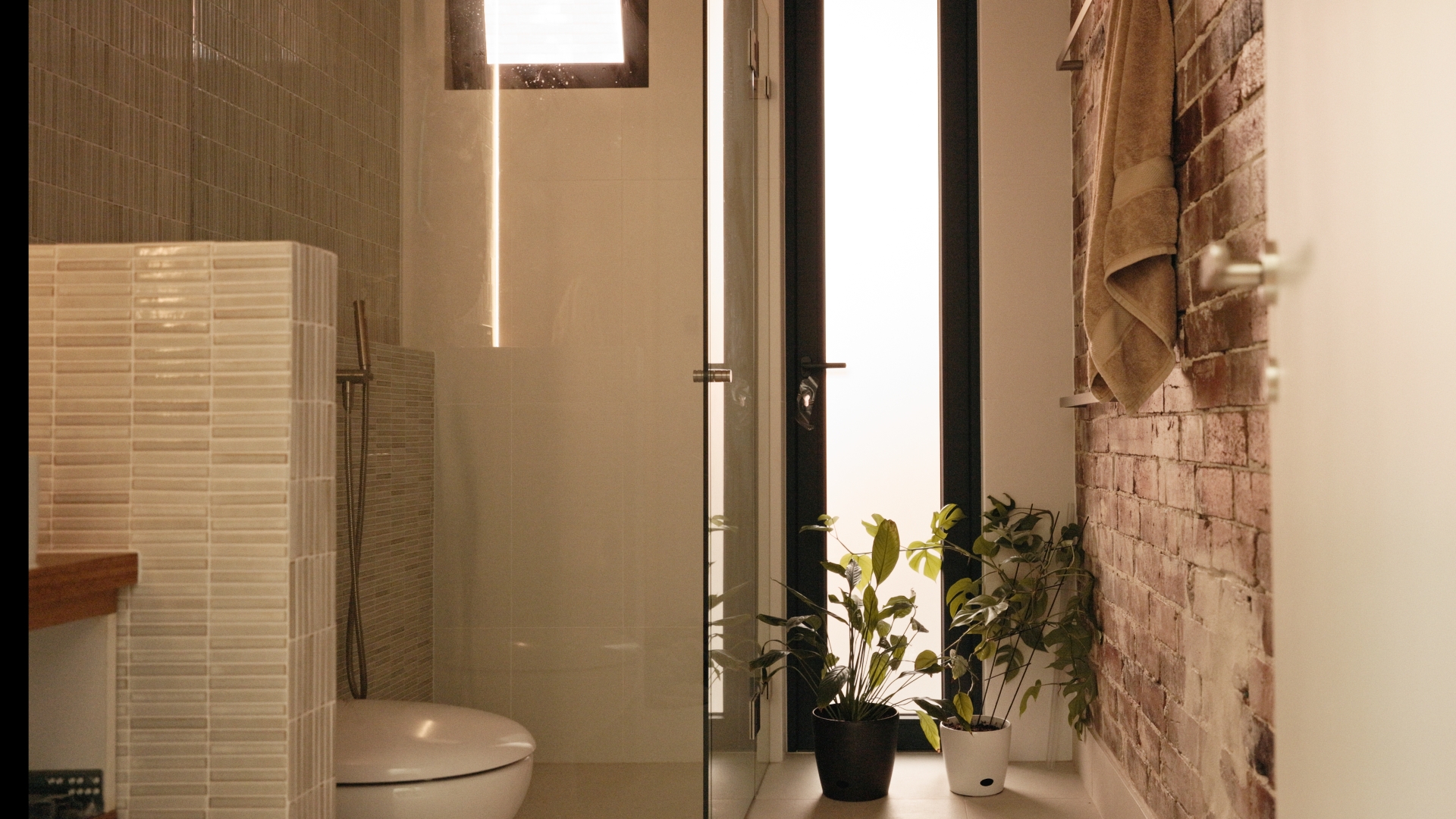
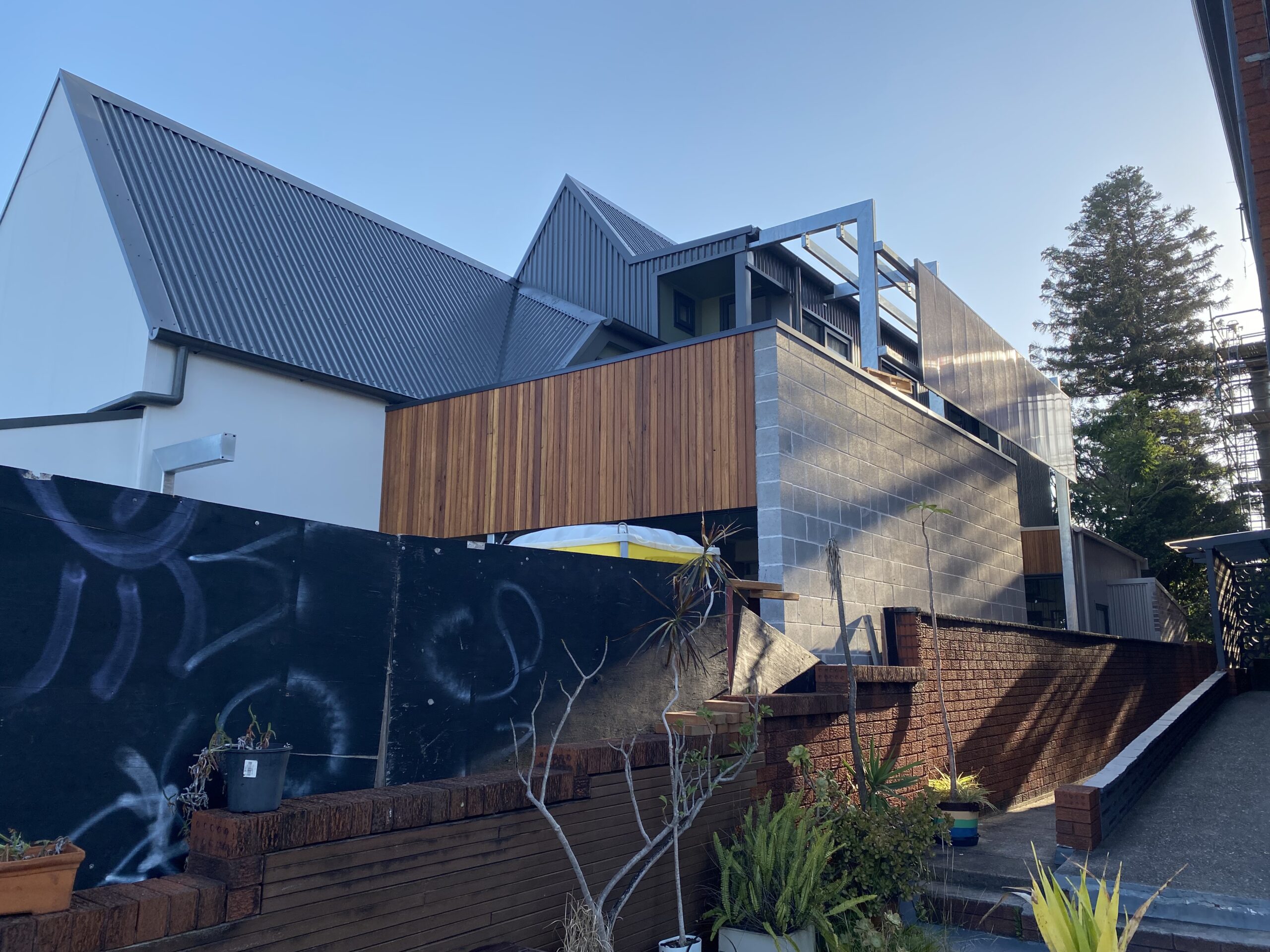
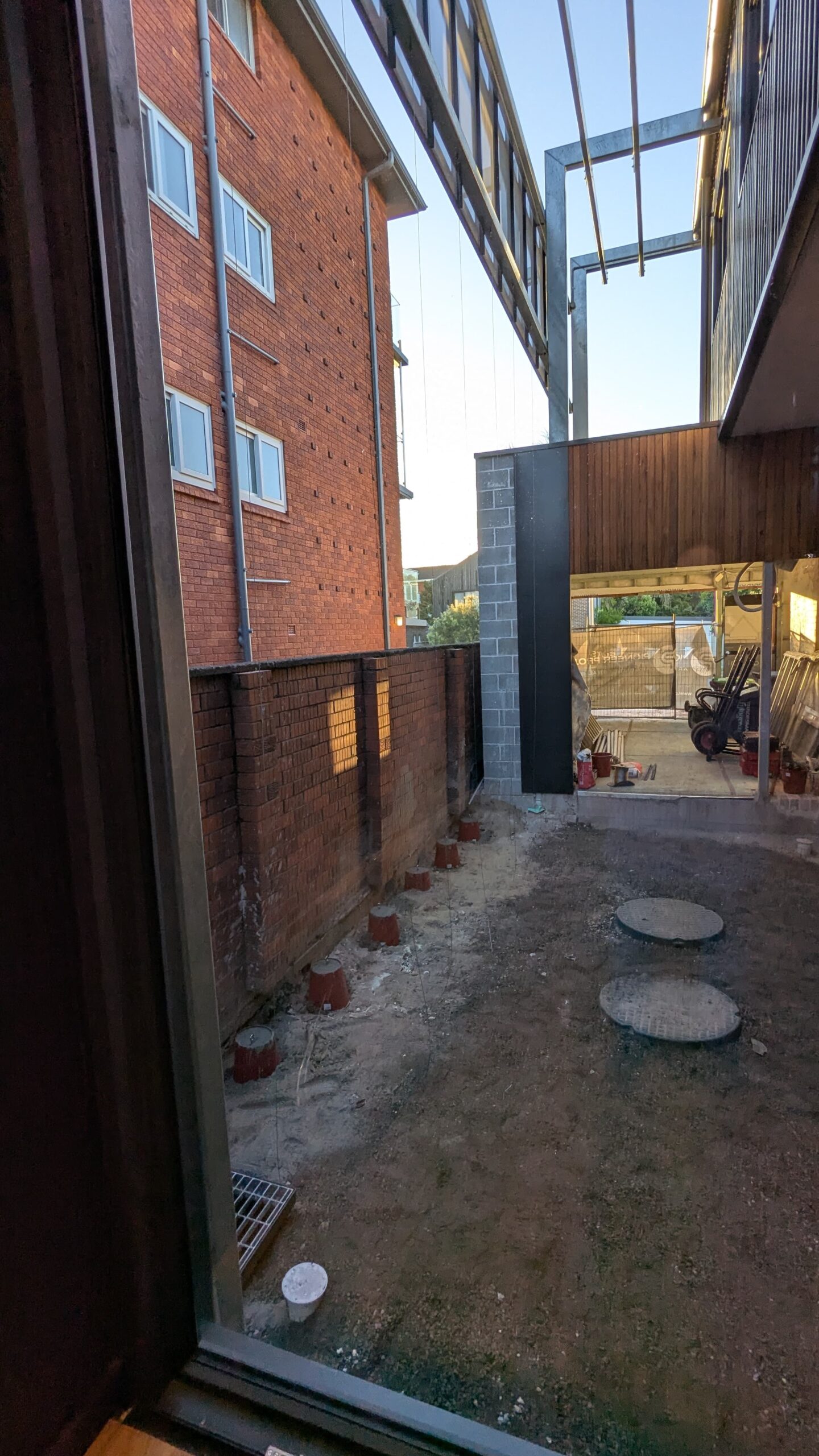
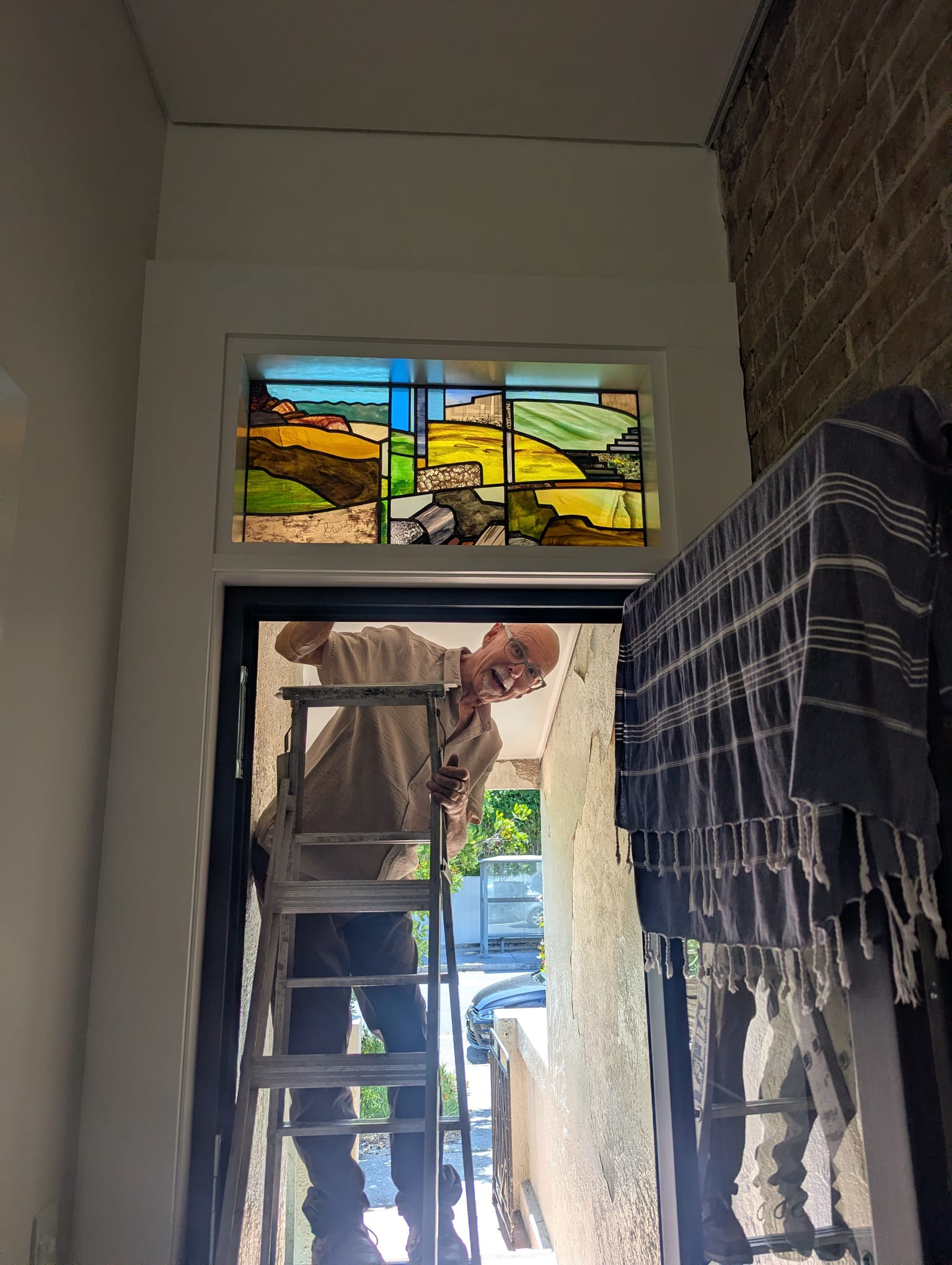
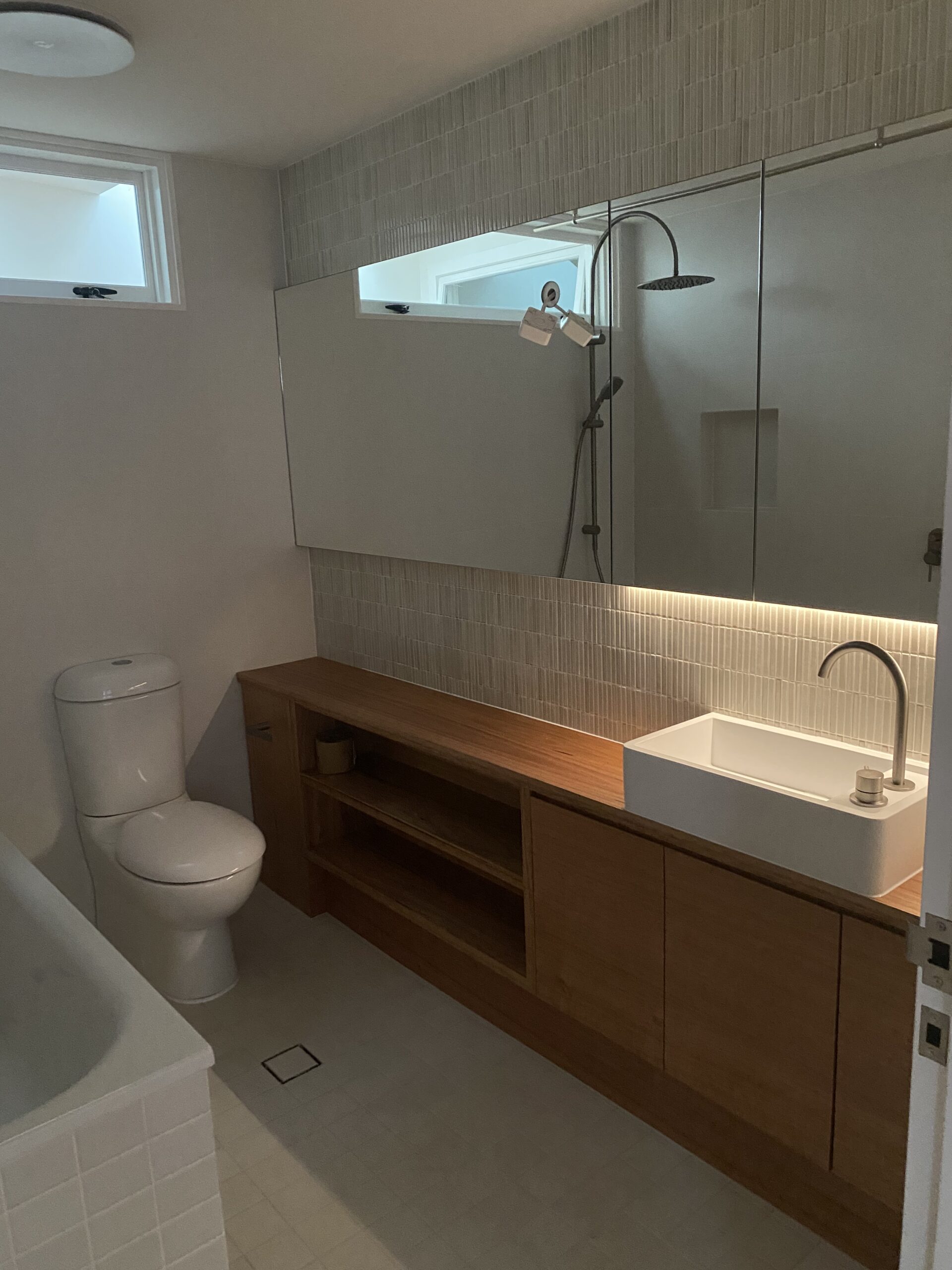
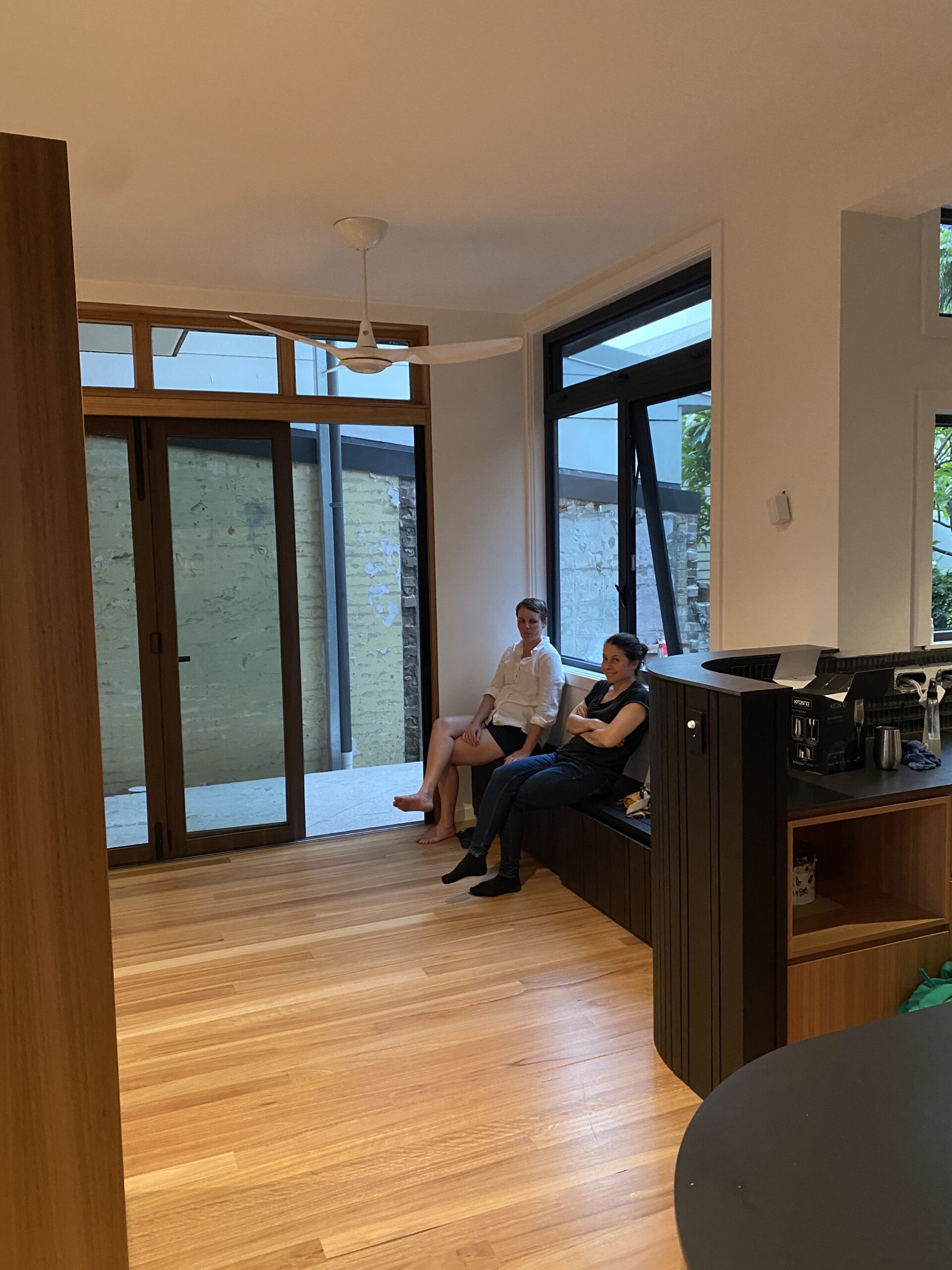
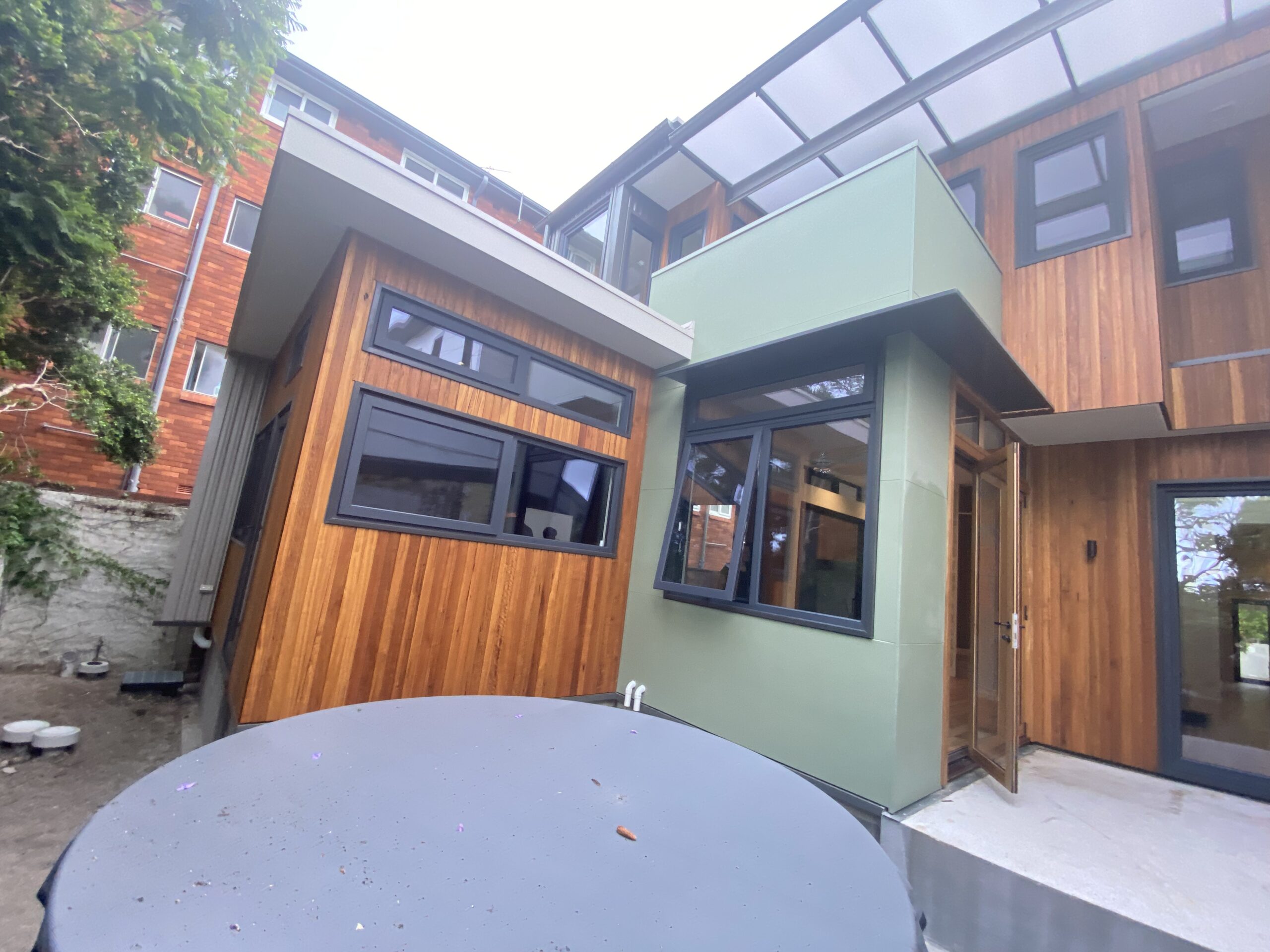
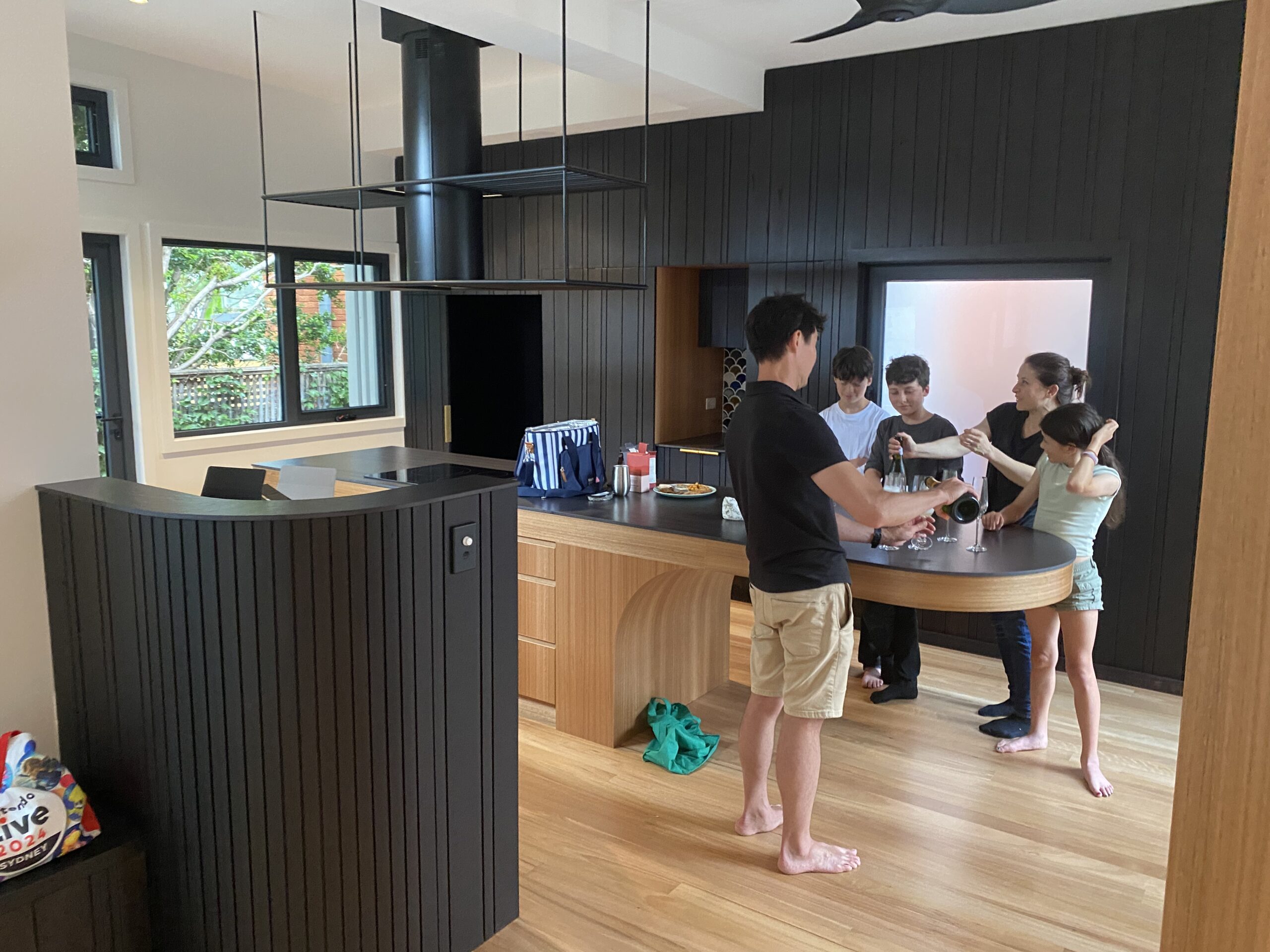
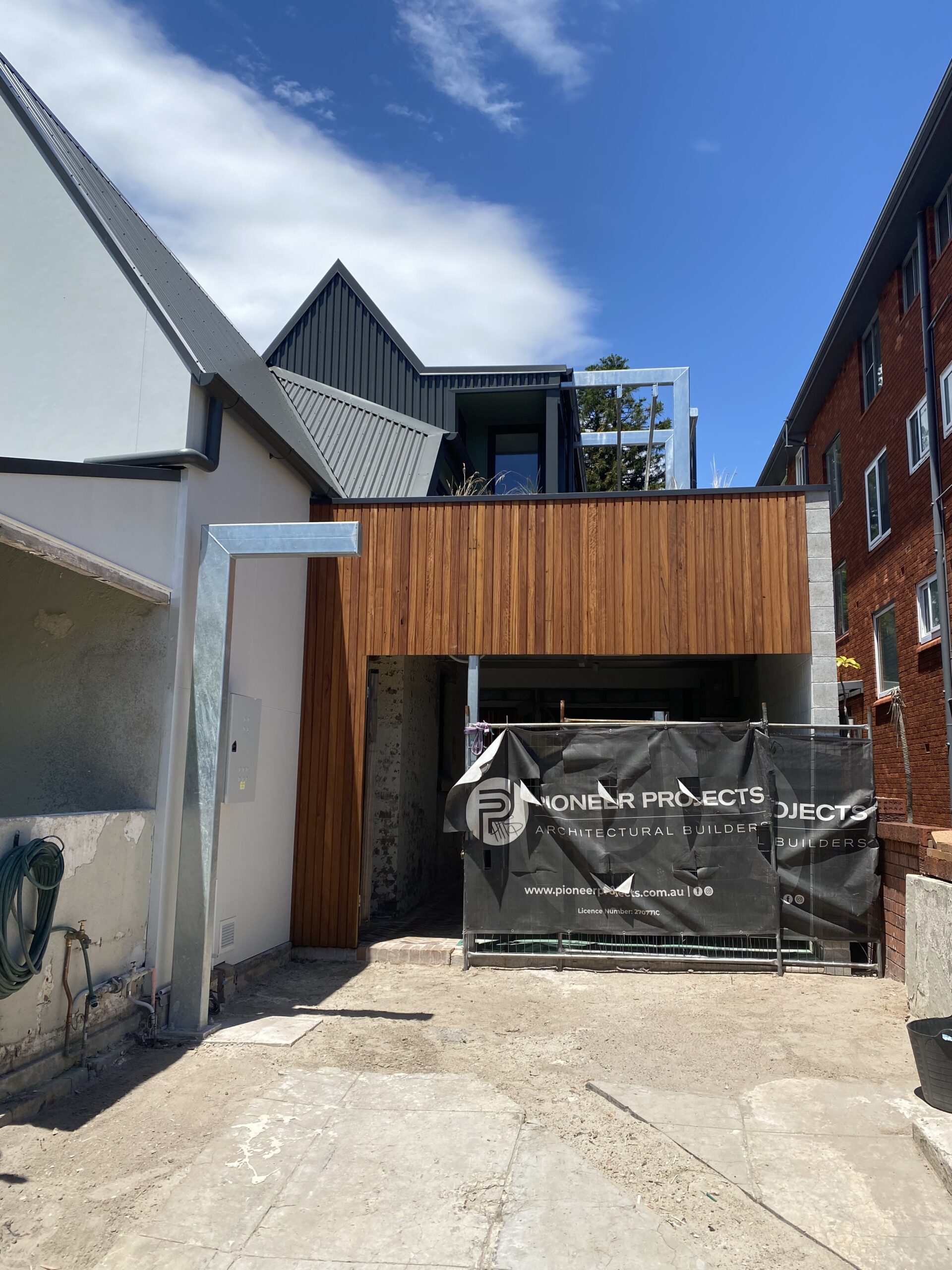

This 100-year-old semi-attached terrace was once dark, draughty and worn from generations of family life. South-facing and disconnected from its site, it had poor access to small courtyards overlooked by a neighbouring apartment block.
Rather than move, the owners chose to renovate, allowing them to stay close to family, schools and the beaches they love. The result is a light-filled, comfortable family home that feels more generous, flexible and connected to its surroundings, with space to accommodate extended family or friends over time.
Accessibility was considered in the design, with the main living spaces, a bedroom and a bathroom all on one level. While ramps and grab rails are not yet installed, a future ramp could be added from the carport to the main level if needed. A second entry through the garage also allows for more private sharing of the home.
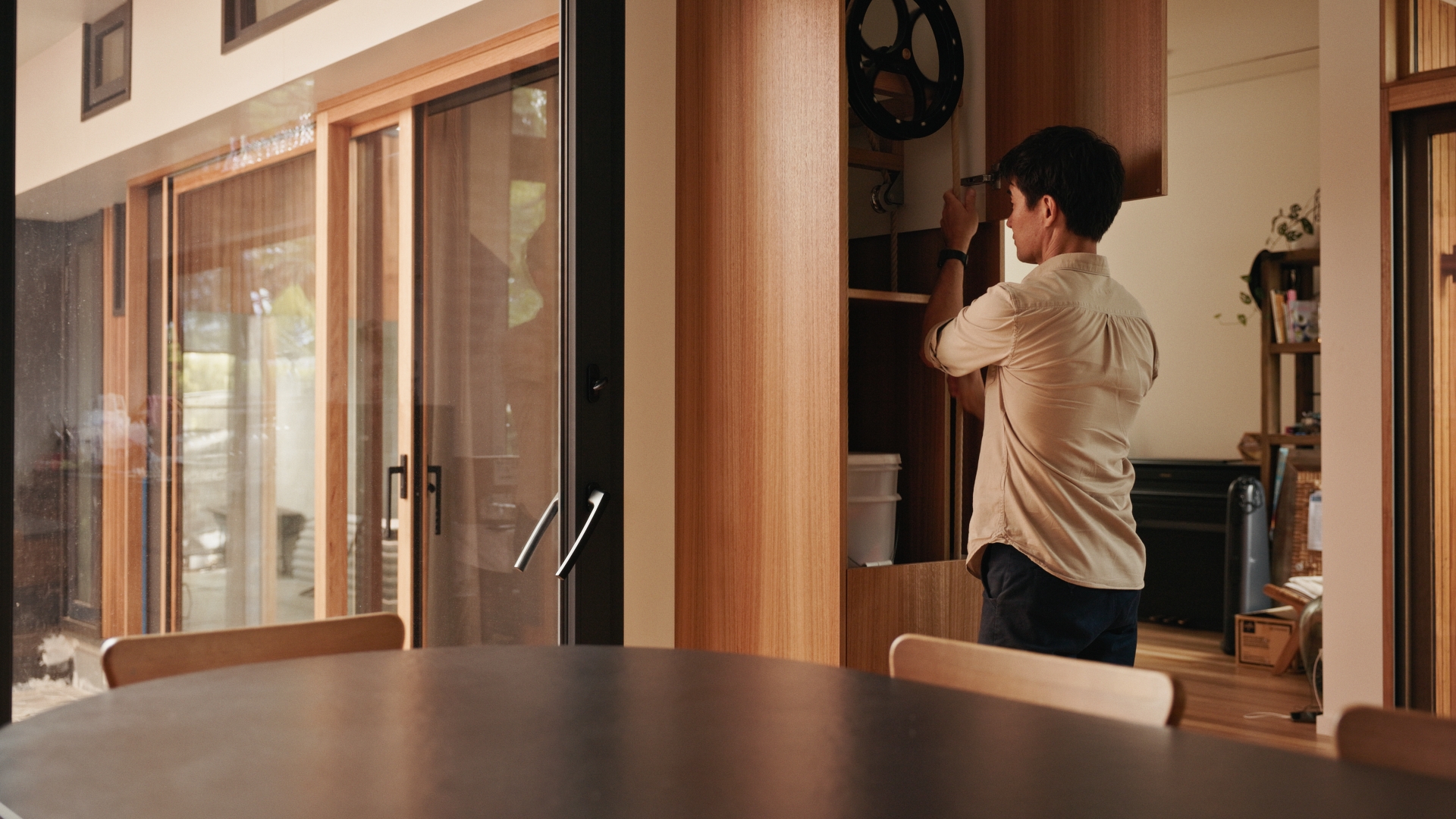
Despite the small site, the project includes concealed rainwater tanks, high-performance glazing, strong insulation and a 7-star energy rating. An extended basement provides valuable storage and overflow space for a growing family, including a manual dumb waiter linking food storage to the kitchen.
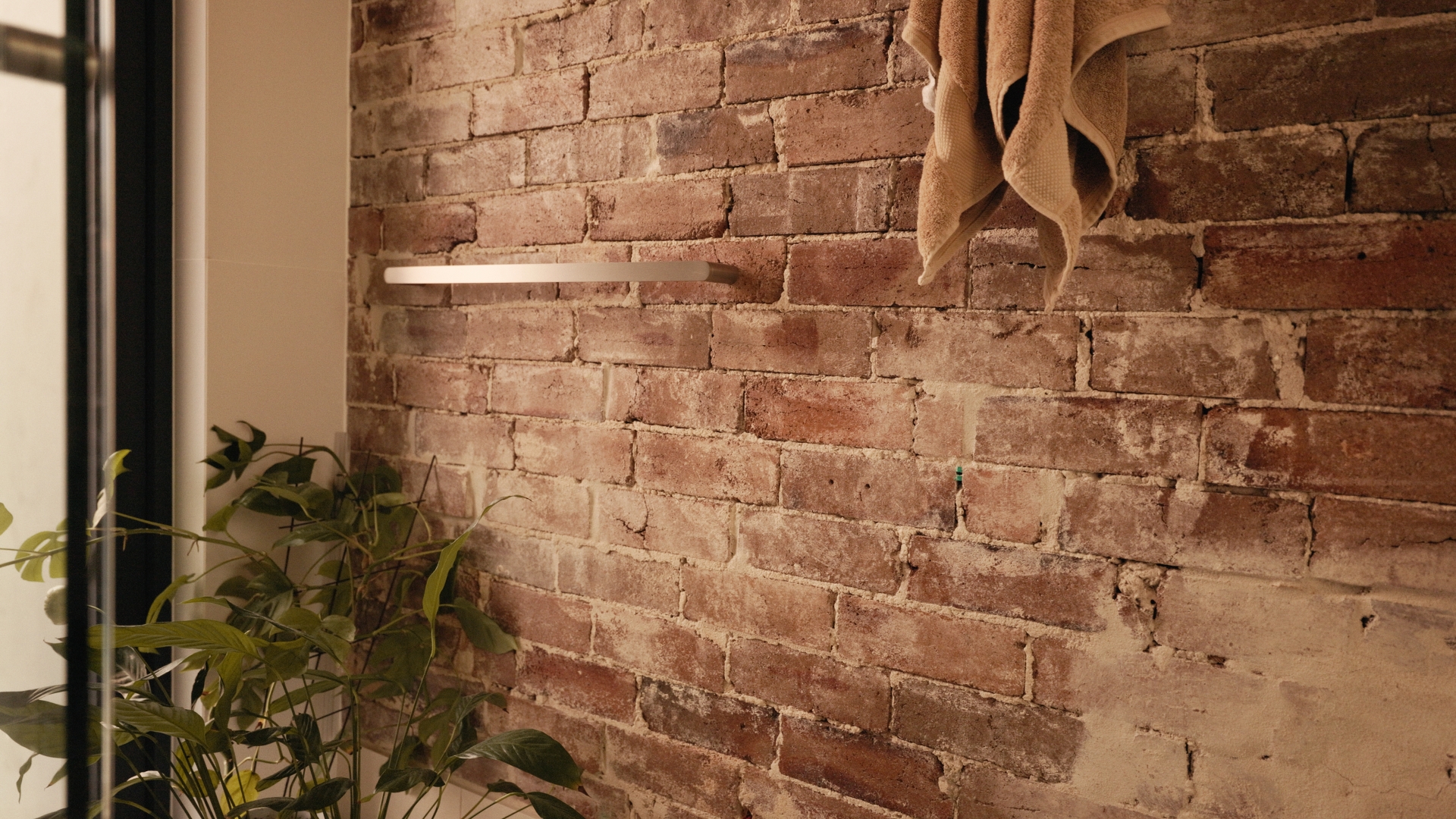
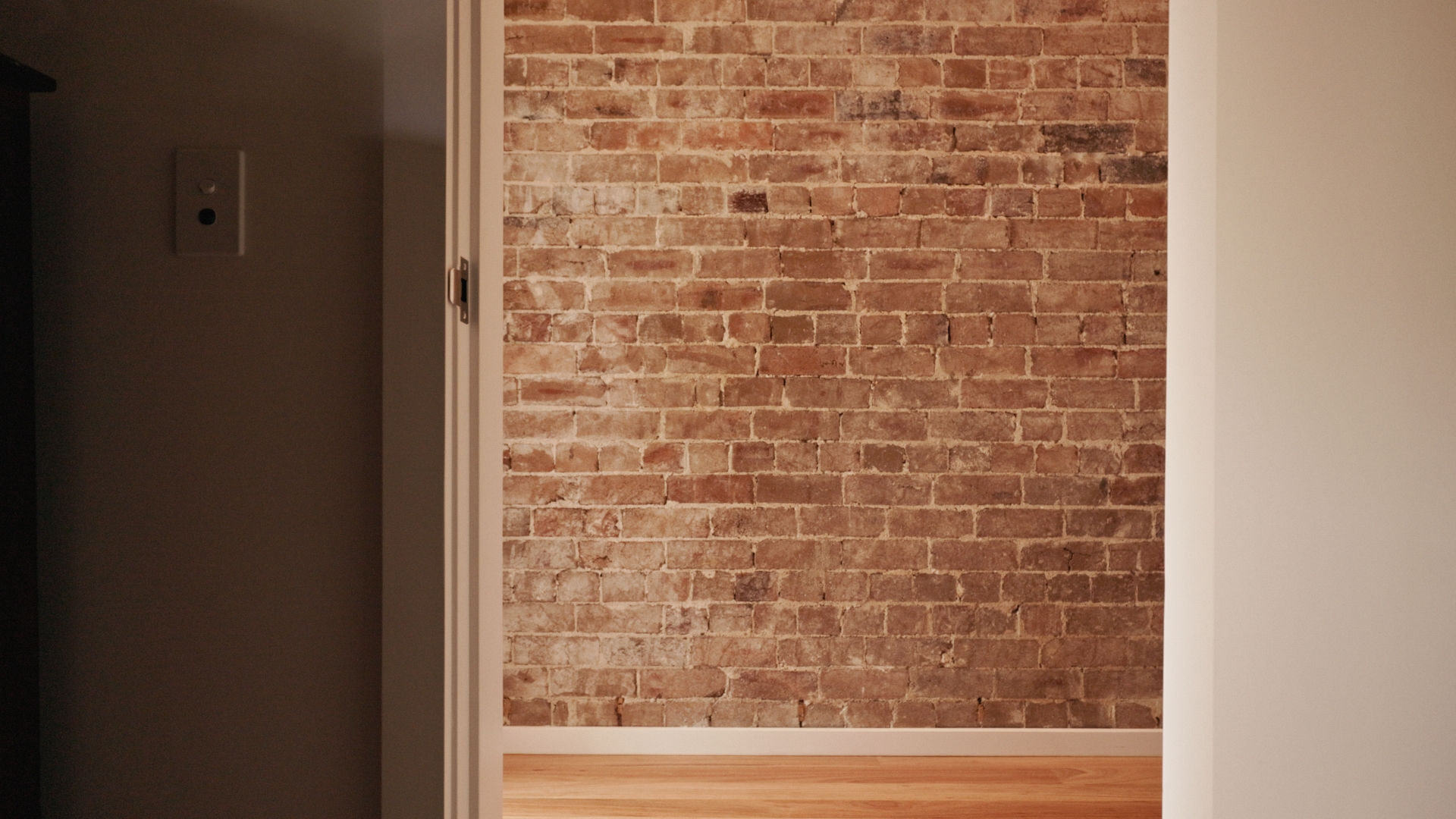
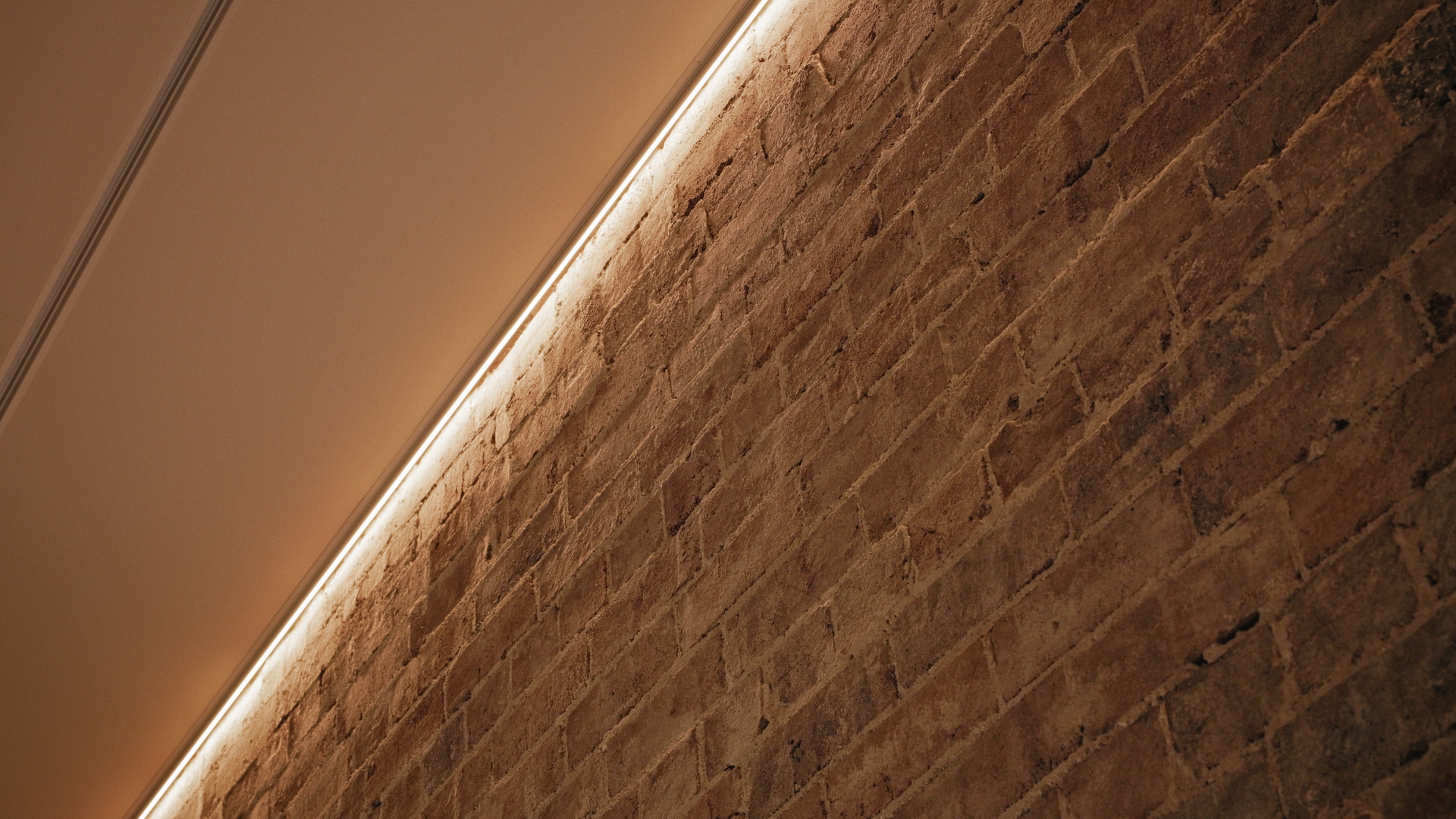
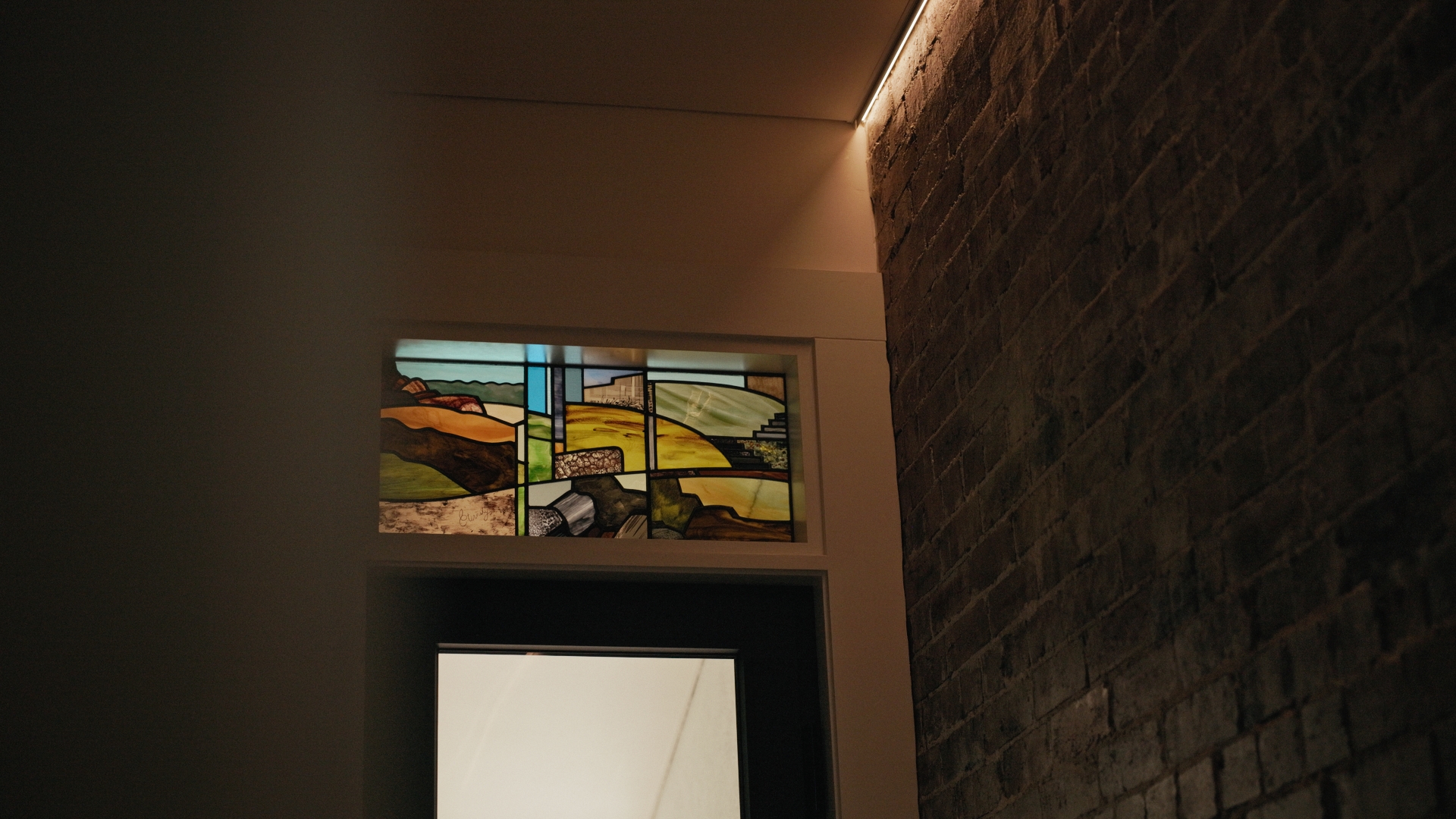
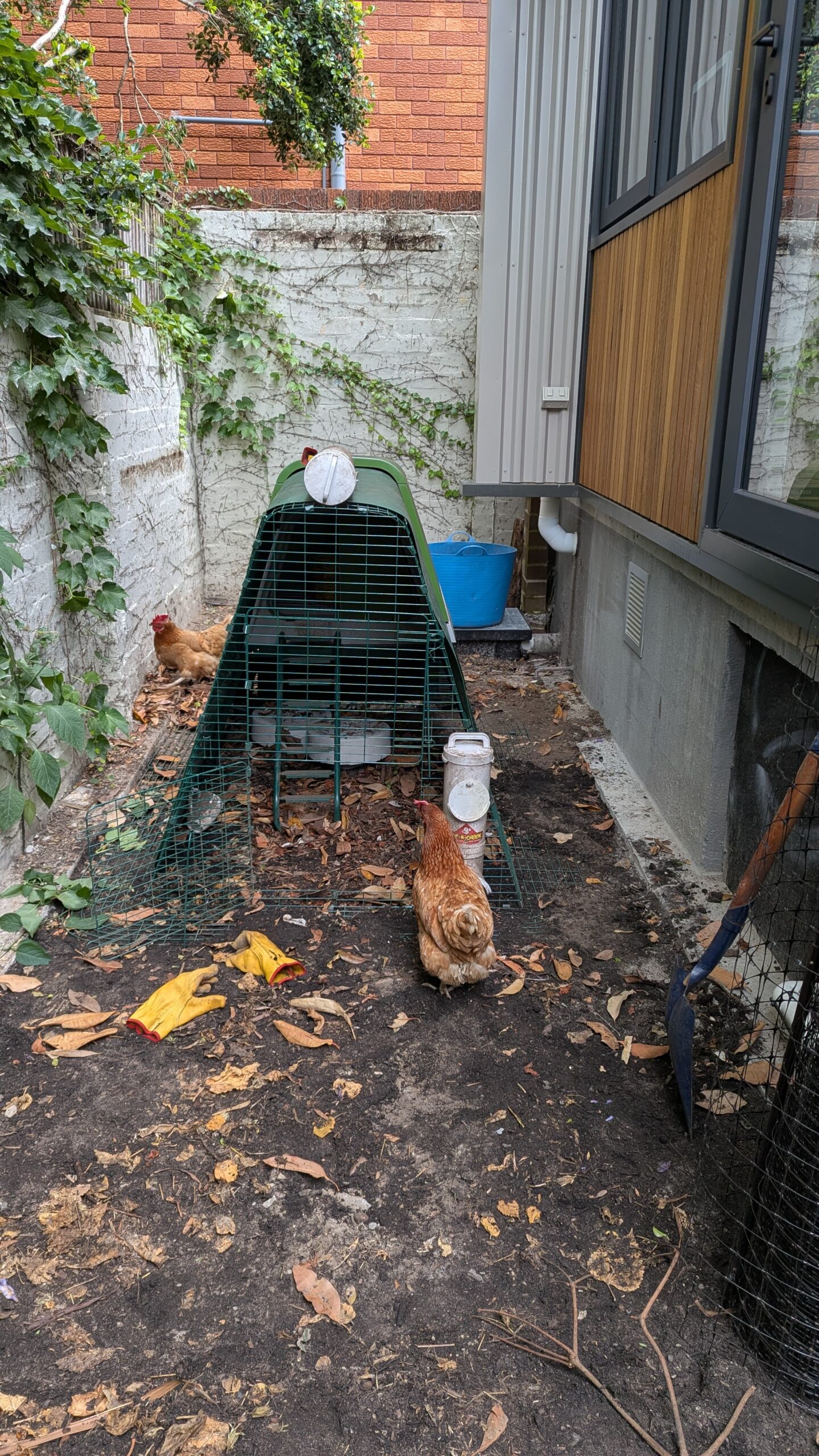
Materials from the demolished rear of the home, including roof tiles, bricks and timbers, were salvaged and are being progressively reused. Original brickwork has been left visible and celebrated. The gardens include endemic natives, local species and edible plants, with room for chooks, a worm farm and composter. The home now captures winter sun, summer breezes and a much stronger connection to site and landscape.
This slideshow captures some of the details of the project, our process, our clients priorities, and how that resulted in a design which is more sustainable than typical homes: https://youtu.be/Lm9uI0rUDXw
Designed by ptma Architecture: www.ptma.au
Peter McArdle and Teresa Wuershing (architecture) with Hayley Witt (interiors)
Movie and stills: Ravens at Odds (Nikolas Strugar)