
Renovated 1950s Timber House

Giabal Country,
Newtown,
QLD
Online home tour

About this home

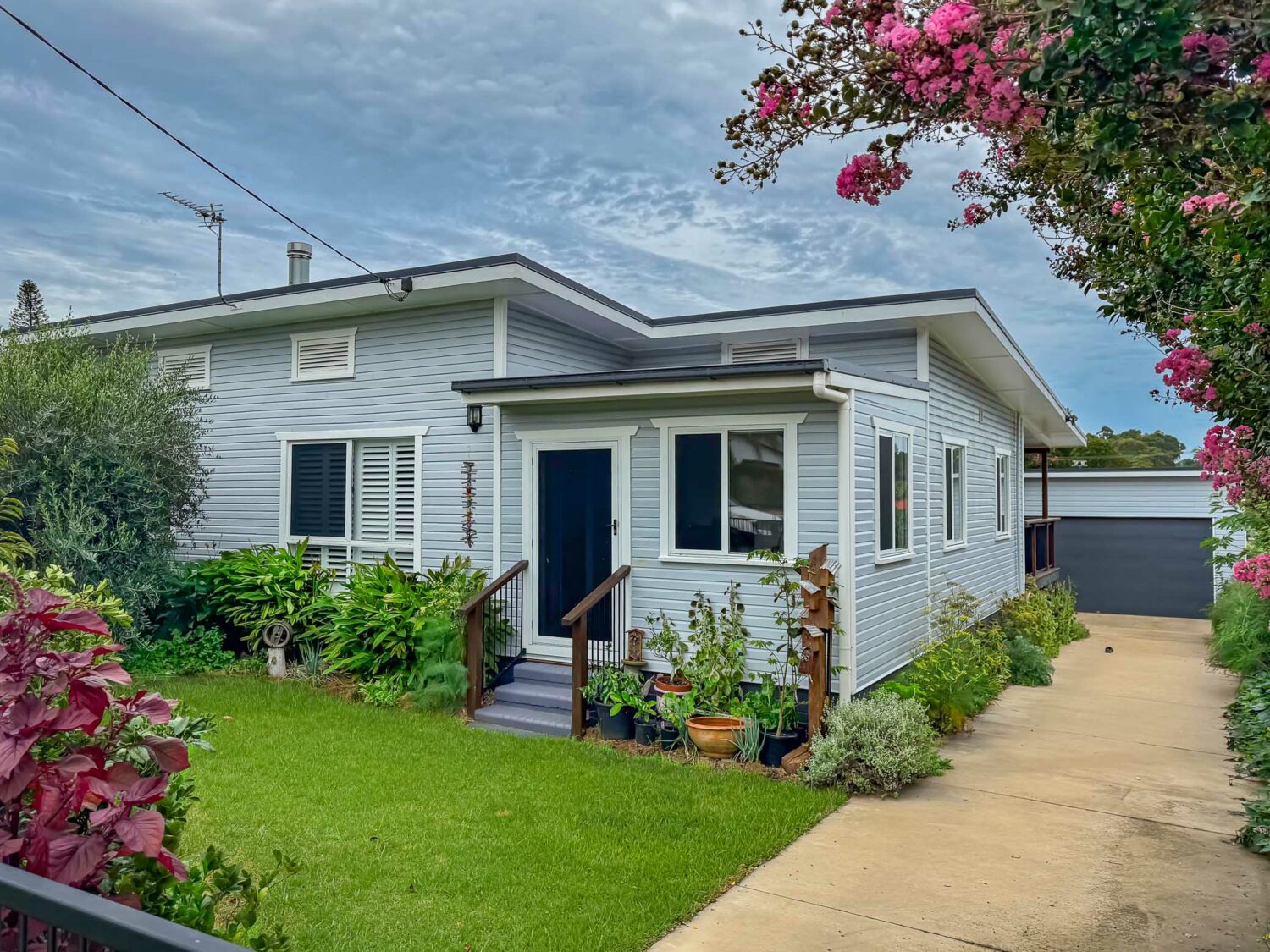
This timber frame house was built in the late 1950s, and one family lived in it until we purchased it almost 10 years ago. A timber house captures carbon emissions, with the carbon that was captured by the living tree not released until the house burns down or rots.

We pulled out the interior wall coverings which were in poor condition and insulated in all the interior and exterior wall frames and the ceiling (under the floor is a bricked in air cavity) – the insulation makes the house so comfortable year round and so energy efficient. The insulation is a key sustainability feature of the house though impossible to show in photos.

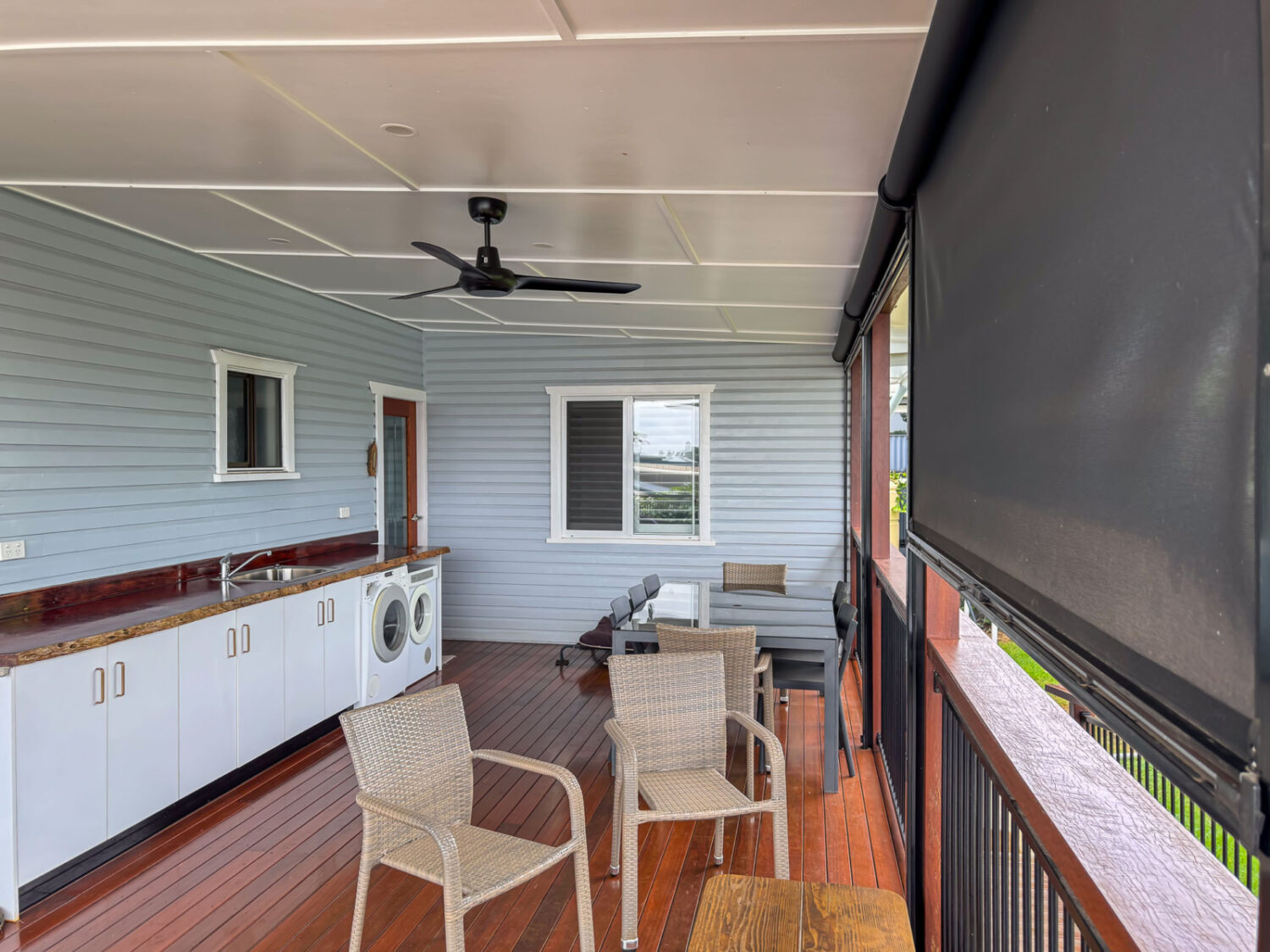
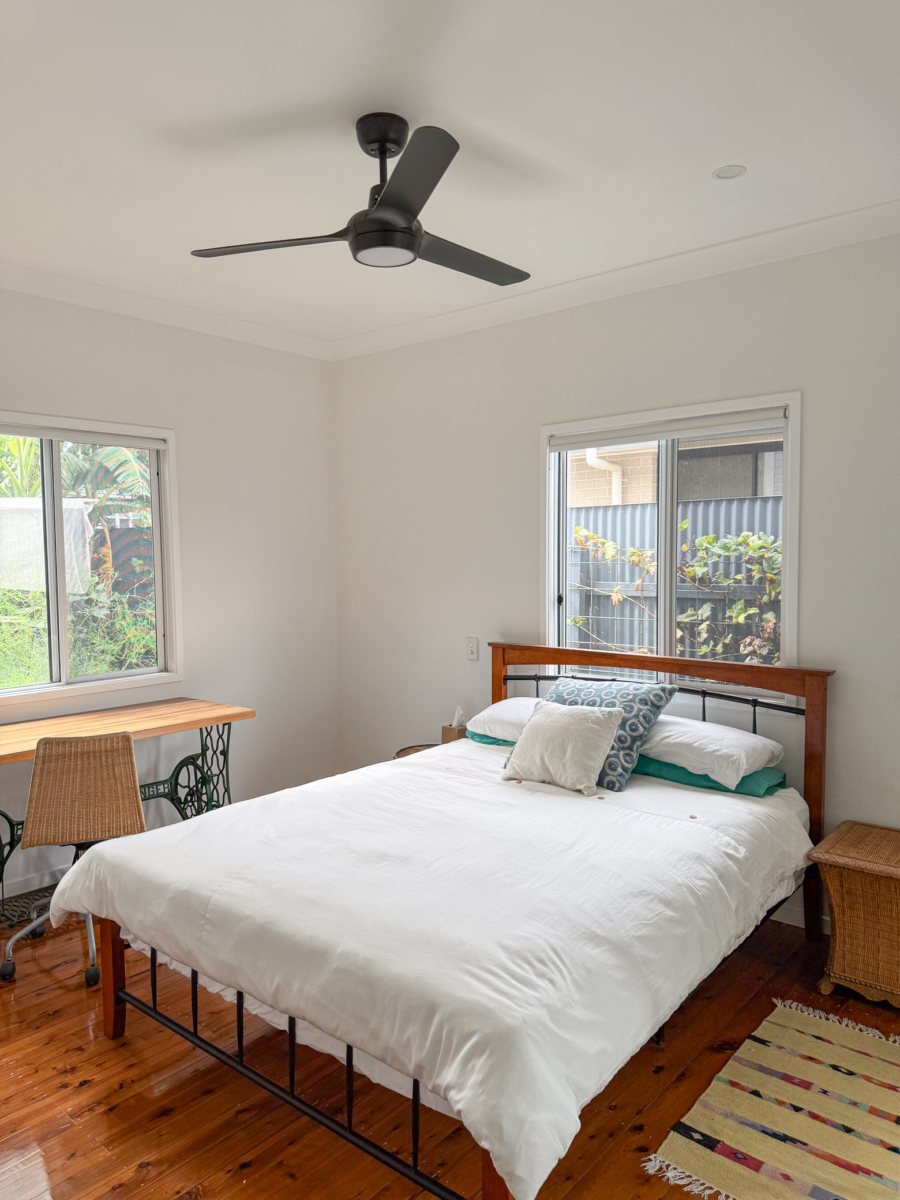
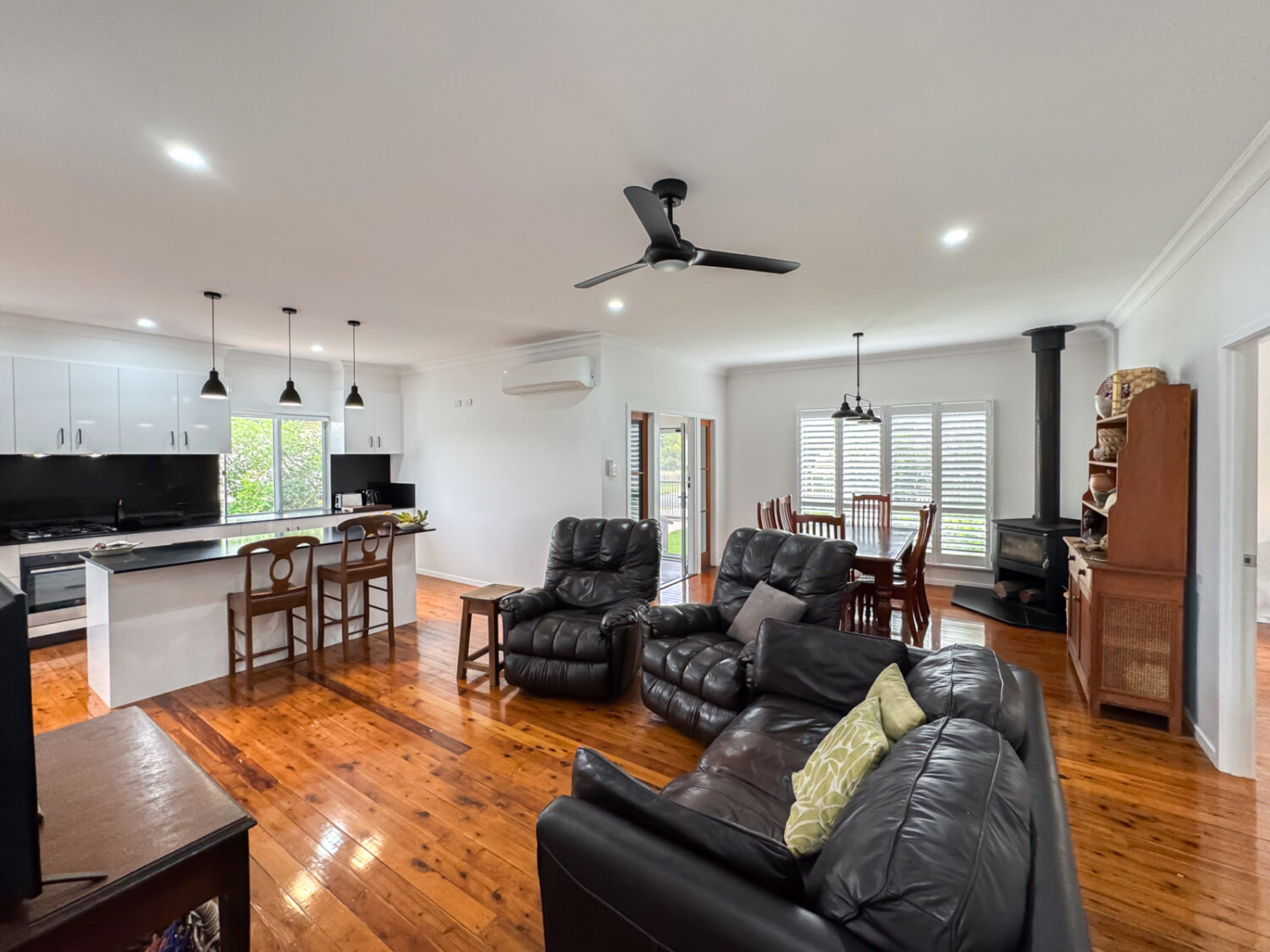
Though we installed a heat pump air conditioner/heater we never use it because the insulation keeps the house so comfortable. We just use fans during heatwaves, and in winter, we use a carbon neutral wood fireplace to heat the home.

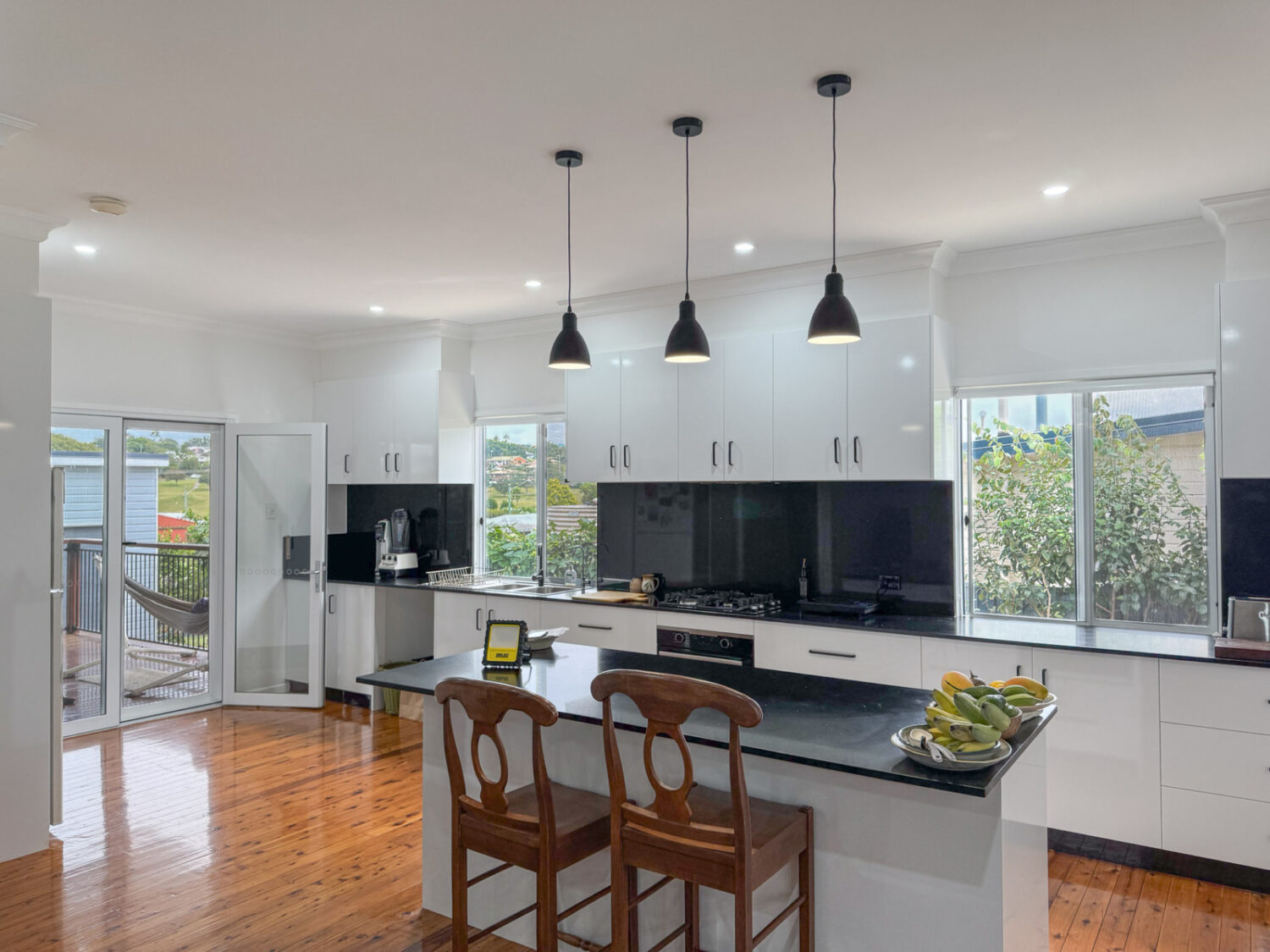
Unfortunately at the time we renovated we weren't aware how terrible gas is for the climate and we installed a gas hot water heater and a gas cooktop.

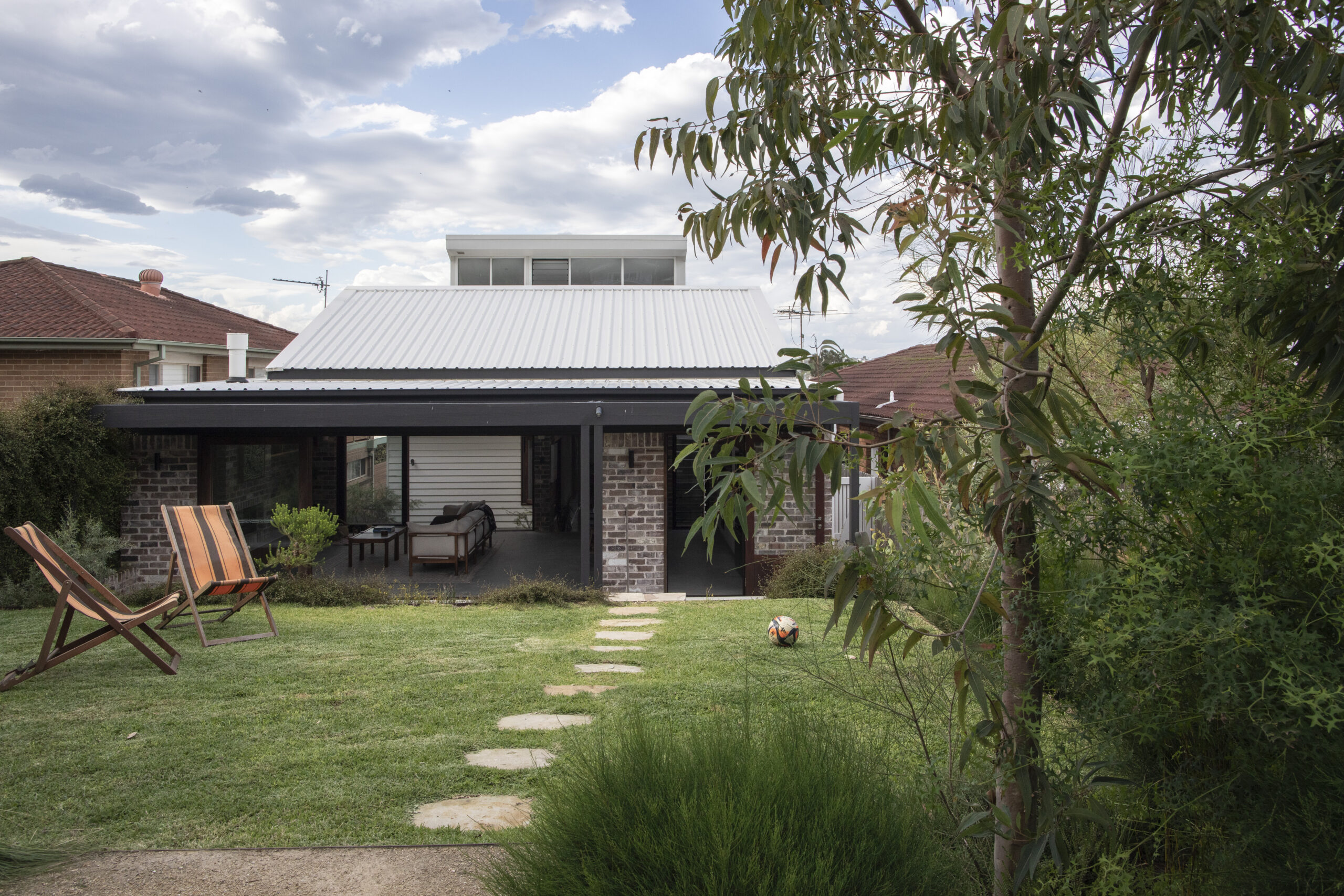
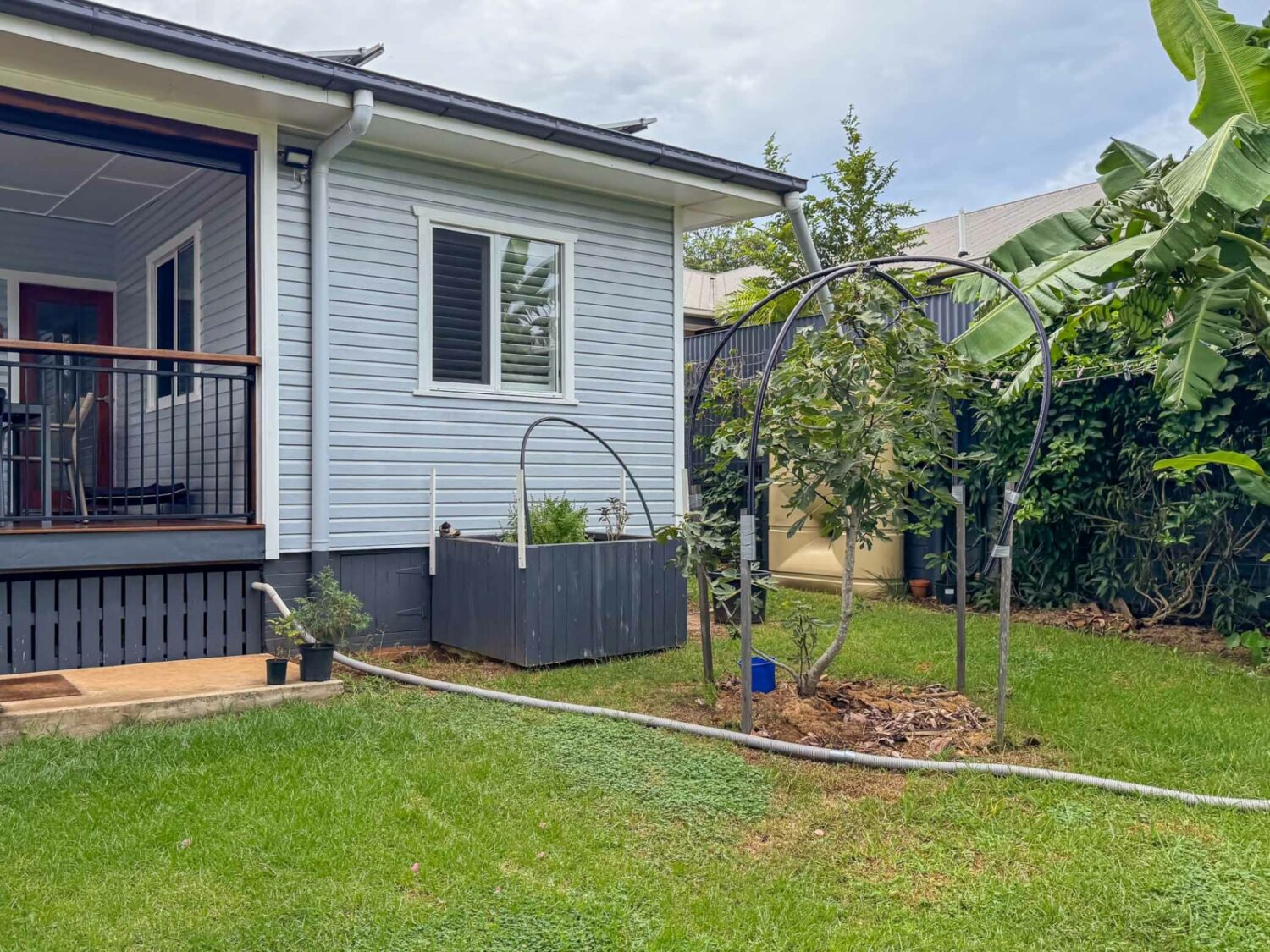
We use the house’s greywater on the garden (which is 100% edible), collect rainwater for drinking, compost our compostable waste, and use trees to cool in summer and allow in warmth in winter - for example, we planted a deciduous fig tree to shade a western-facing bedroom. The transpiration and shade of the many trees we have planted help us cope with heatwaves, and we’ve planted perennial species that are suited to low-rainfall conditions.
Q & A

What motivated you to build or retrofit sustainably?
It makes sense to - it saves on electricity use and bills and it is critical that we all slash our emissions
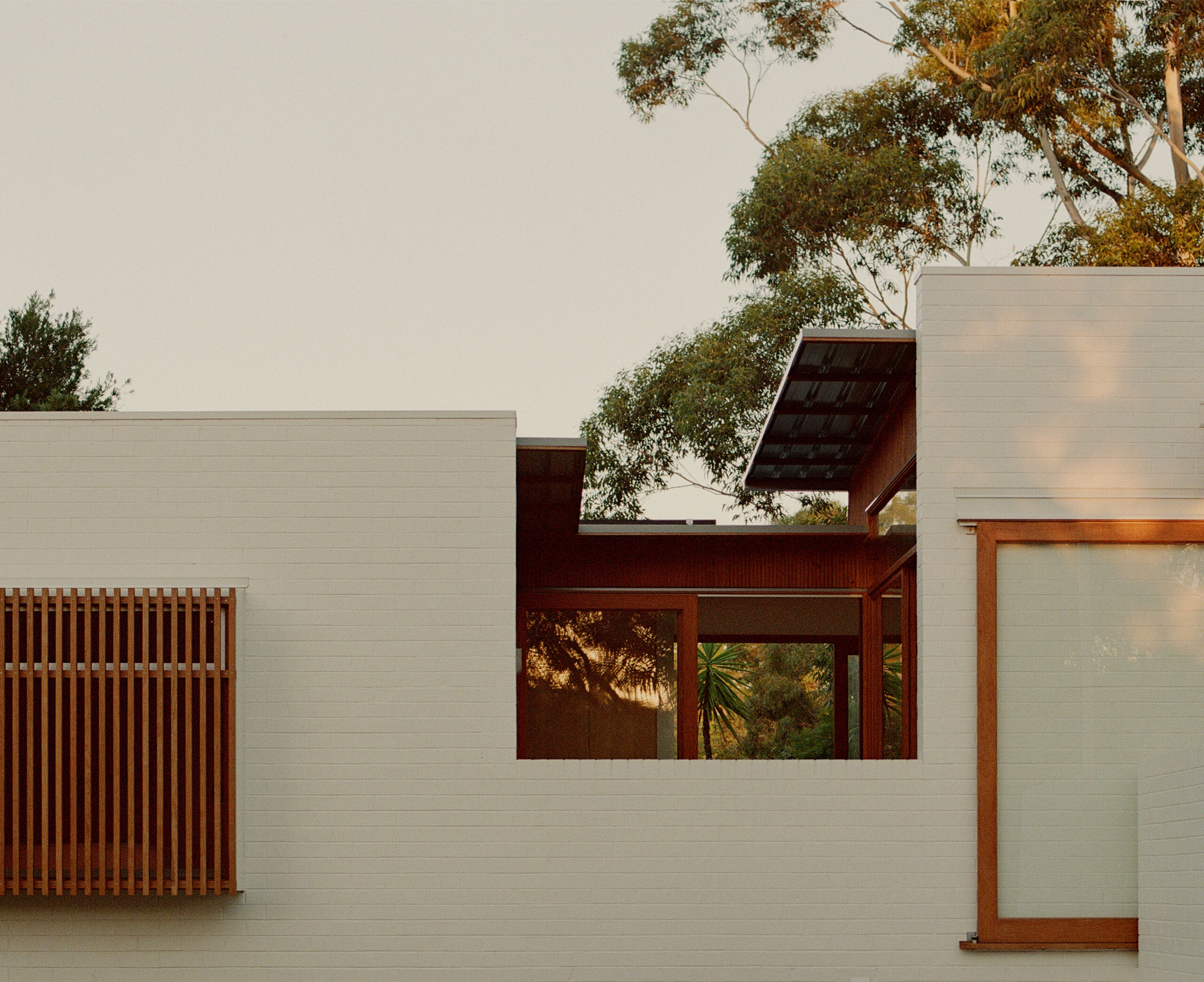
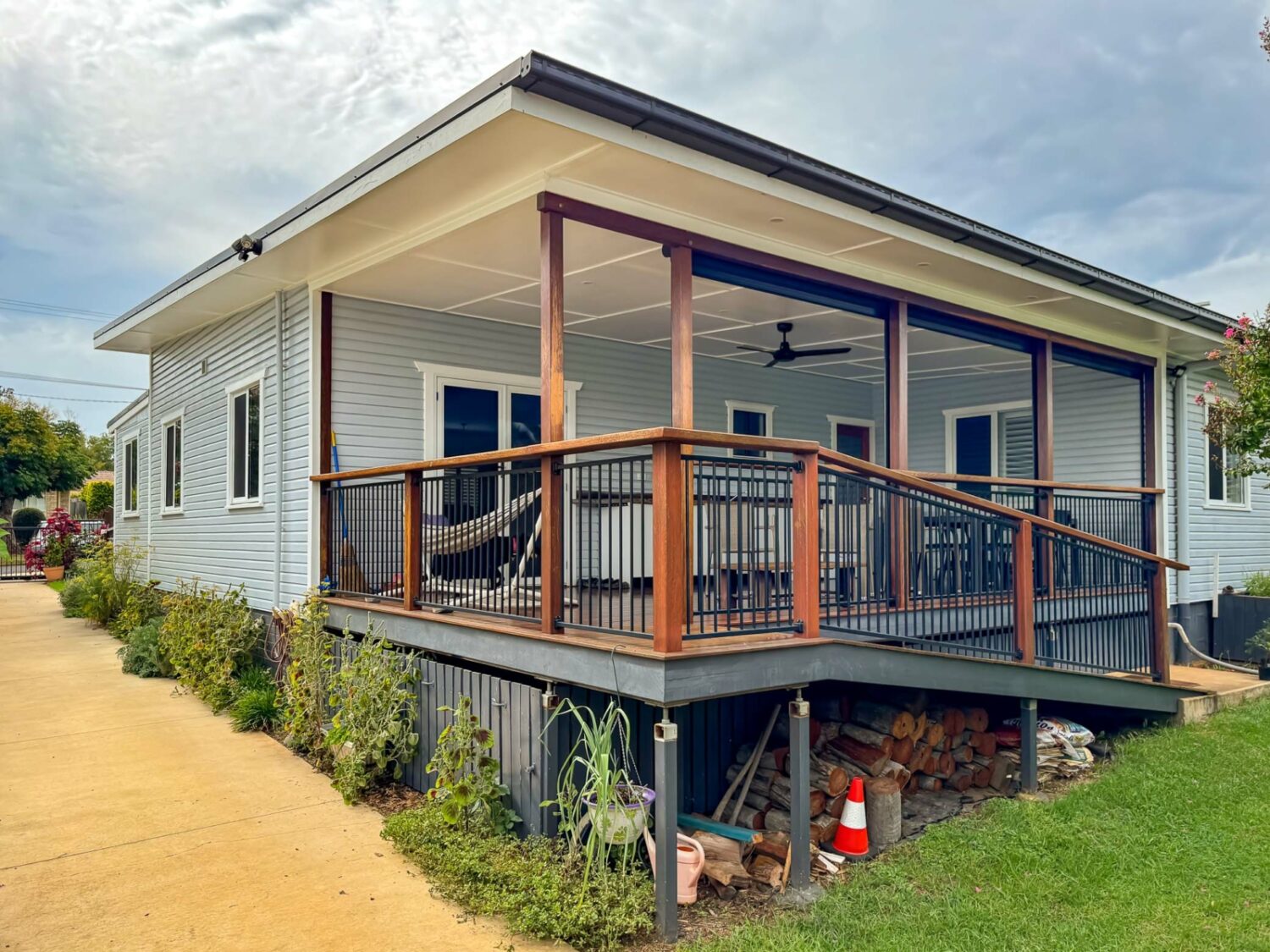
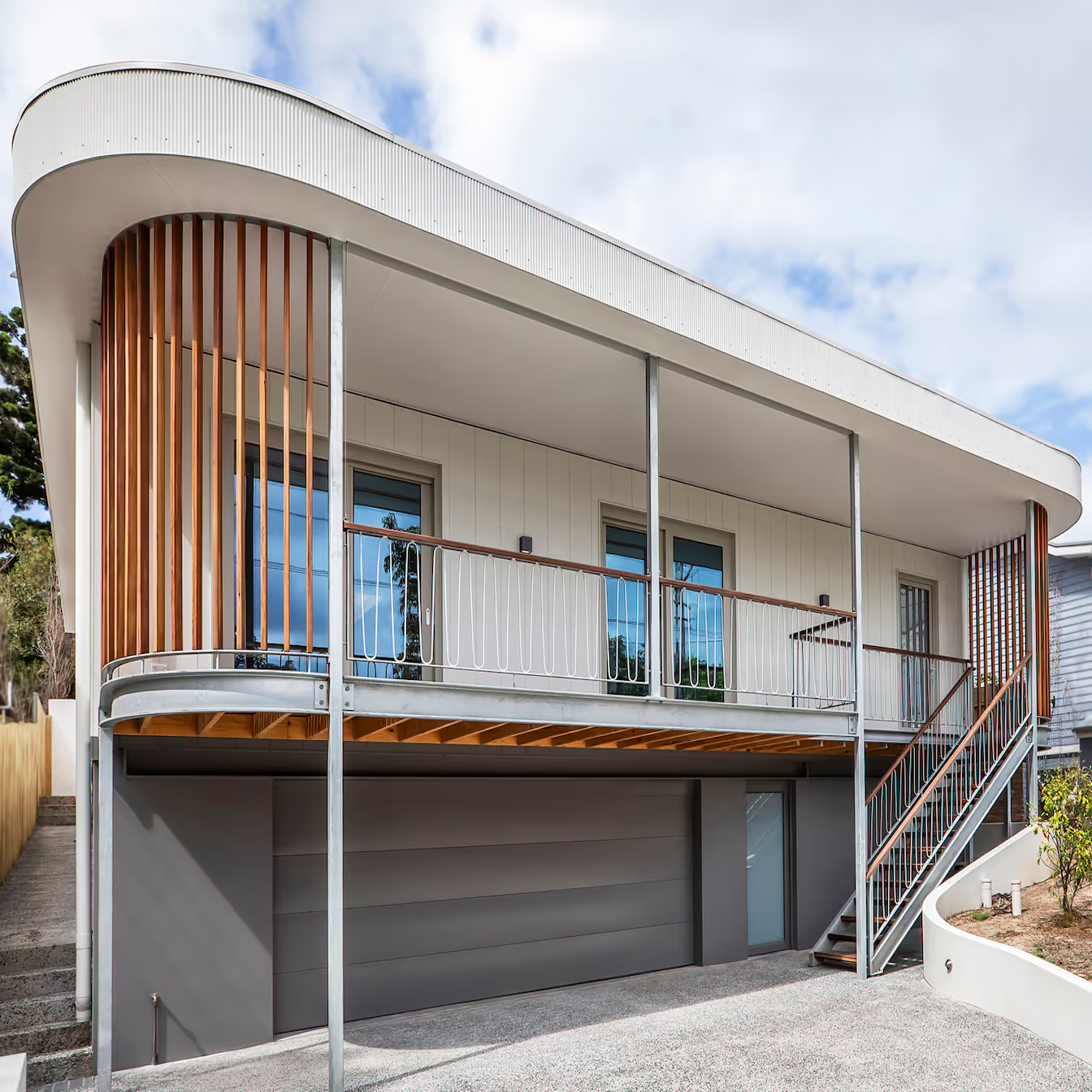
Insulation made a huge difference. Our house is quiet (doesn't reflect noise even though we have almost all hard surfaces, such as no carpet) and it is always a more pleasant temperature inside than outside. Something we didn't have a say in but is so important is passive design - the sun doesn't enter our house in the summer to heat it up, but it does enter in winter. This is due to the depth of the roof overhang. What is missing though is something like a concrete or stone floor that the sun can heat up in winter which would store up that heat and radiate it at night.
I wish we'd known how terrible gas is for the climate and renovated to make the house all electric. I ended up buying a countertop induction cooktop to use instead of the gas stove.I wish we'd known how incredibly efficient heat pumps are. They use one unit of electricity to deliver four units of heat (unlike every other form of heater which provides less than one unit of heating) because they use that one unit to draw heat out of the atmosphere.
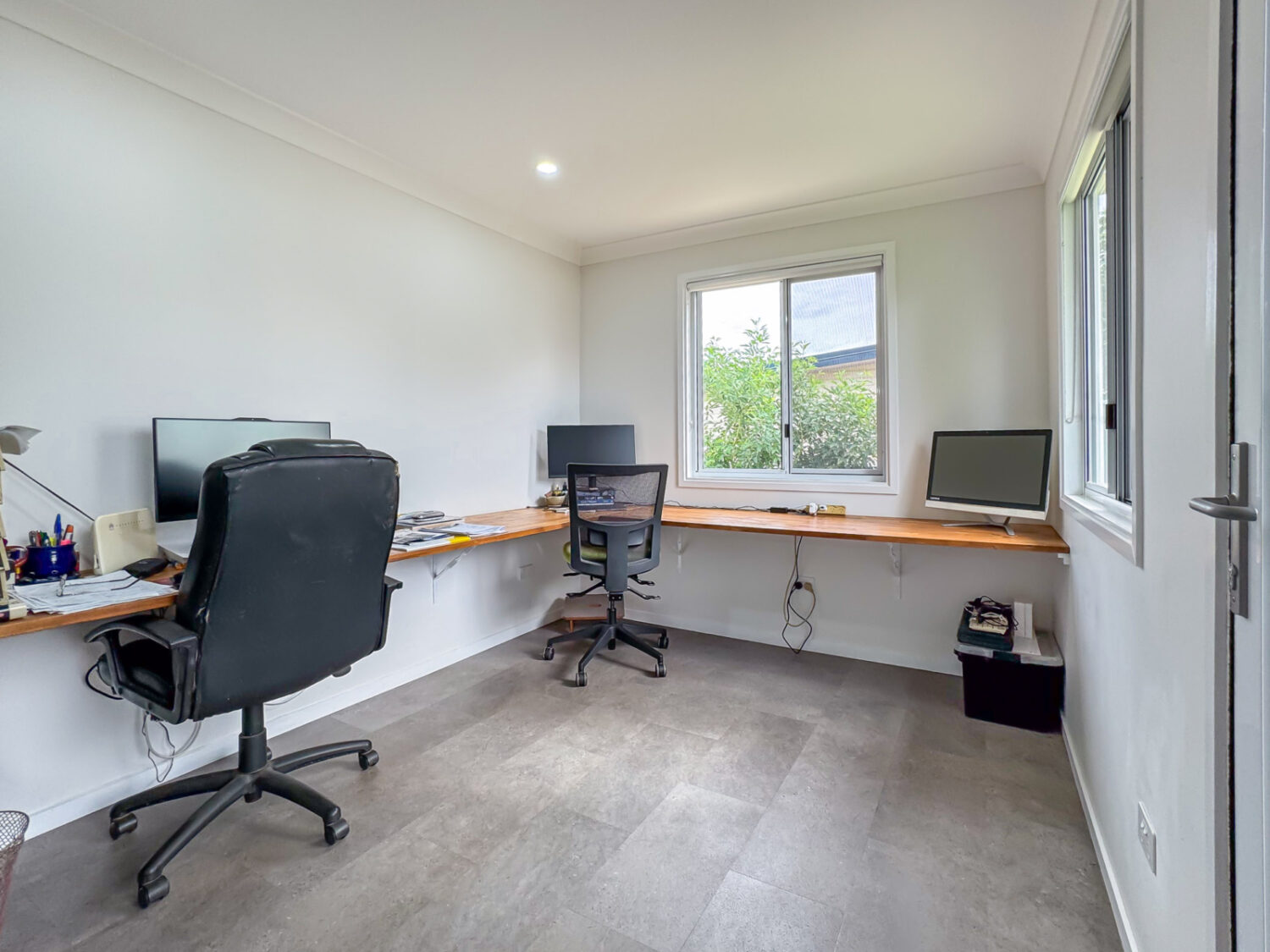
We did everything we wanted to. To make the house more flexible, one door could be added which would transform the back bedroom, bathroom and hall into a separate studio apartment with separate entrance. This could be used for a teen or grandparent retreat, or for a long-term tenant or to rent out for short term holiday rental to earn income (or to live in while the front is rented out).
Type: Standalone house/townhouse
Project: Renovation or extension
Size: 170m²
Bedrooms: 3
Bathrooms: 2

Sustainability Features

Building Materials & Envelope

High-performance insulation
Sustainable or low-impact materials

Heating, Cooling and Ventilation

Passive heating/cooling (north-facing glazing, cross ventilation, thermal mass, shading, etc.)
Ceiling fans
Heat pump (reverse-cycle) heating/cooling

Energy and Appliances

Rooftop solar PV
Efficient lighting (LED, daylighting, solar skylights)

Water & Waste Systems

Water-efficient fixtures
Rainwater tanks
Greywater system

Landscape & Biodiversity

Edible garden
Beehives
Wildlife-supporting habitat

Climate Resilience

Heatwave

Accessible & Flexible Design Features

Share this home:

Related Homes

Home tours delivered to your inbox

Step inside sustainable homes across Australia and get practical ideas you can use in your own