
Pocket Passiv

Gadigal,
Glebe,
NSW
Online home tour

About this home

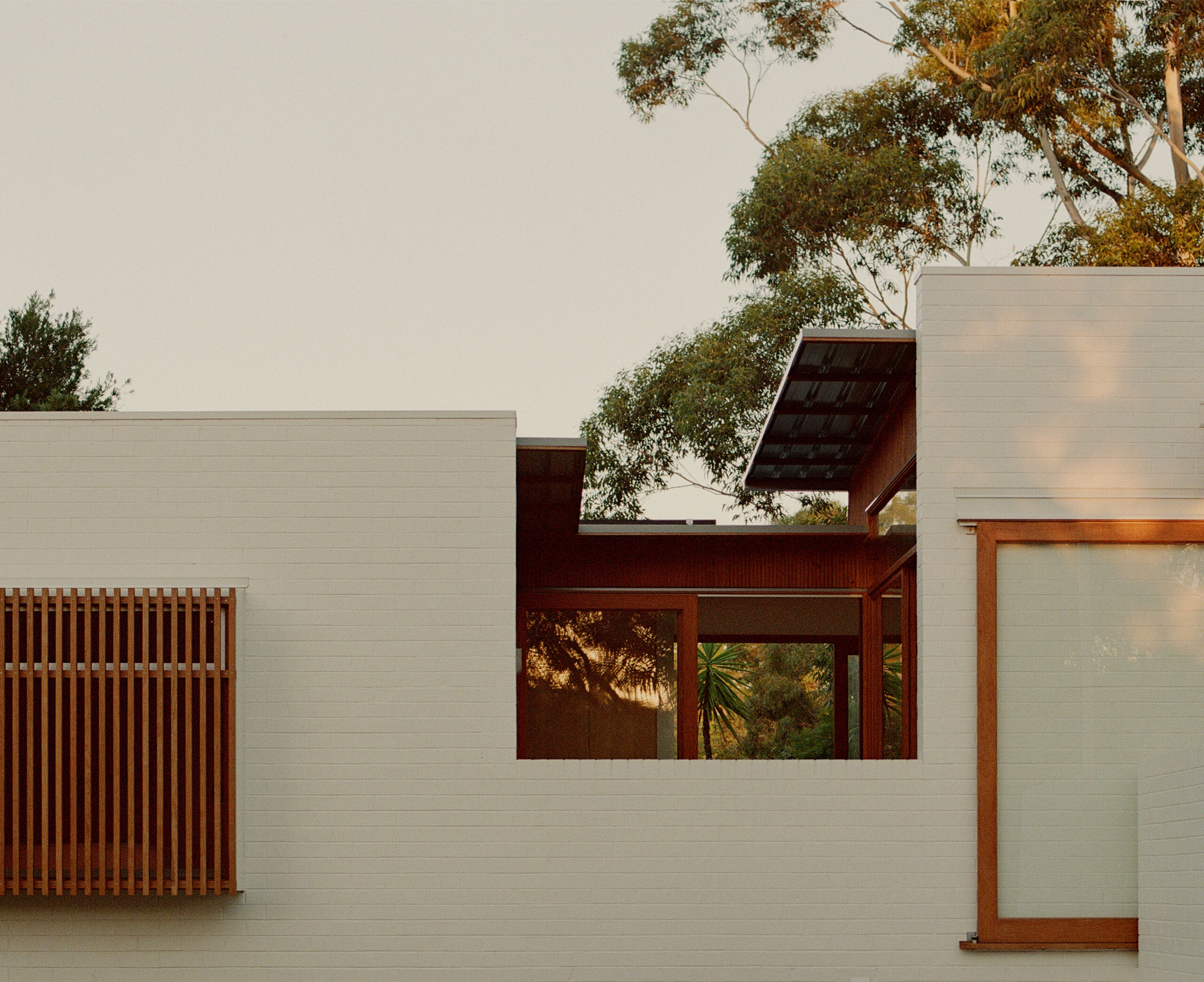
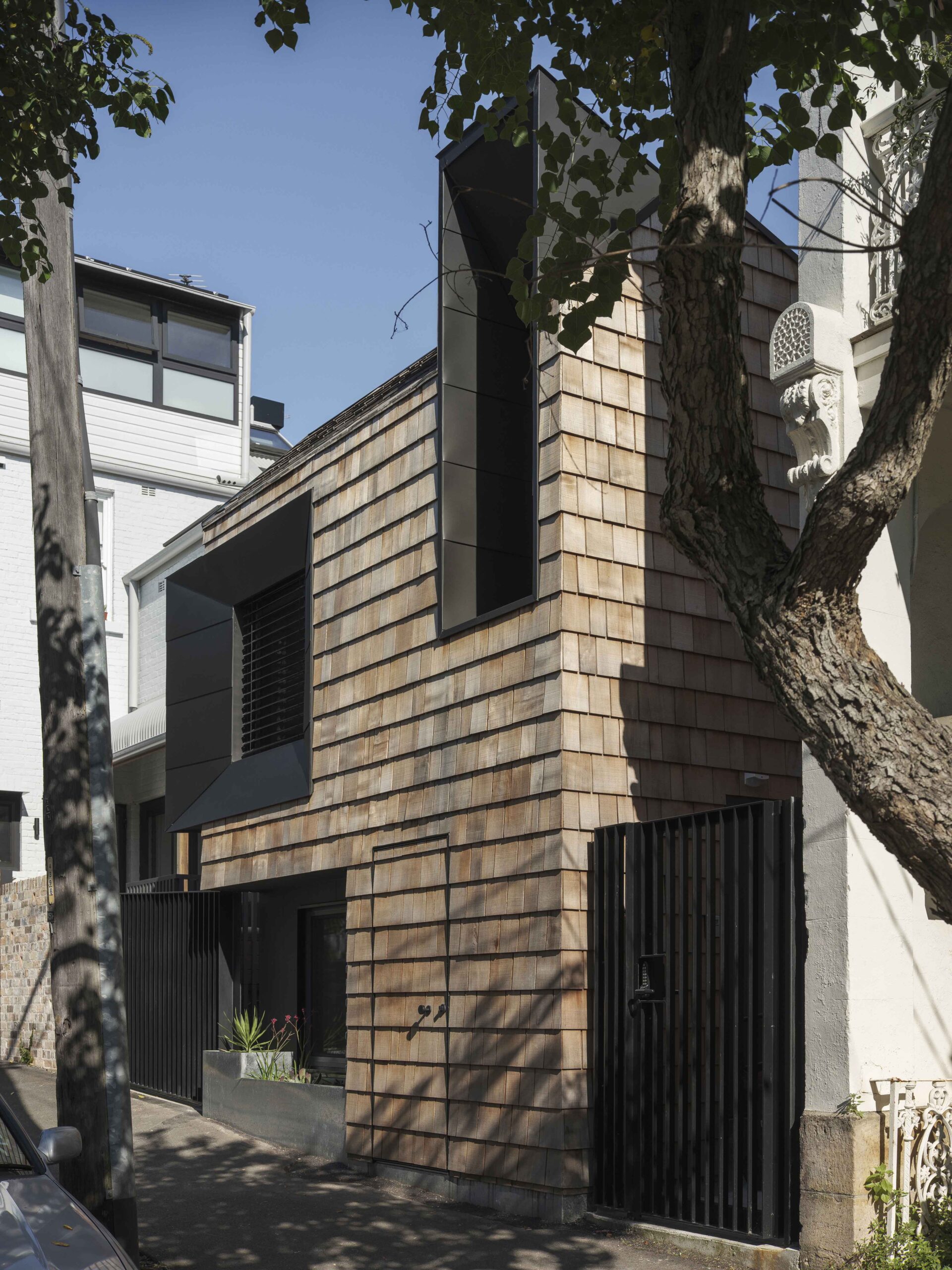
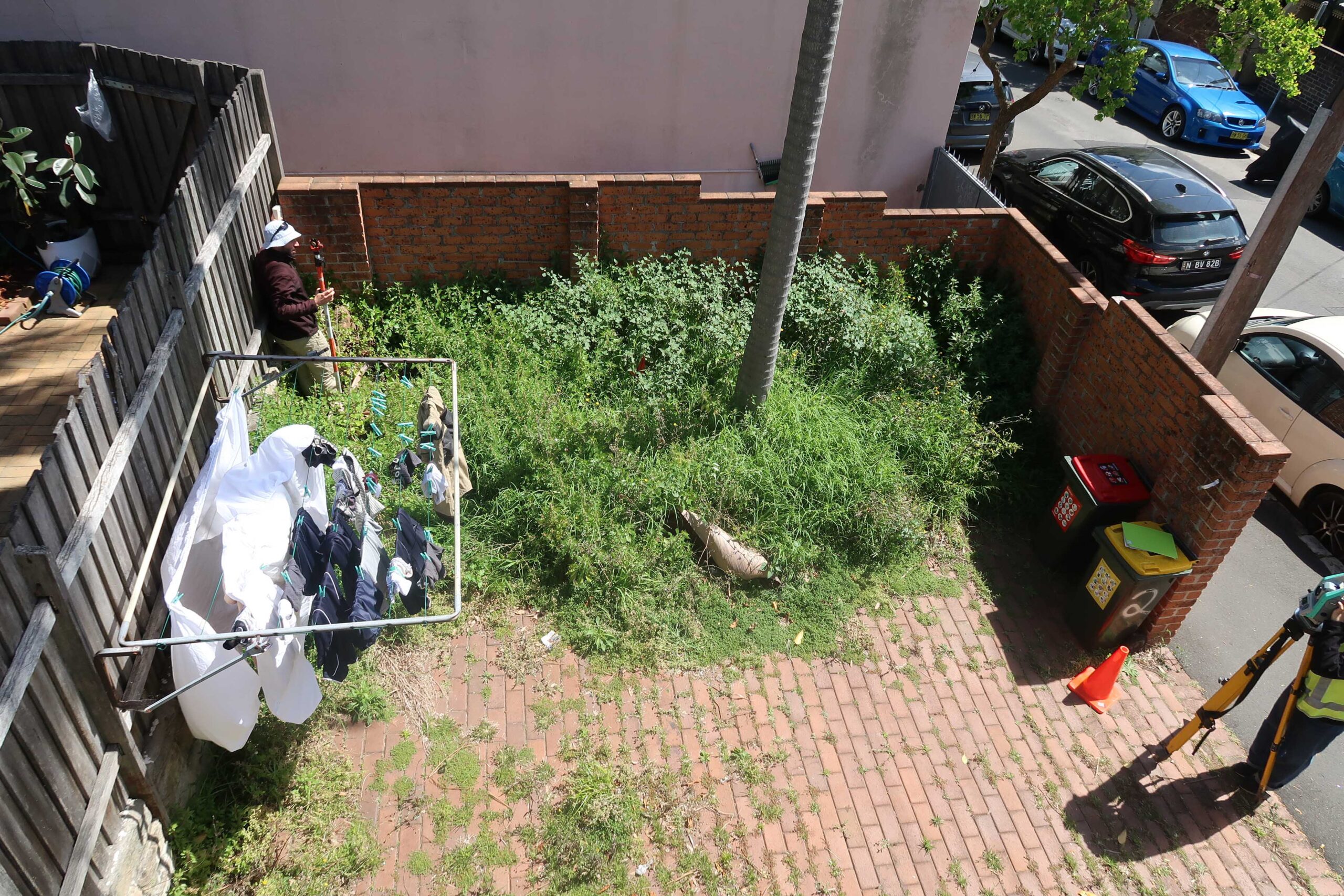
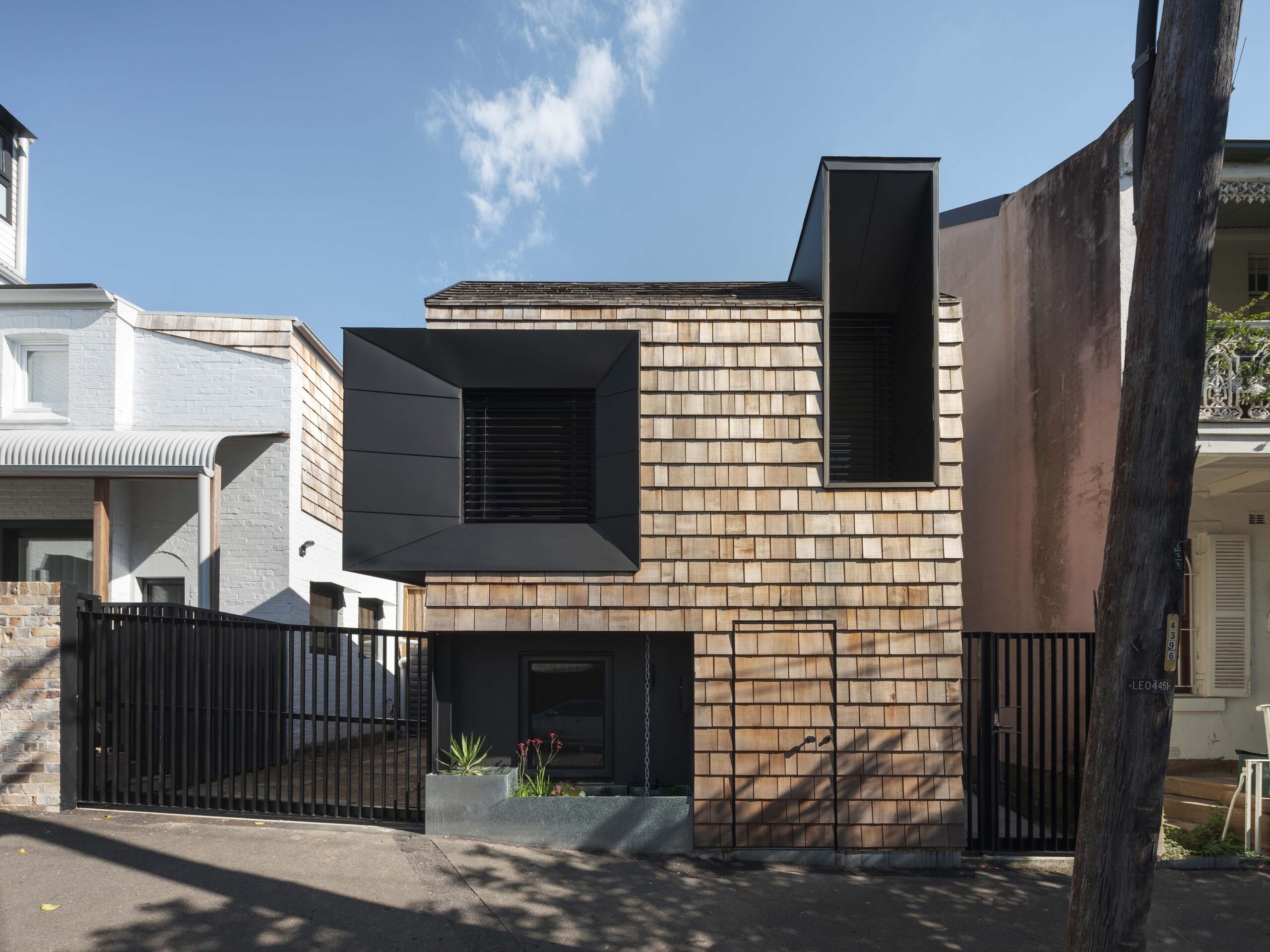
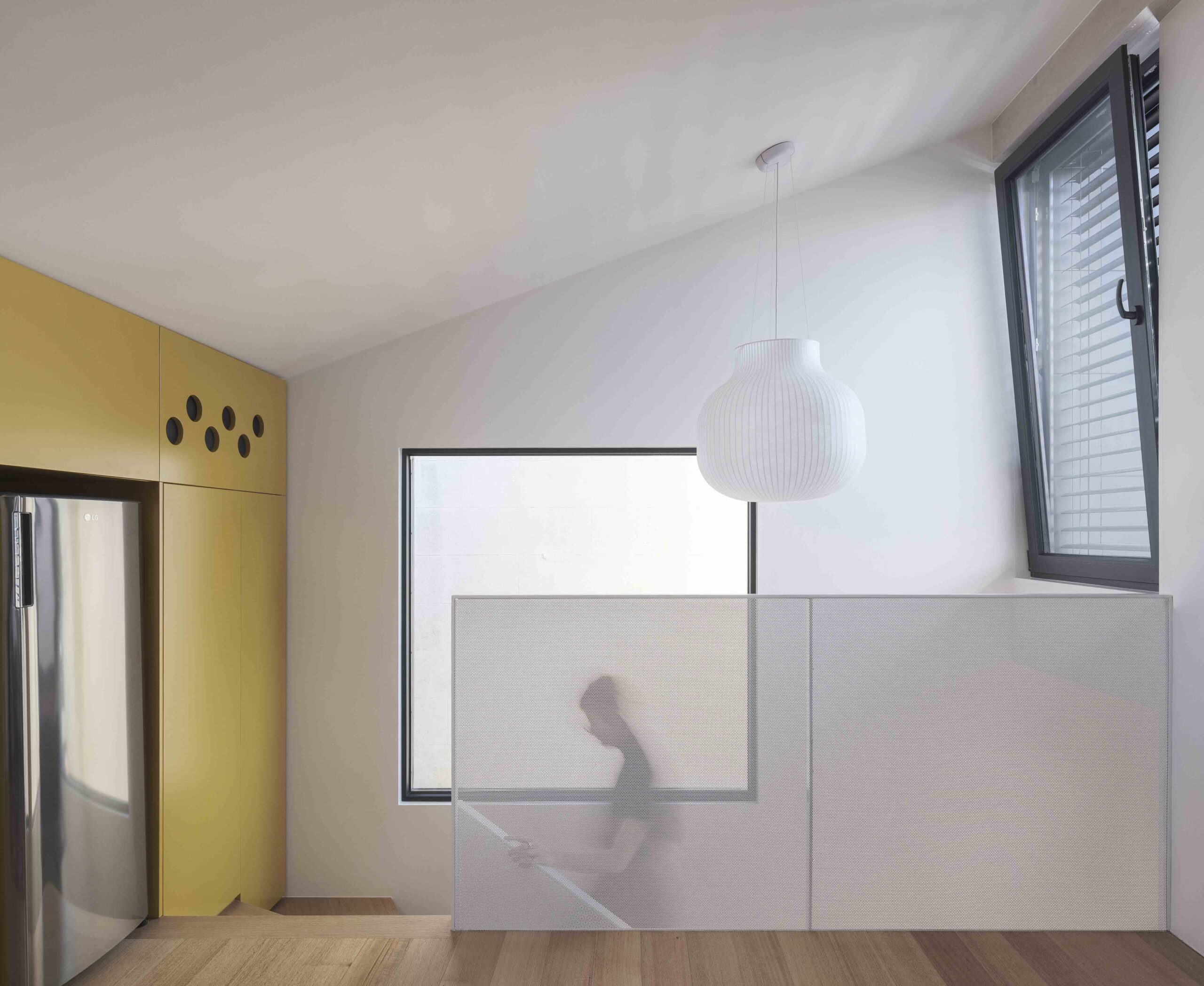
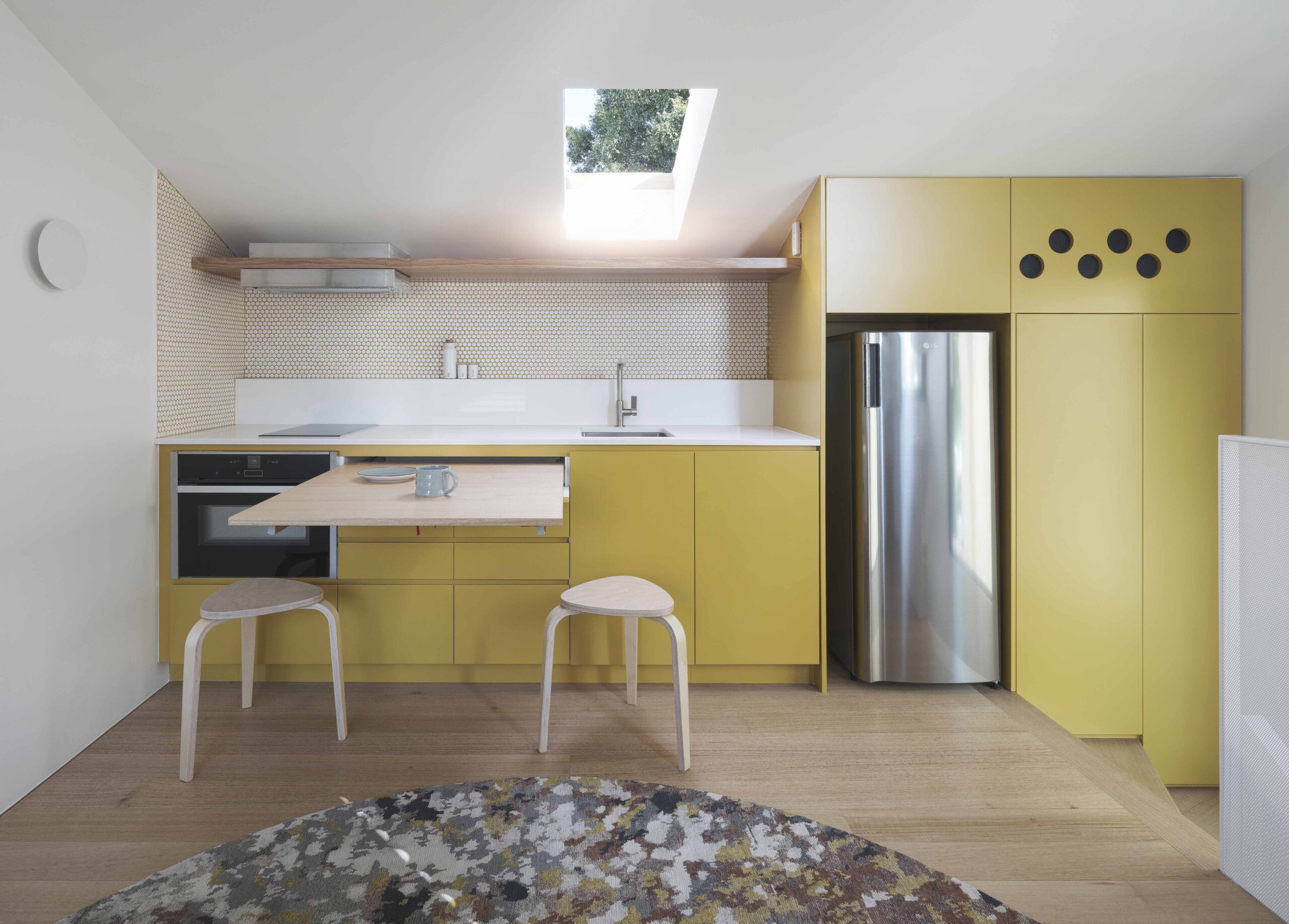
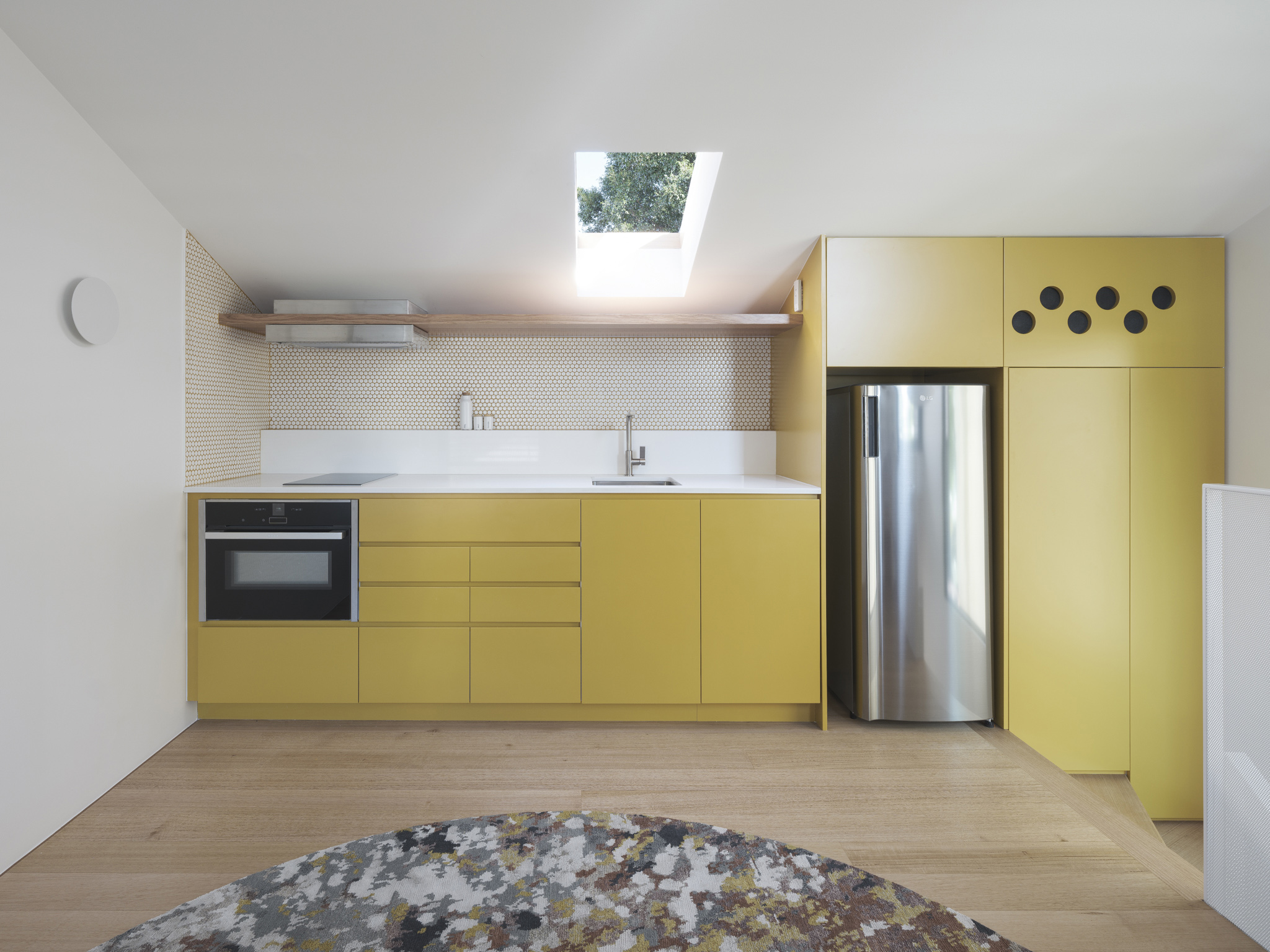
Pocket Passiv is a small infill residential studio occupying the unused space of a spatially constrained inner-city terrace house corner block. The project achieves ambitious levels of amenity for its residents all whilst occupying the ‘pocket-sized’ footprint of 27sqm, along with Passivhaus certification making the home incredibly energy efficient and Australia's smallest Passivhaus.

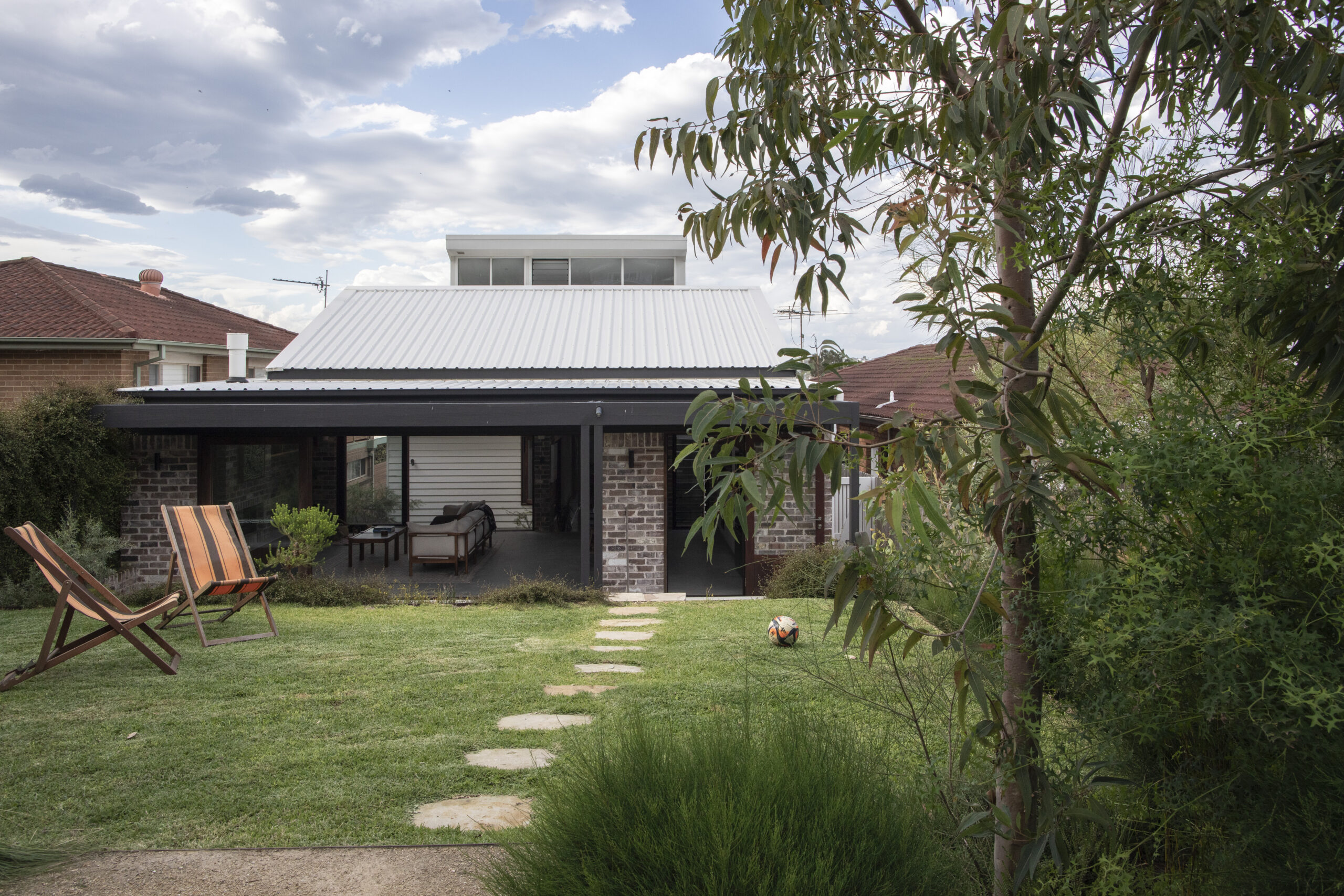
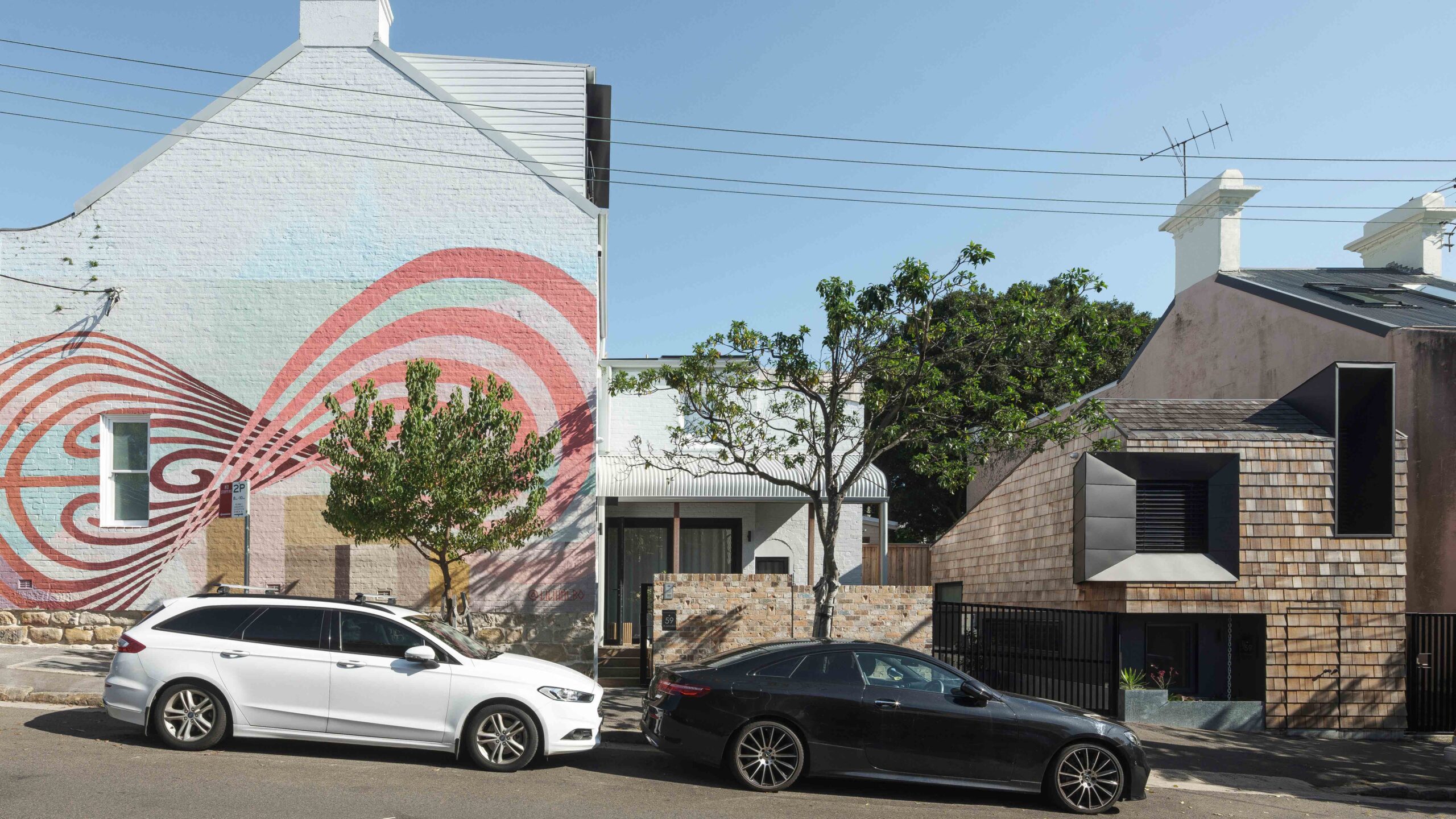
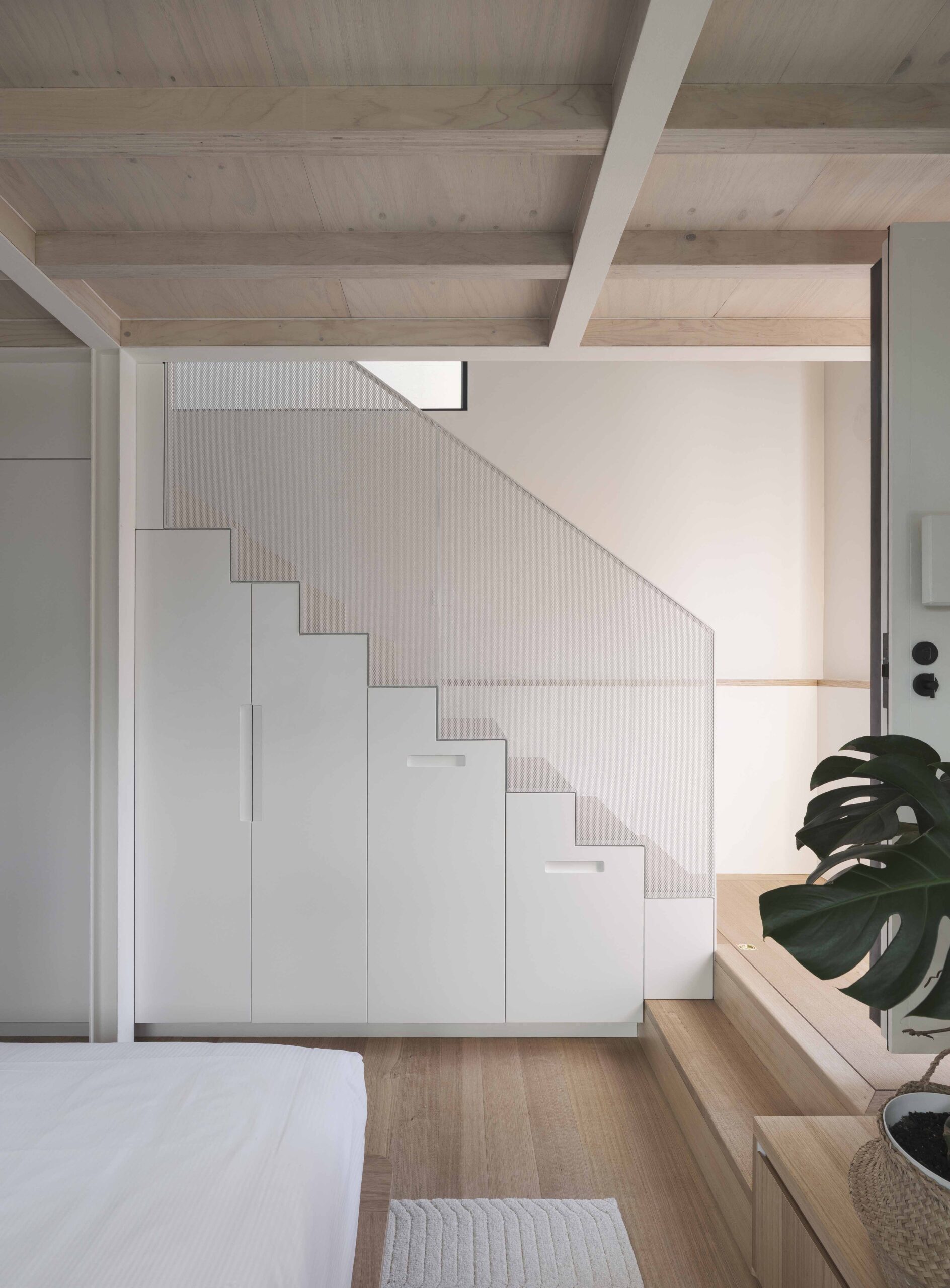
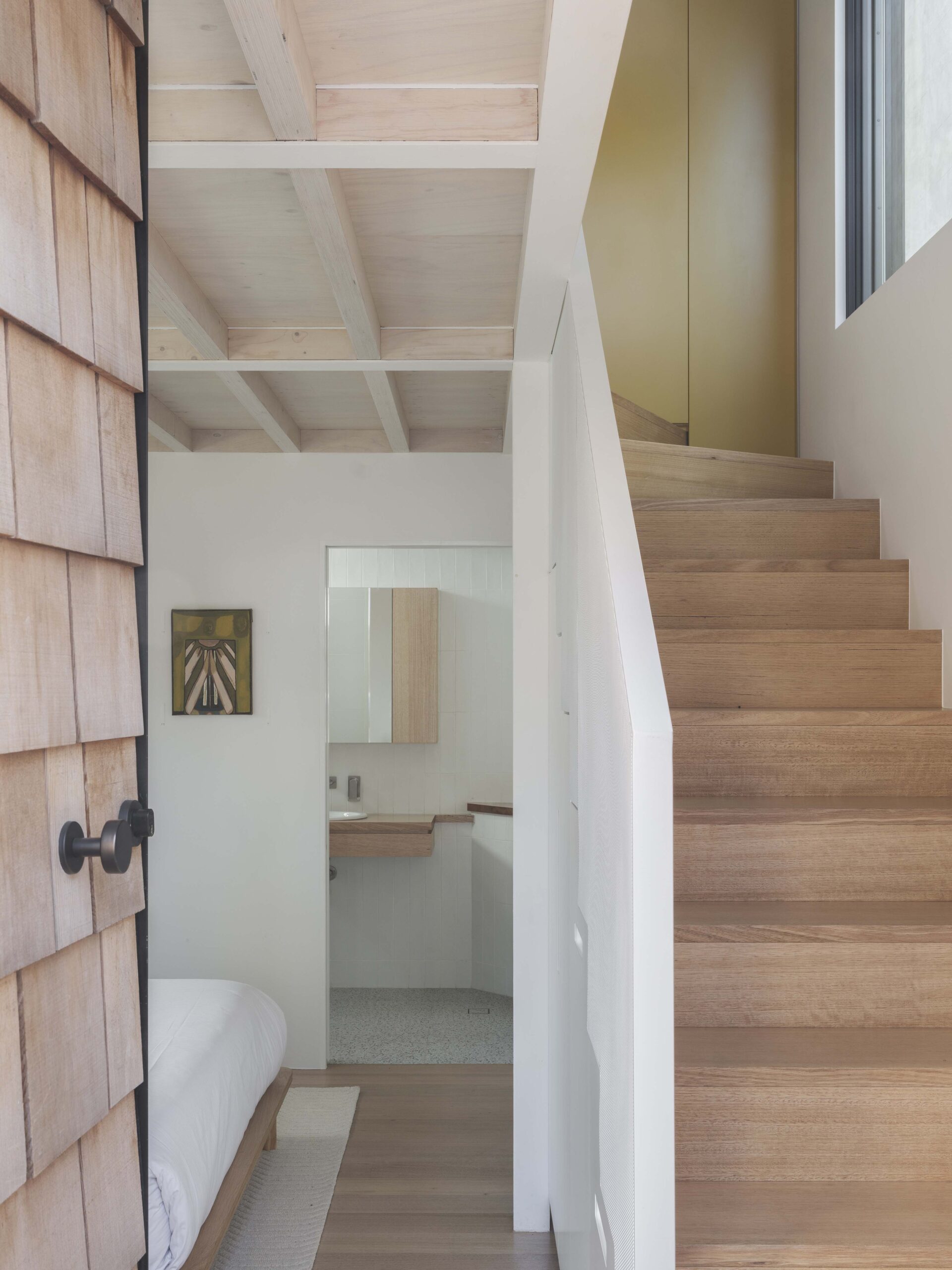
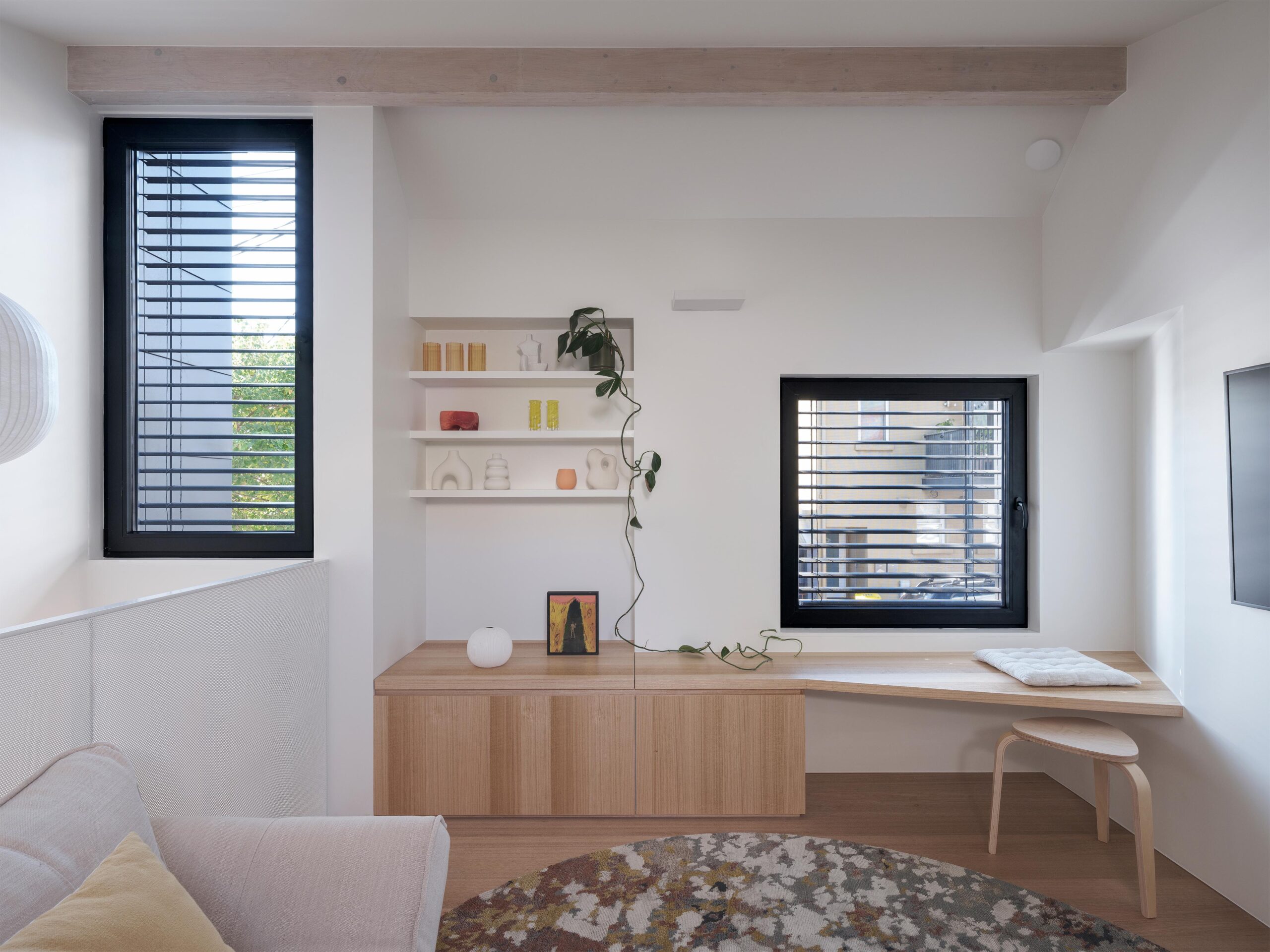
Beyond its impressive energy efficient design and construction Pocket Passiv offers an exemplar of a rare yet needed typology of inner-Sydney residential housing, infilling constrained urban sites with diverse, well-designed, and environmentally conscious housing options. Aiming to respect its layered historic context and neighbours, Pocket Passiv emerged as a highly considered geometric form. It is a modest two-storey studio with a cozy downstairs area with a combined bedroom / study and dramatic double height bathroom, and upstairs is a smartly configured kitchen / living / dining area. Submerged nearly one metre below the existing ground level the studio retreats into its residential context maintaining sunlight to the adjacent residential courtyards.

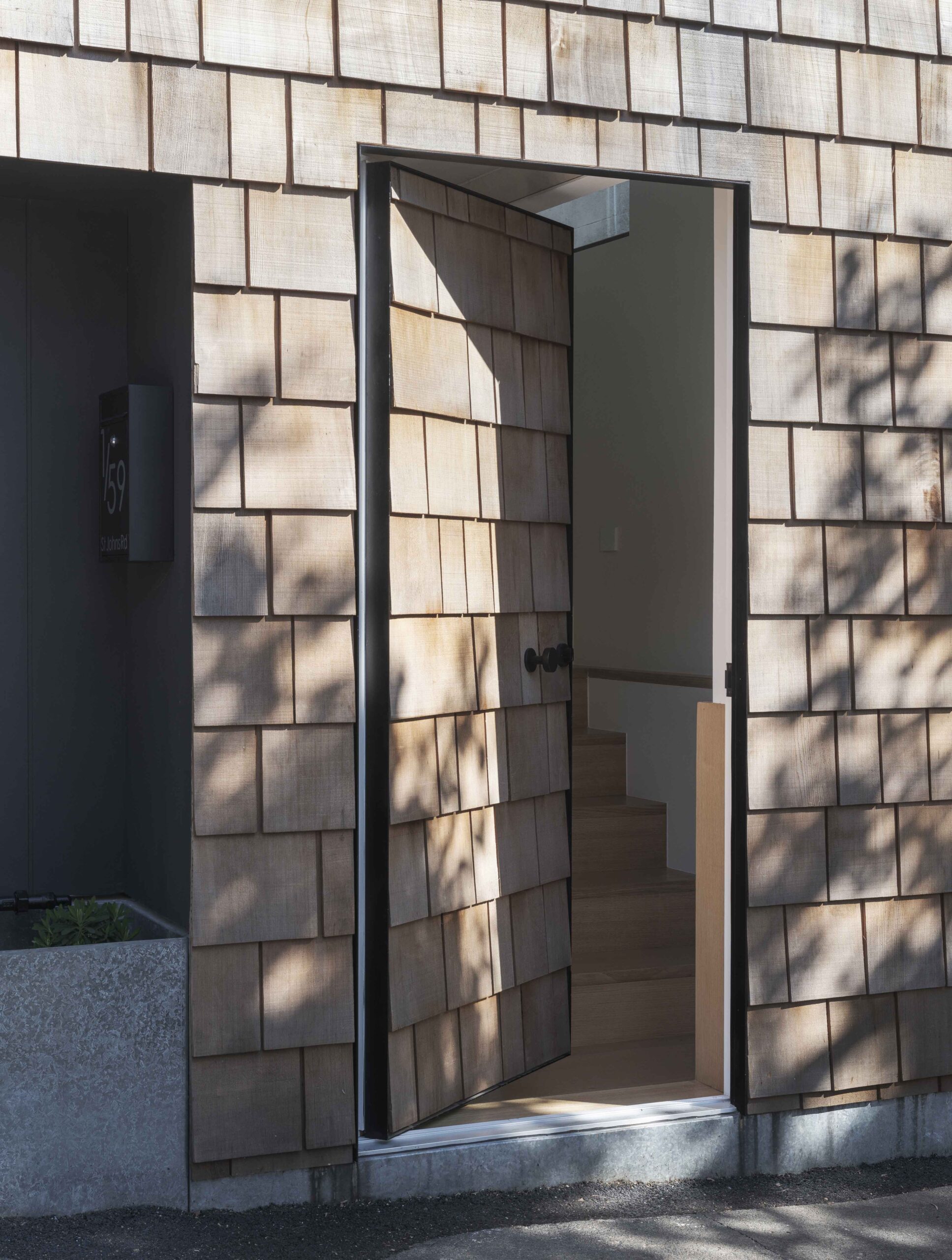
Adopting an asymmetrical pitched roof with a ridgeline that leans towards the street, a large area for solar panels hidden from view is created and an architectural proposition that creates a truly contemporary, purposeful, and urban pocket-sized presence. Clad in timber shingles Pocket Passiv will age overtime, weathering, and greying off, adding another architectural layer to the rich creative tapestry of Glebe.
Q & A

What motivated you to build or retrofit sustainably?
Make the most comfortable homes that use the least amount of energy
Achieving Passive House certification. Pocket Passiv has been designed and constructed to meet Passivhaus Plus criteria, making the home self-sustaining and all electric, with its solar panels providing enough energy to meet the needs of the building and below a set electrical demand criteria. Pocket Passiv successfully achieved an air tightness result of 0.52 air changes, and an annual heating and cooling load well below 15kWh/(m2a). The overall success of adopting such building construction methods means that theoretically a small hair dryer of 400 watts could heat the entire studio on Sydney’s coldest winter days.
The smaller the home the harder it is to achieve Passivhaus levels of air-tighness!
Adding a battery to store PV power from the roof
Type: Passive House or EnerPHit, Secondary dwelling, Standalone house/townhouse, Tiny home
Project: New build
Architect: Anderson Architecture
Builder: Mindful Building
Size: 34m²
Energy Rating: Passive House
Bedrooms: 1
Bathrooms: 1

Sustainability Features

Building Materials & Envelope

Draught-proofing/air sealing
High-performance insulation
Double or triple-glazed windows
Sustainable or low-impact materials
Other

Heating, Cooling and Ventilation

Passive heating/cooling (north-facing glazing, cross ventilation, thermal mass, shading, etc.)
Heat pump (reverse-cycle) heating/cooling
Mechanical ventilation with heat recovery (MVHR) system

Energy and Appliances

Rooftop solar PV
Efficient lighting (LED, daylighting, solar skylights)
Heat pump hot water
Electric cooktop - induction/ceramic
Other energy-efficient appliances

Water & Waste Systems

Water-efficient fixtures
Rainwater tanks

Landscape & Biodiversity

Native garden

Climate Resilience

Heatwave

Accessible & Flexible Design Features

Design for multigenerational living or dual occupancy
Share this home:

Related Homes

Home tours delivered to your inbox

Step inside sustainable homes across Australia and get practical ideas you can use in your own