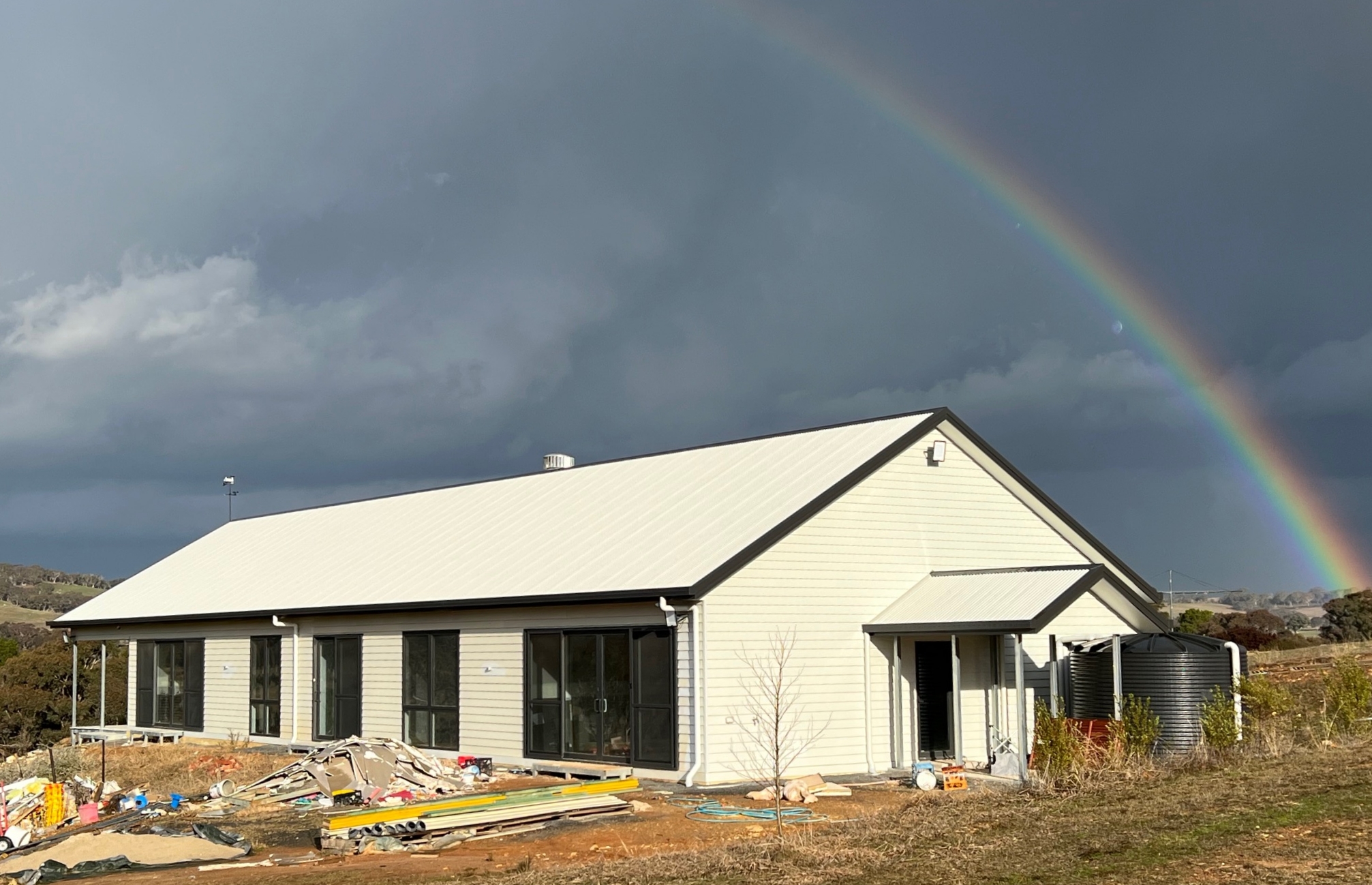
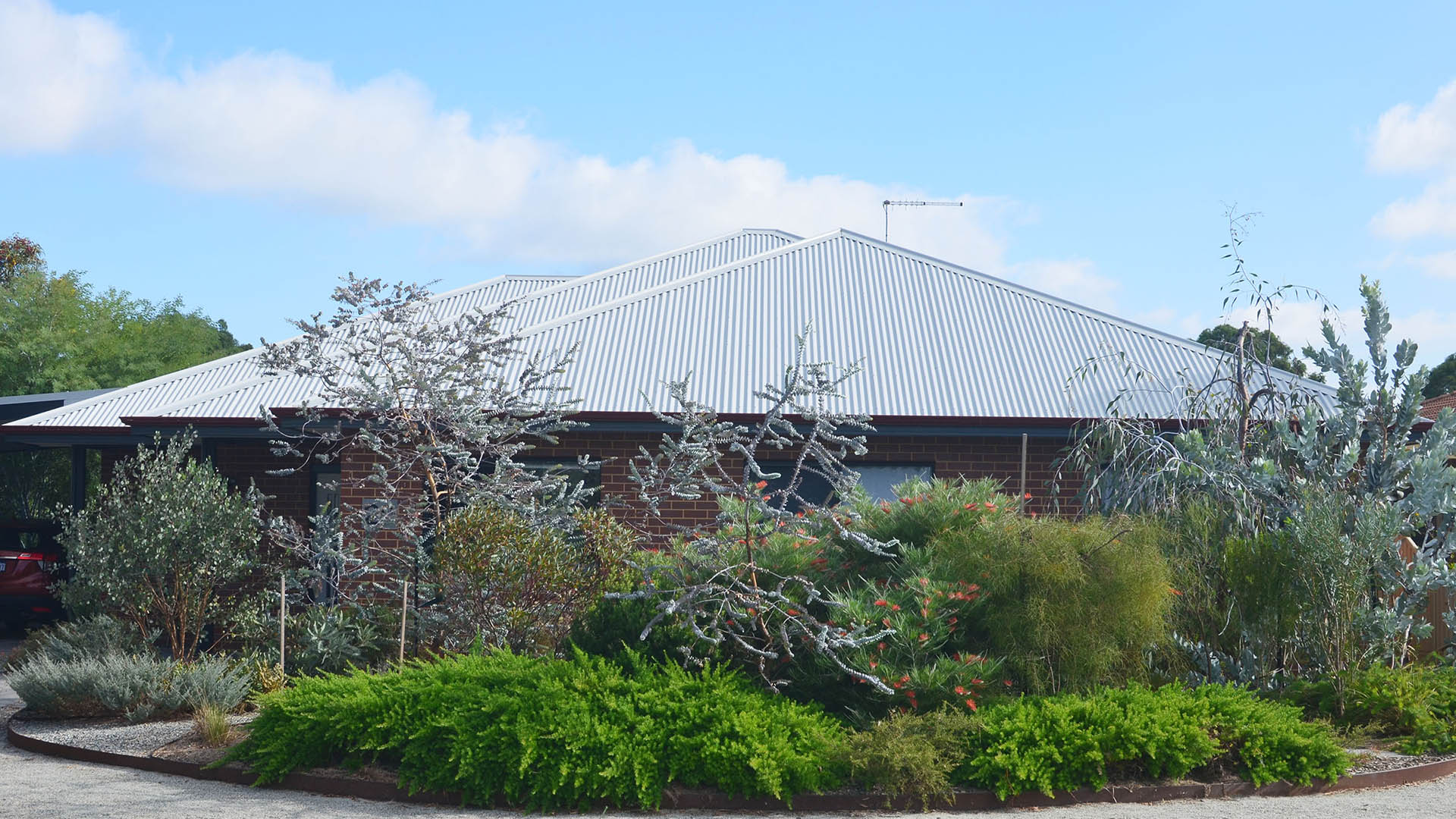
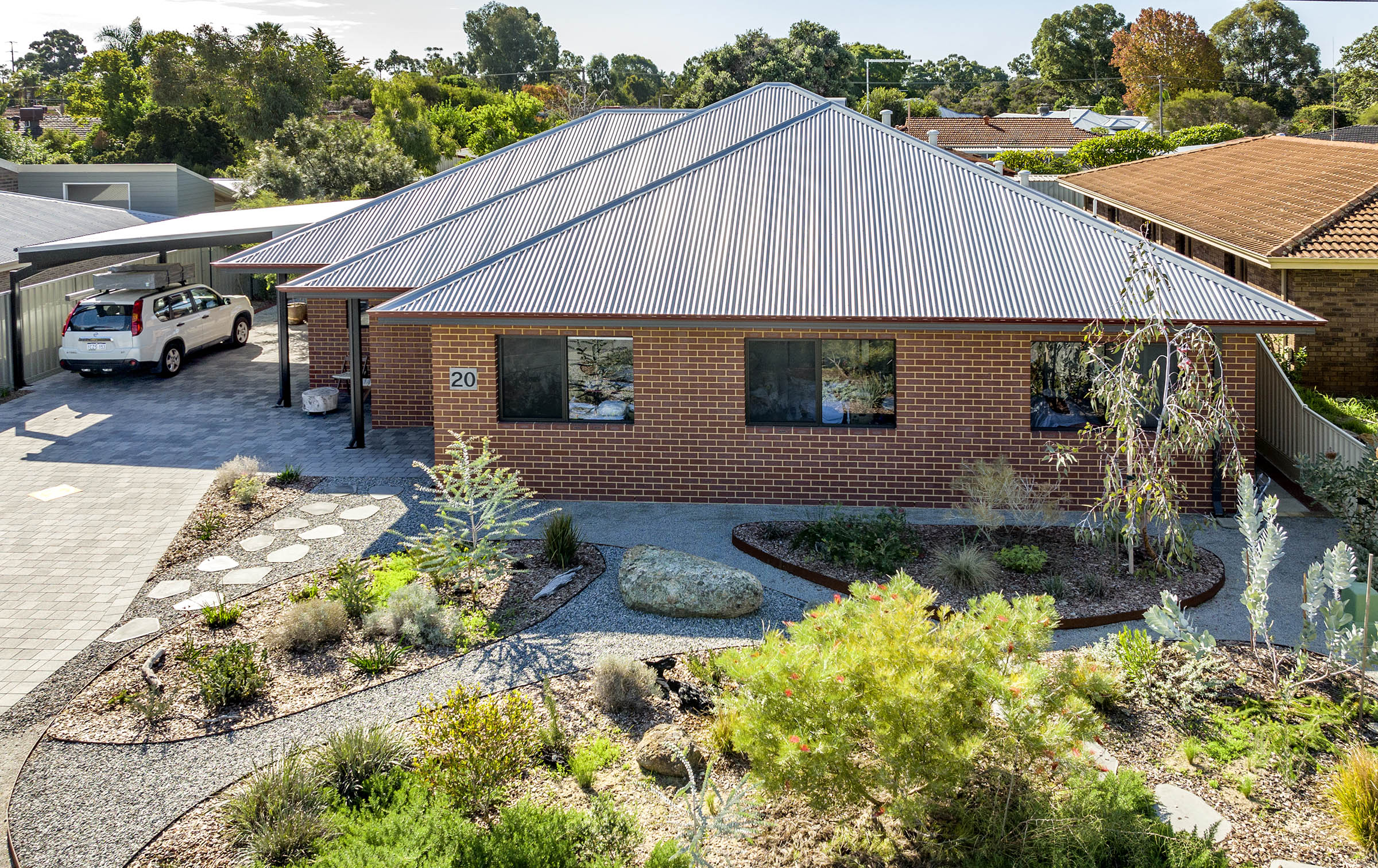
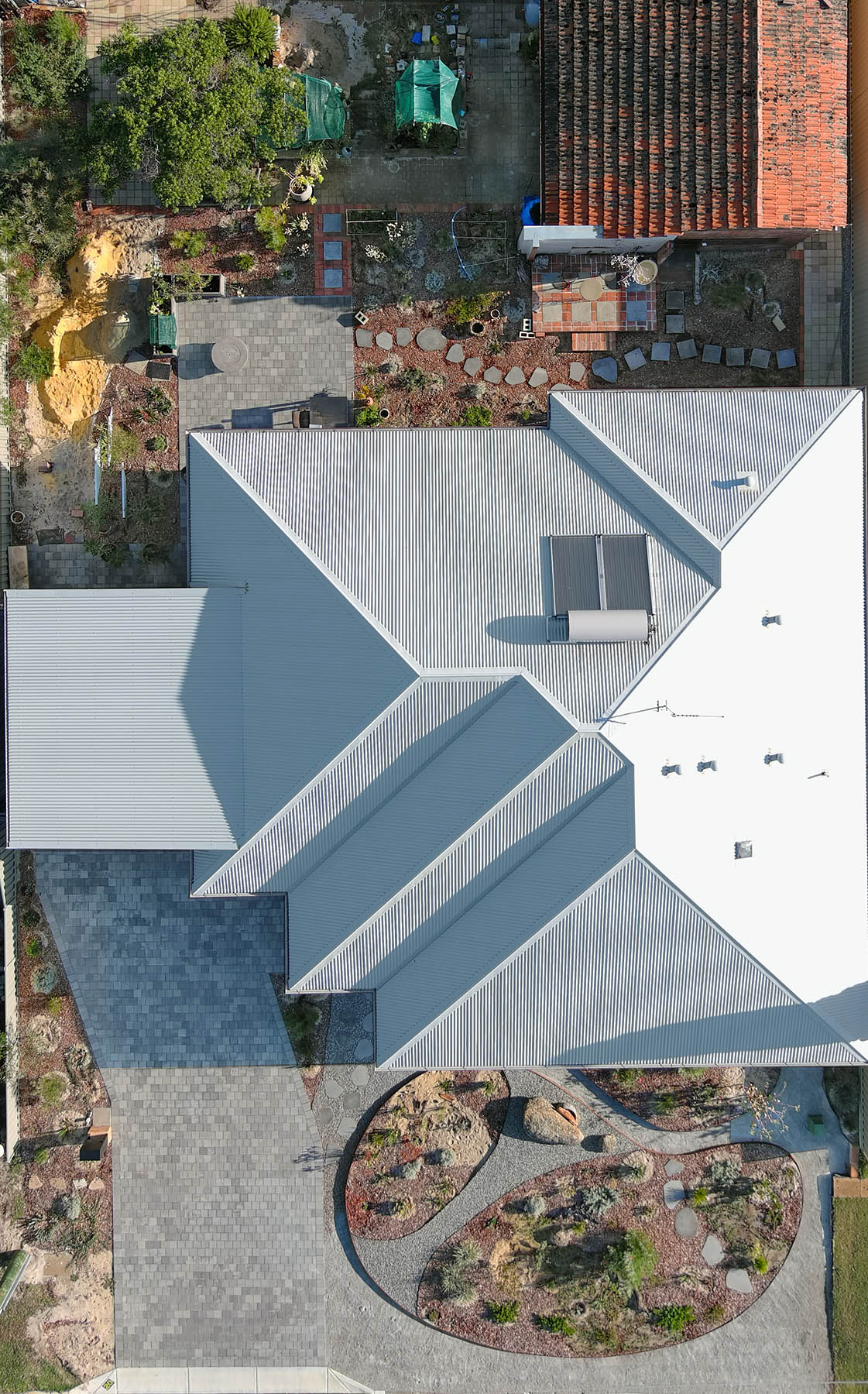
In 2020 we replaced our damaged 1972 home with a sustainable passive solar rebuild on the same site. Our new insulated double brick, all-electric home was built on a tight budget, but the clever design by Griff Morris of Solar Dwellings ensured it is comfortable, efficient and economical.
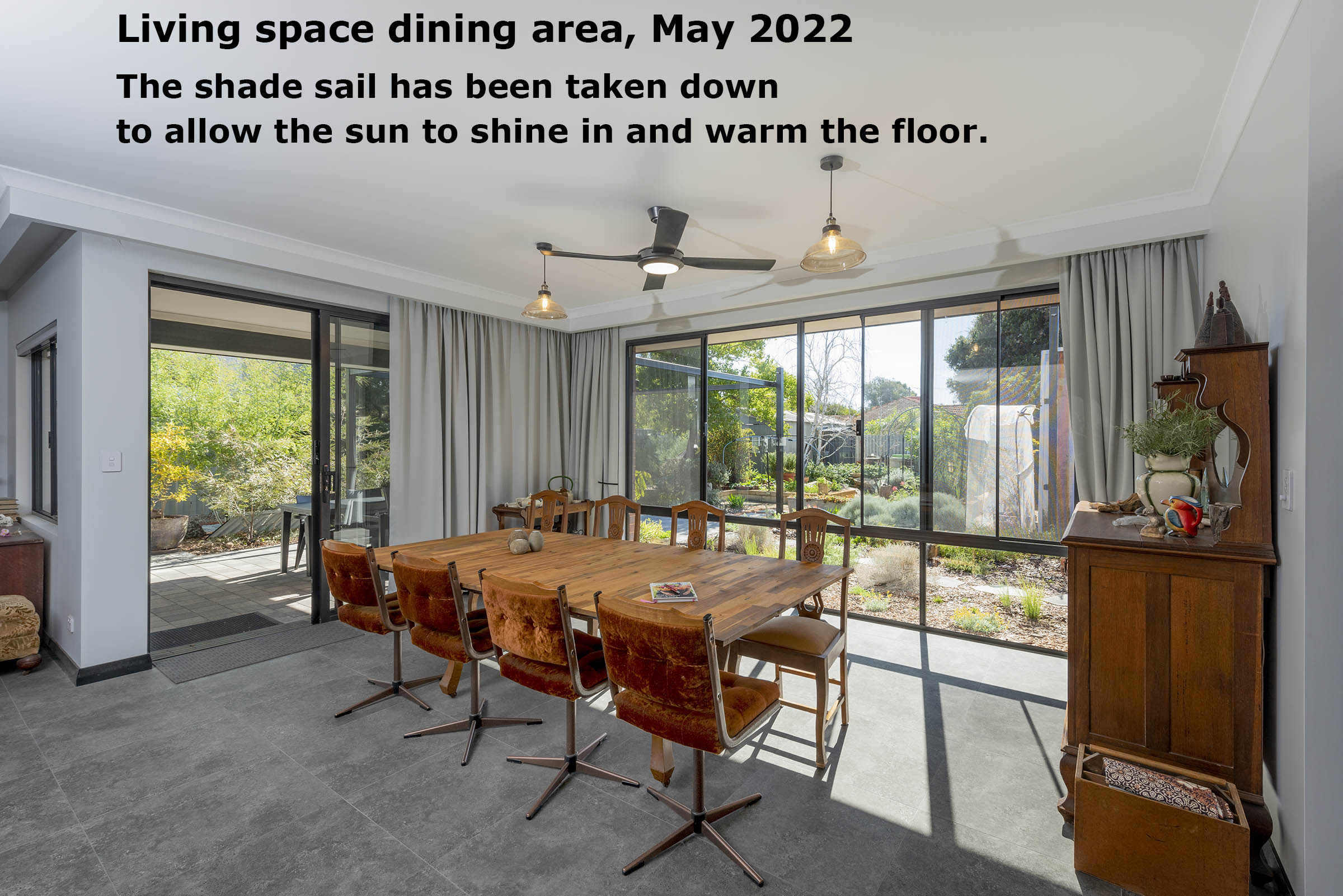
We no longer need air conditioning and average only 4 units of power use per day. Ceiling fans keep us cool in summer. Large north facing windows let in winter sun and the captured warmth is retained long into the night.
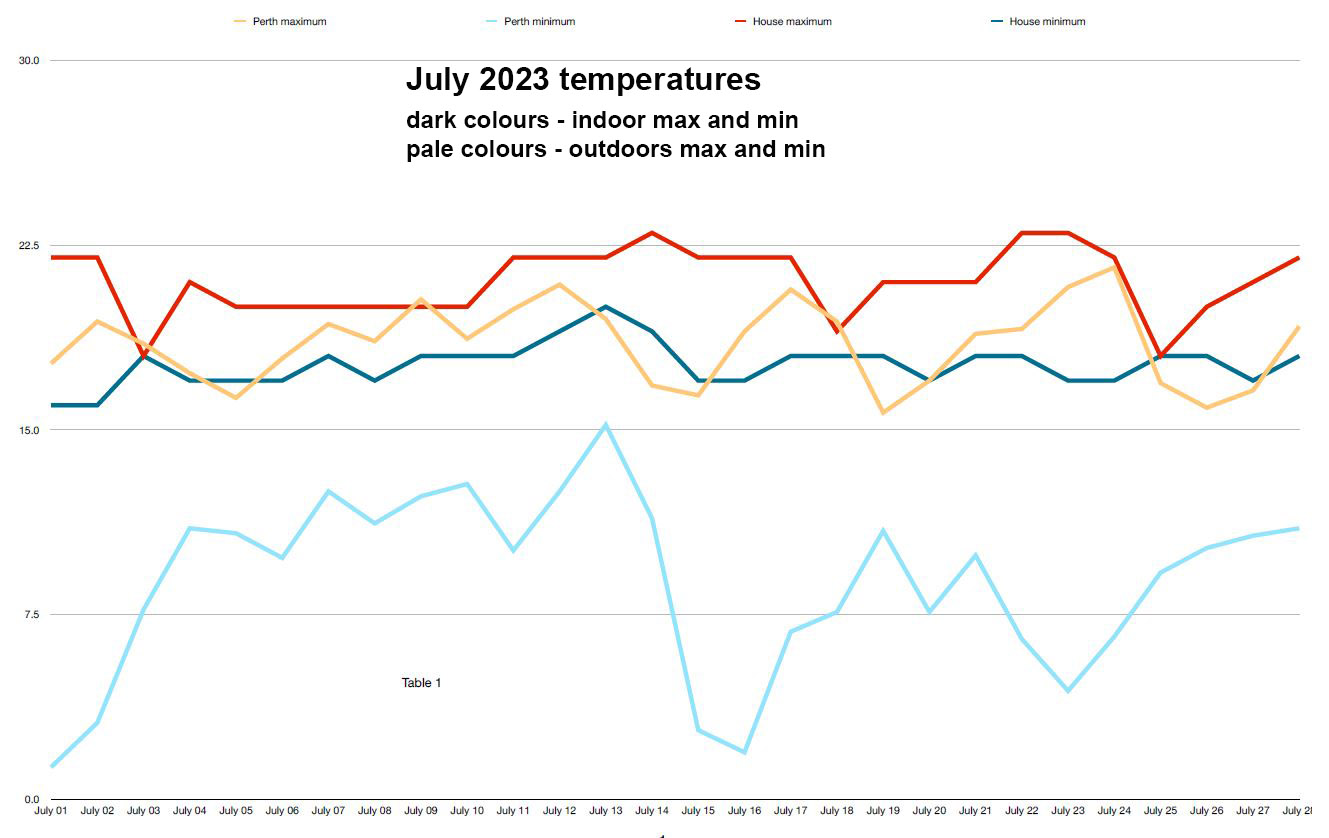
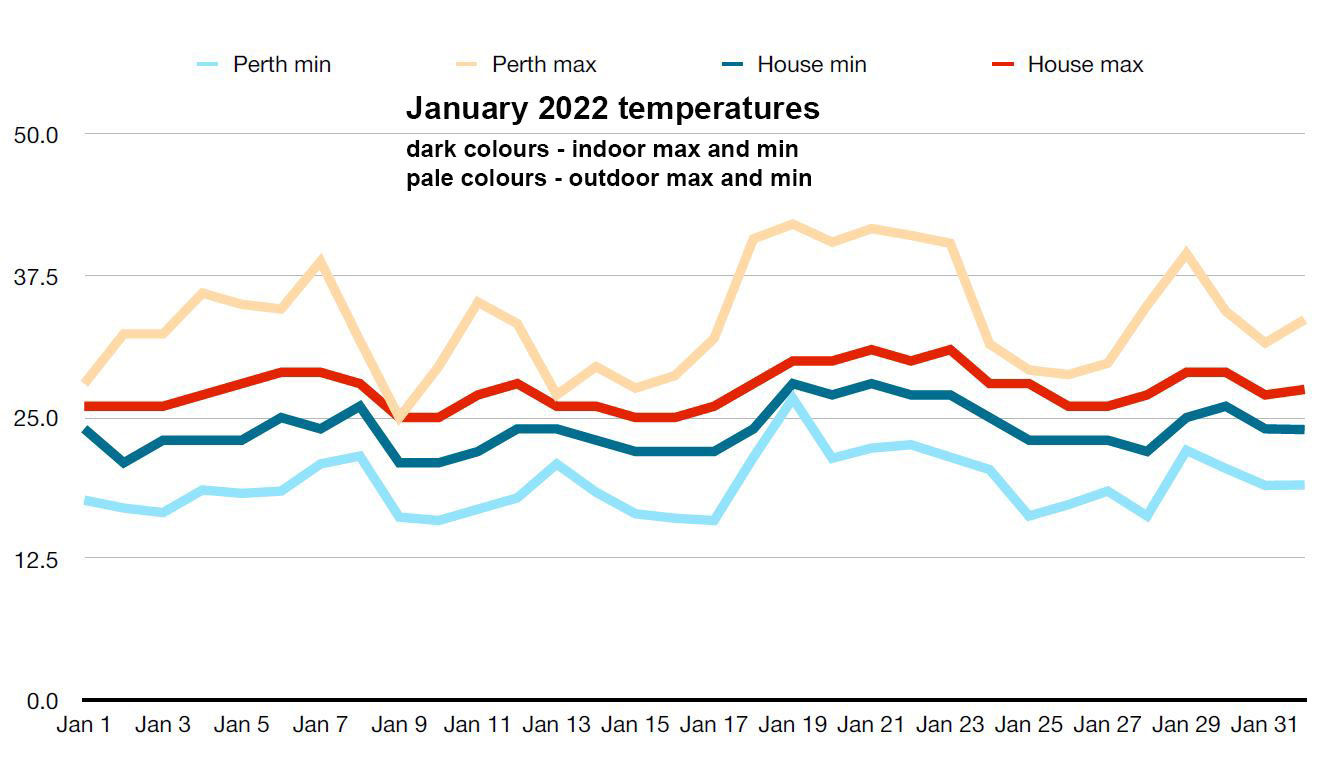
A thermometer on our kitchen bench is our simple, low tech means of keeping track of our home’s performance. We record the inside temperature first thing in the morning and at its highest point later in the day, to compare with the daily recorded official minimum and maximum. The resulting charts show how well the house moderates what is happening outside. There is usually less than 5 degrees difference inside on any day, despite the extremes outside.
In autumn and spring we don't need any effort to keep the house comfortable. On winter mornings we open the curtains to let the winter sun inside and close down late afternoon when the inside temperature starts to drop. This keeps the day's warmth inside until long after we've gone to bed. Sometimes our winter internal minimum is higher than the outside maximum.
In summer we close the curtains when the temperature inside climbs above 25 and the outside temperature is much hotter. We open up when the outside temperature has dropped significantly. Security mesh allows us to open our windows wide on hot nights to capture even the lightest of cooling breezes.
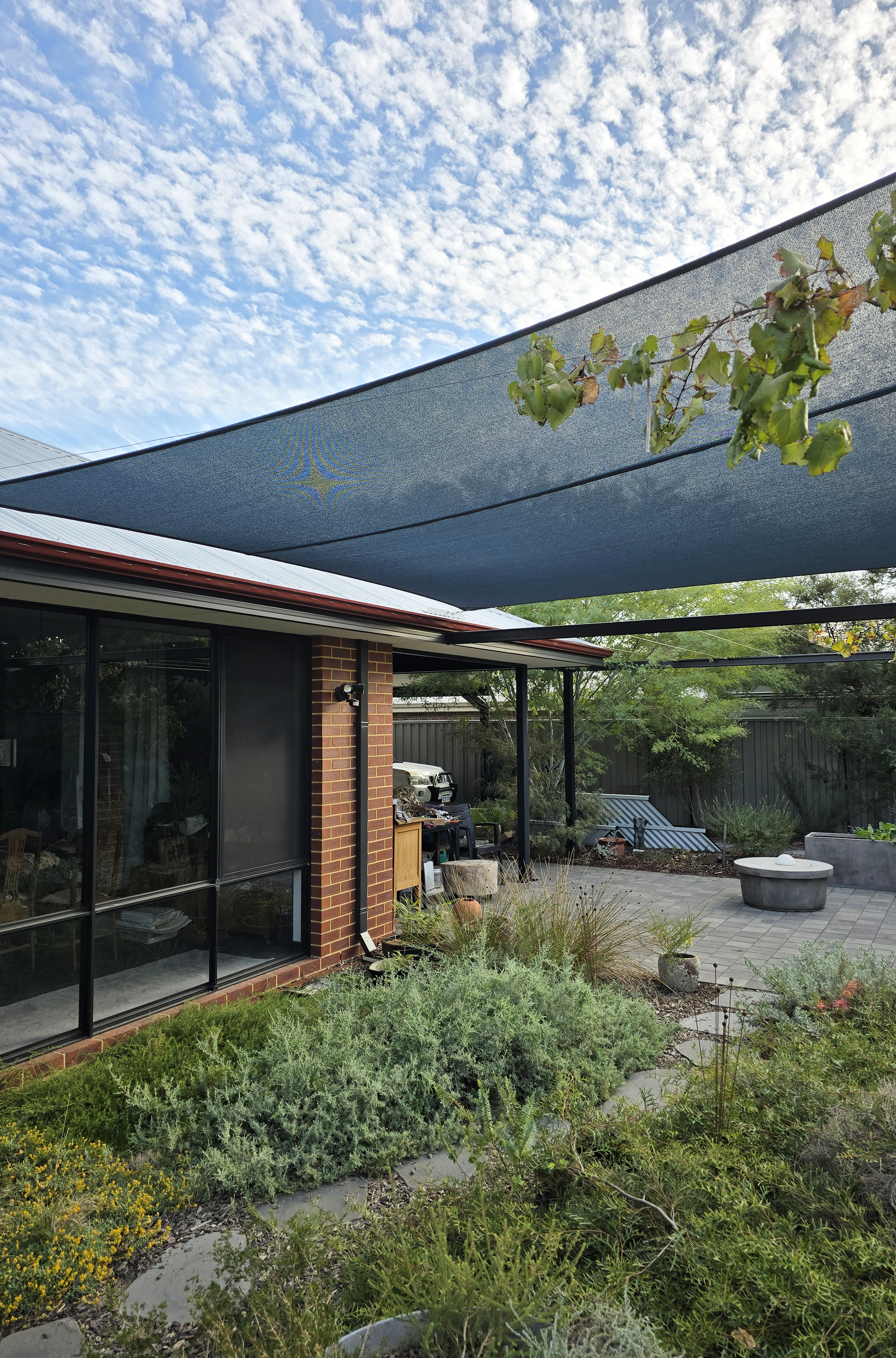
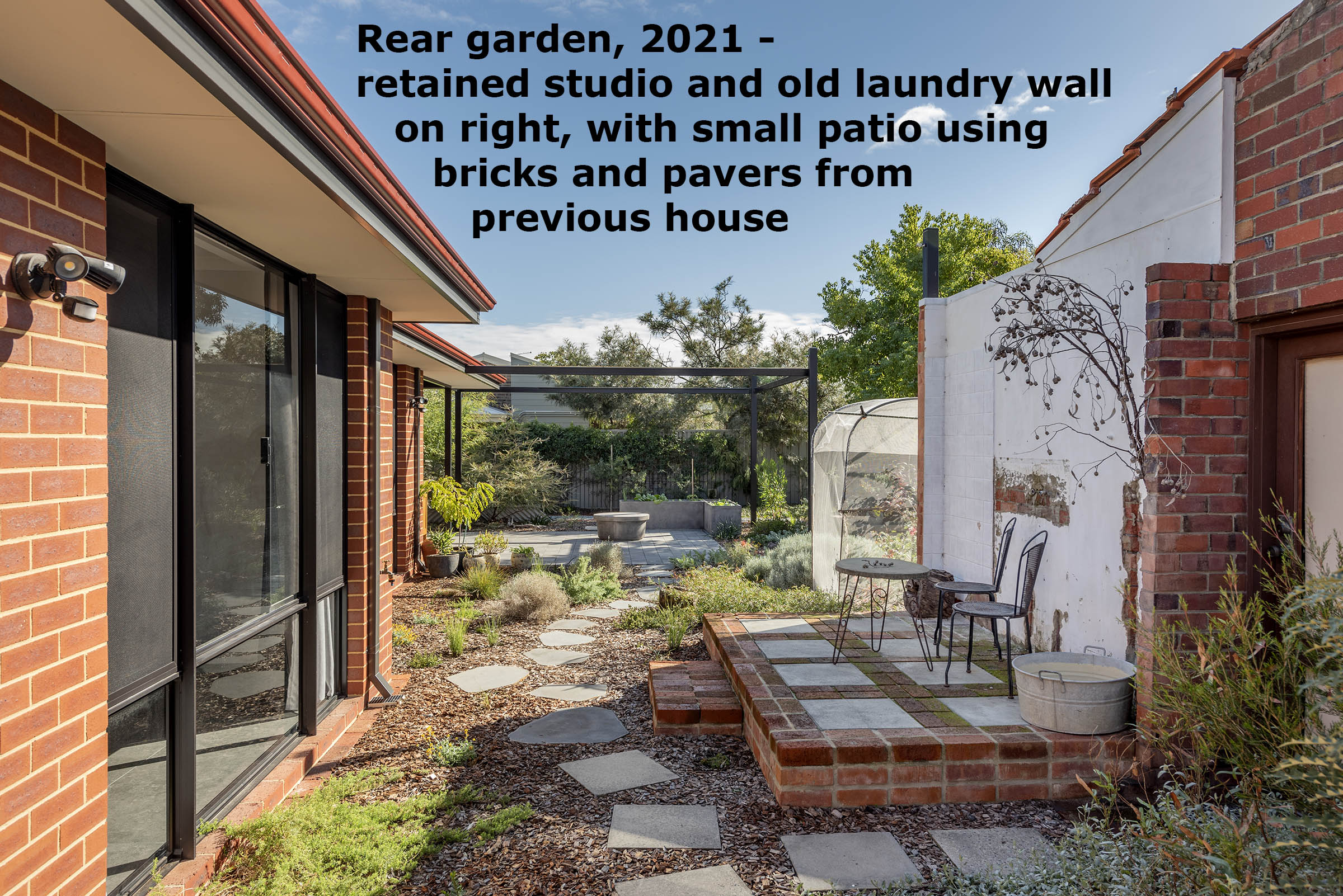
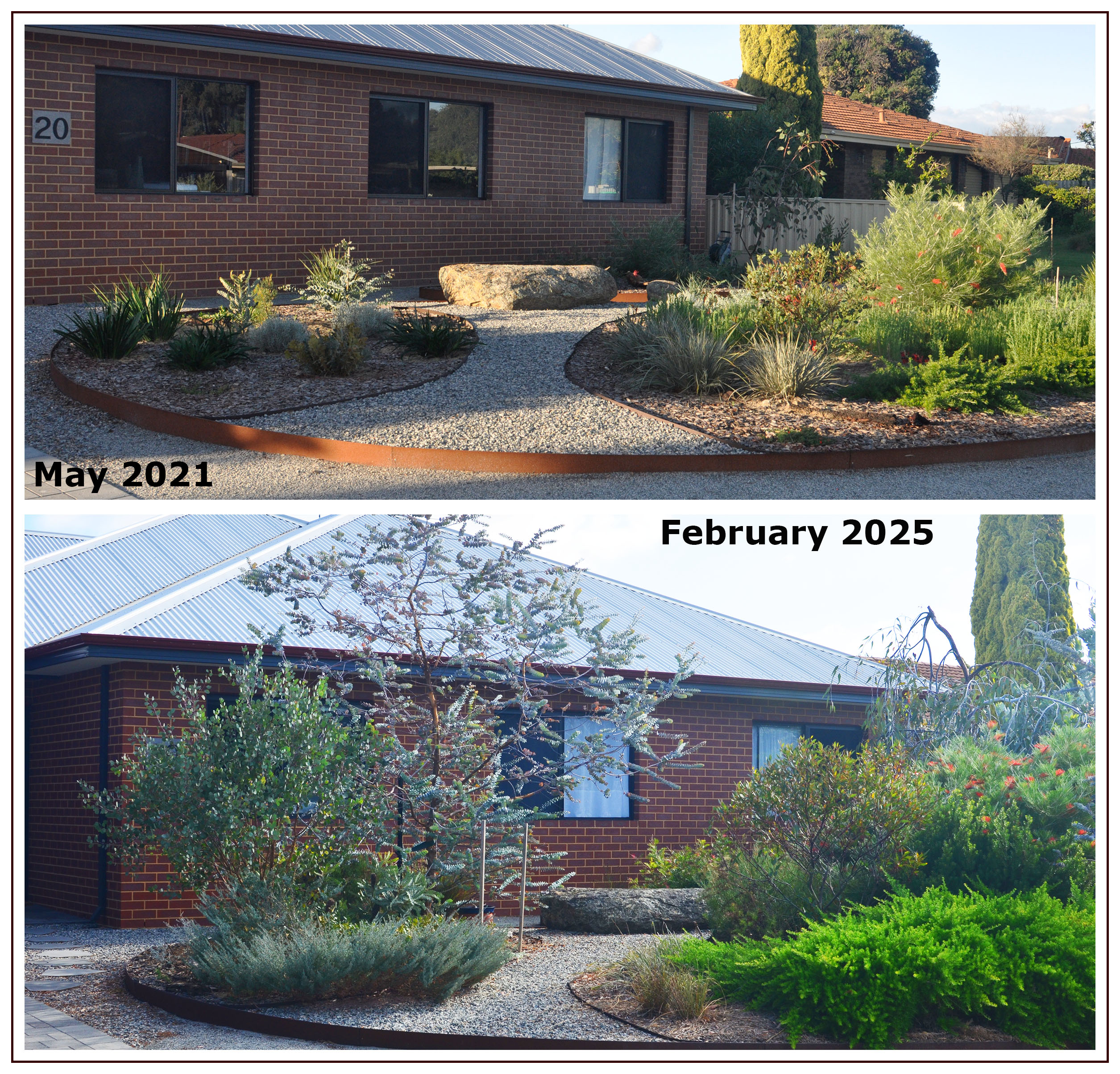
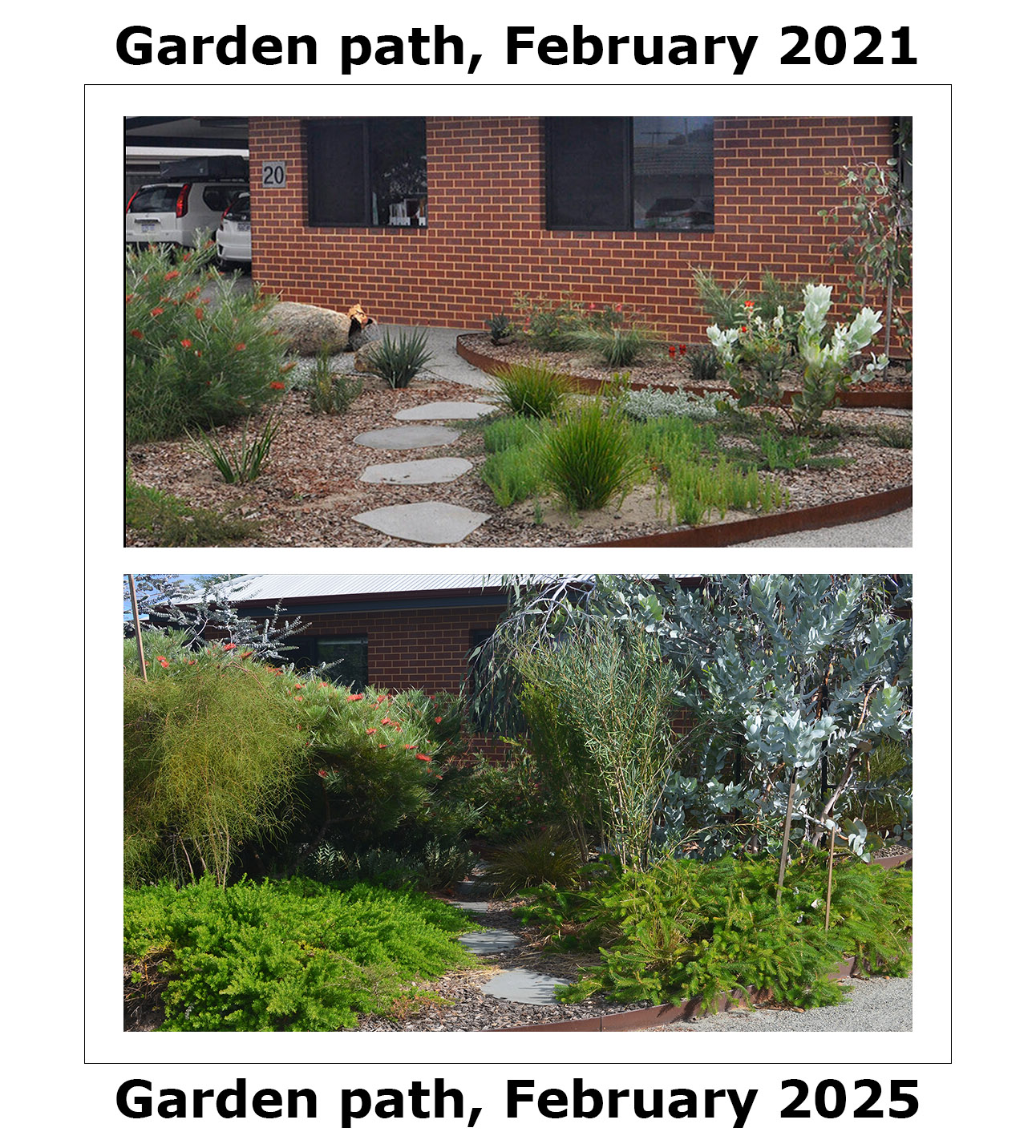
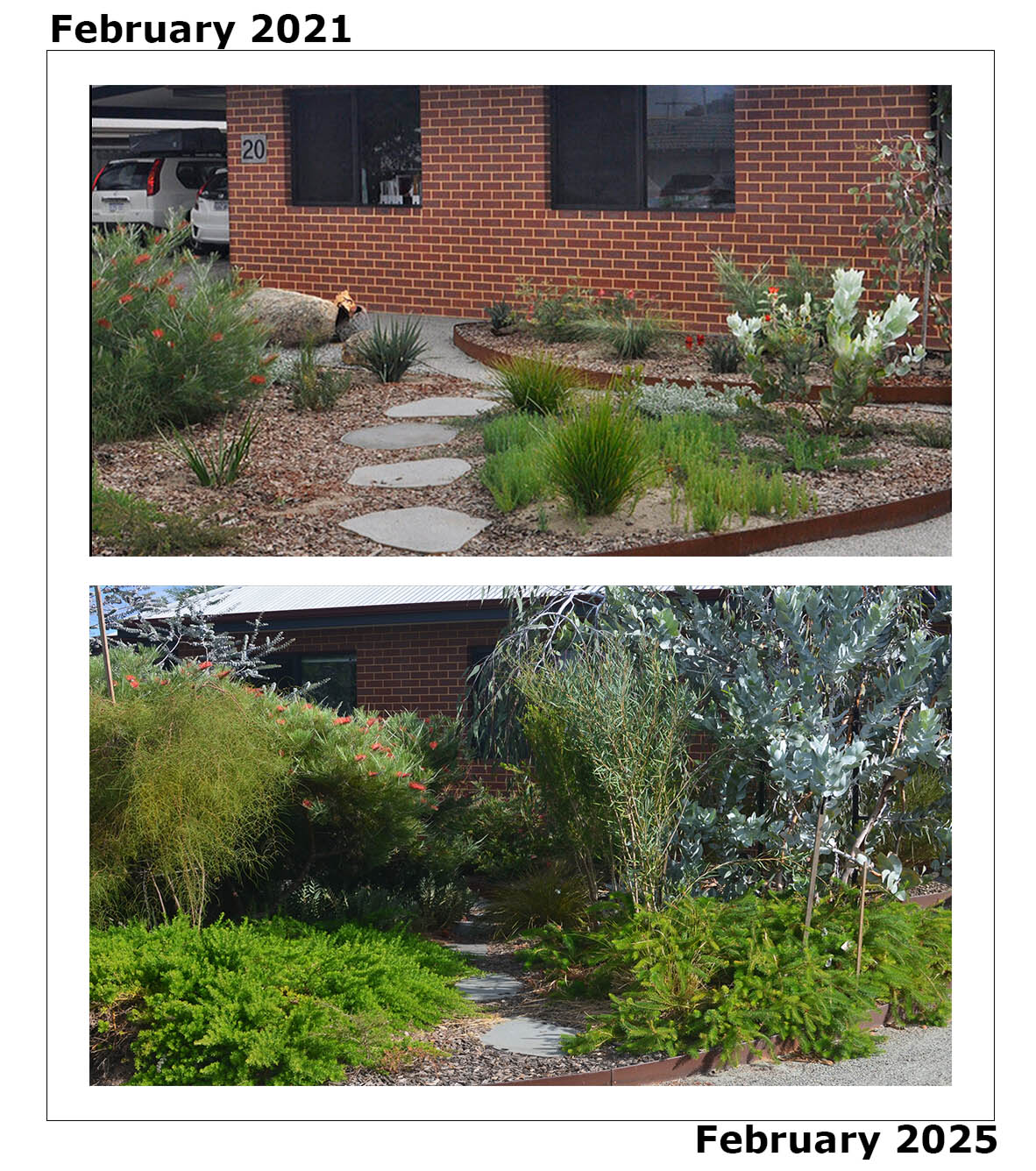
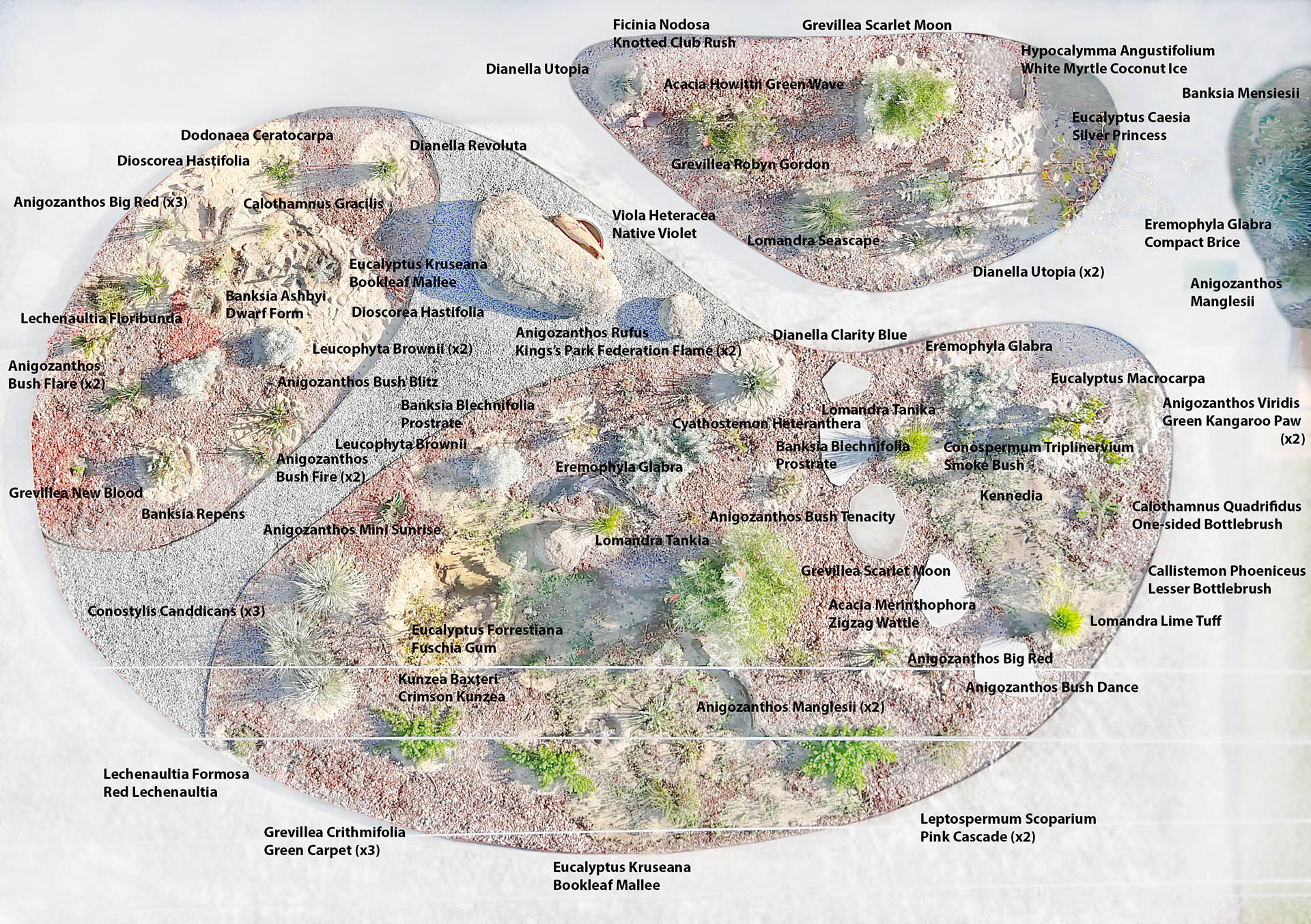
We also keep our home comfortable by controlling the conditions outside. After six years the trees in our re-established garden are tall enough to provide plentiful shade in summer. We have native trees to the west and south, deciduous trees to the north, and vines on our pergola. We also have a shade sail protecting our northern aspect.