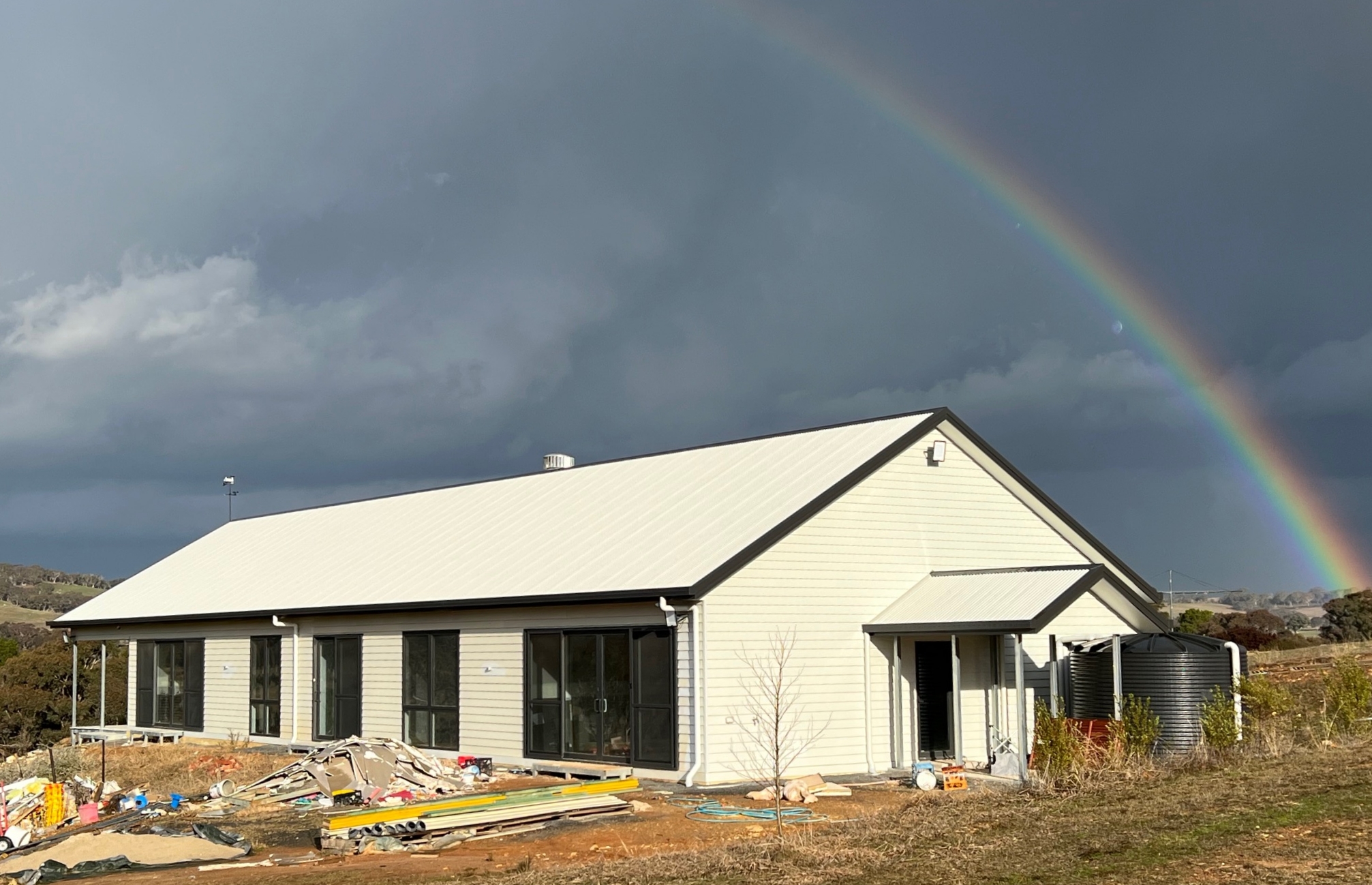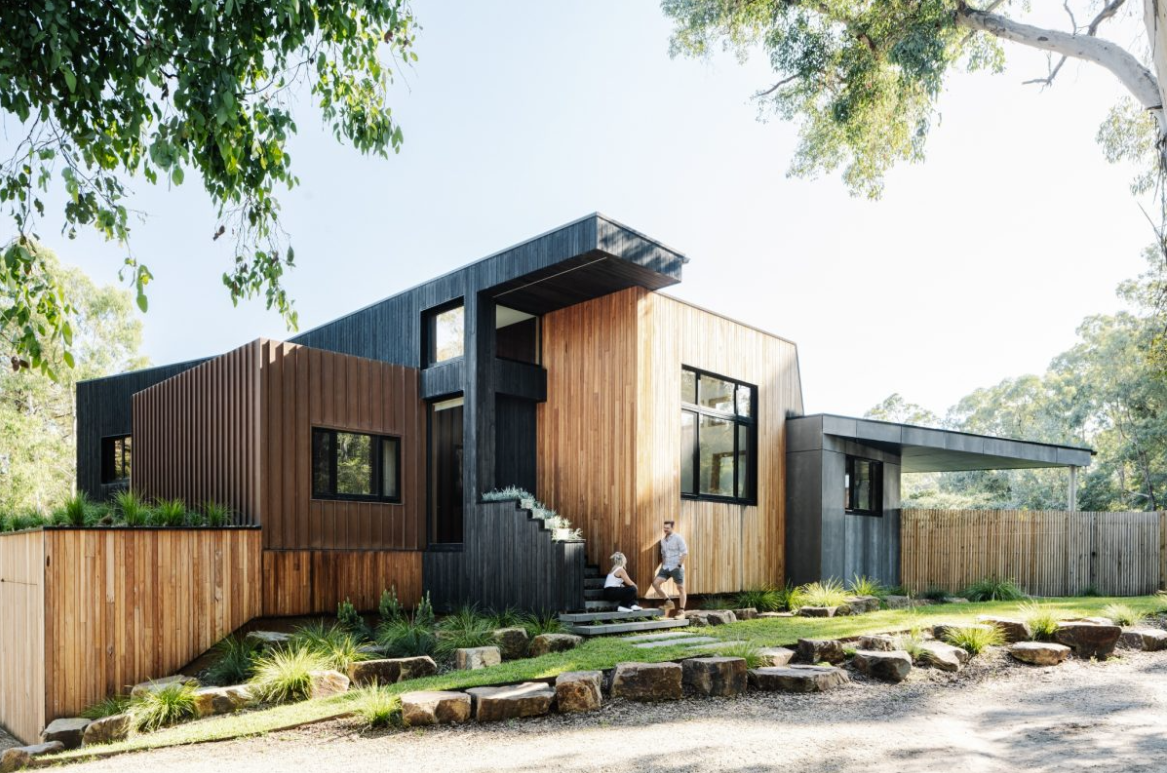
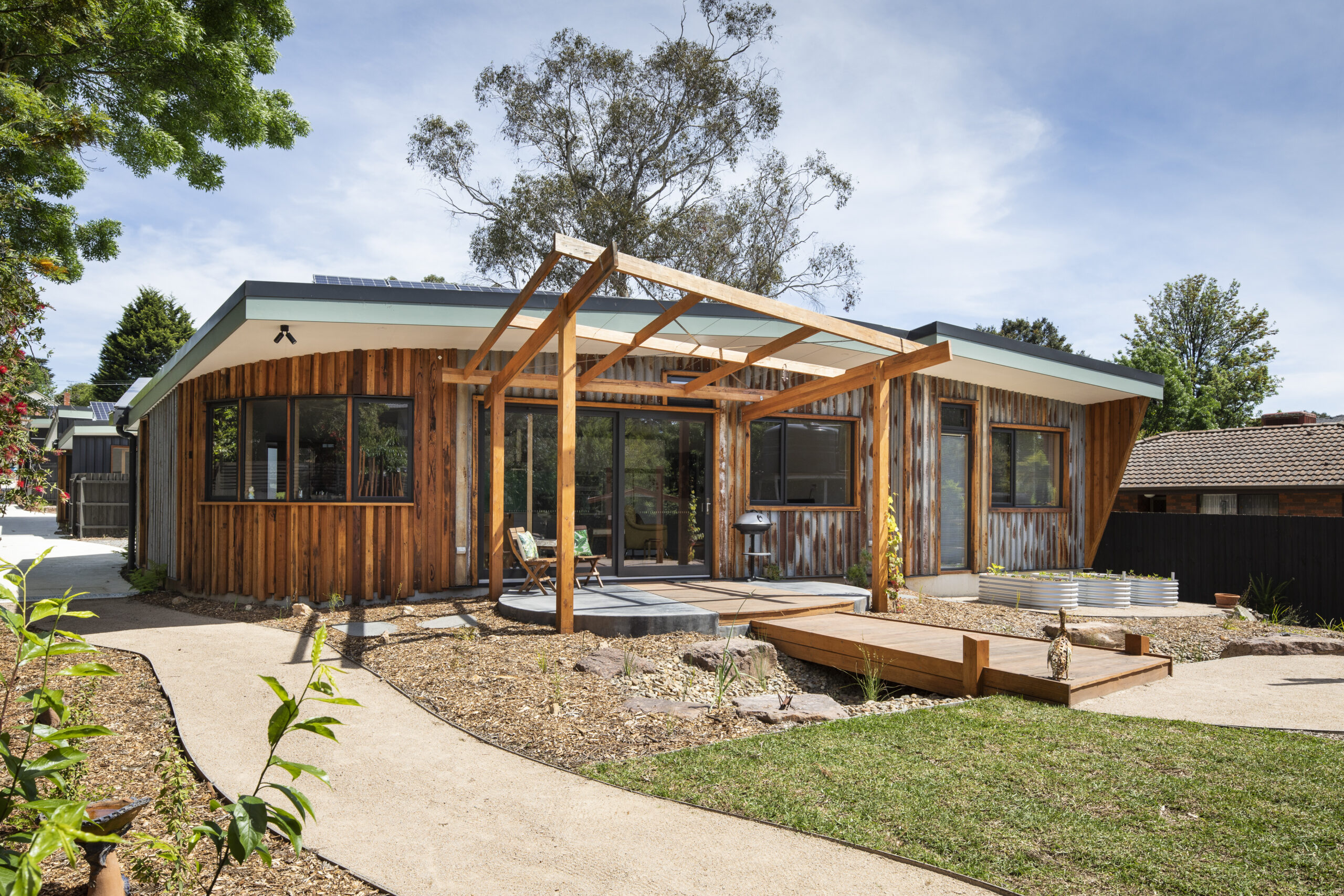
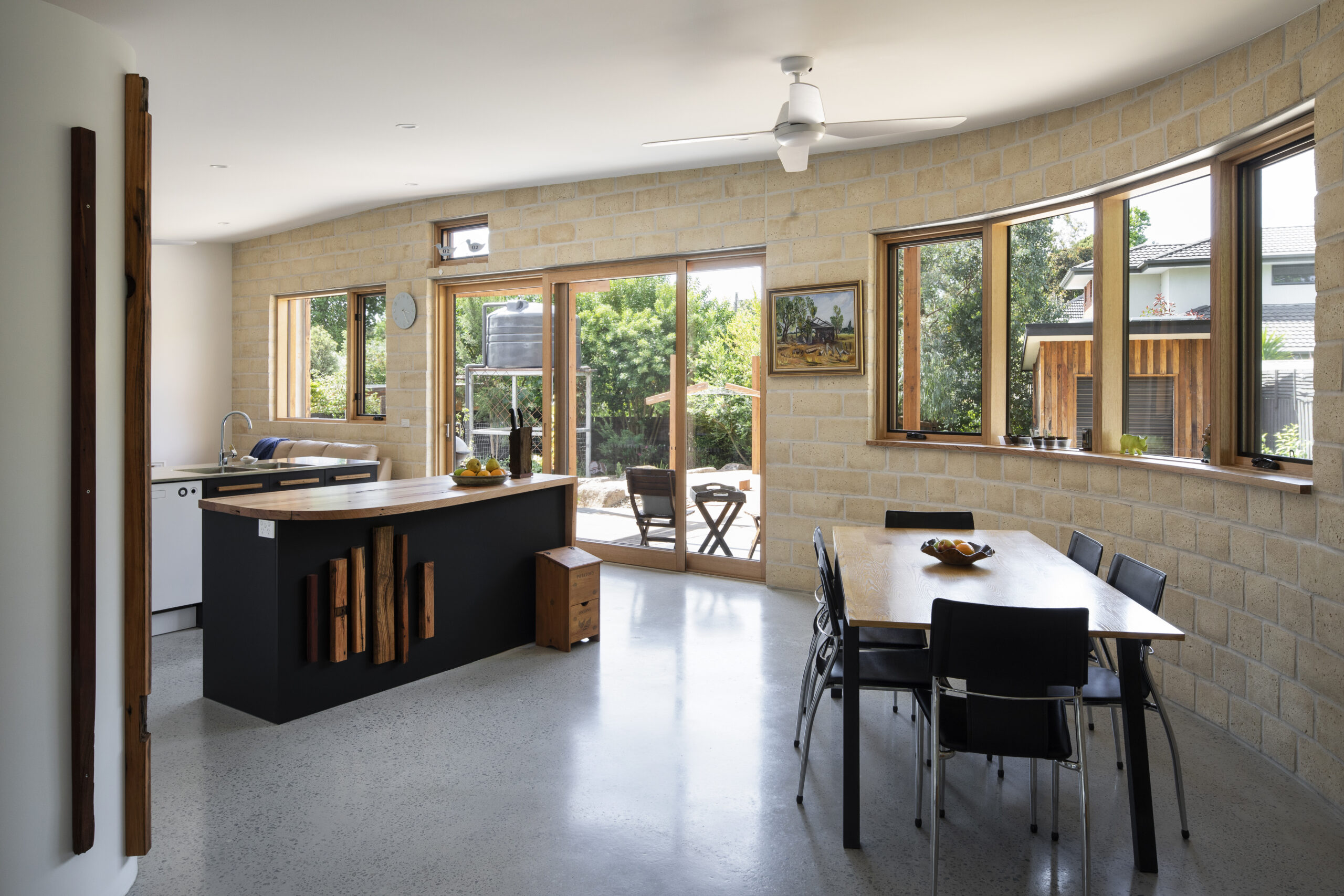
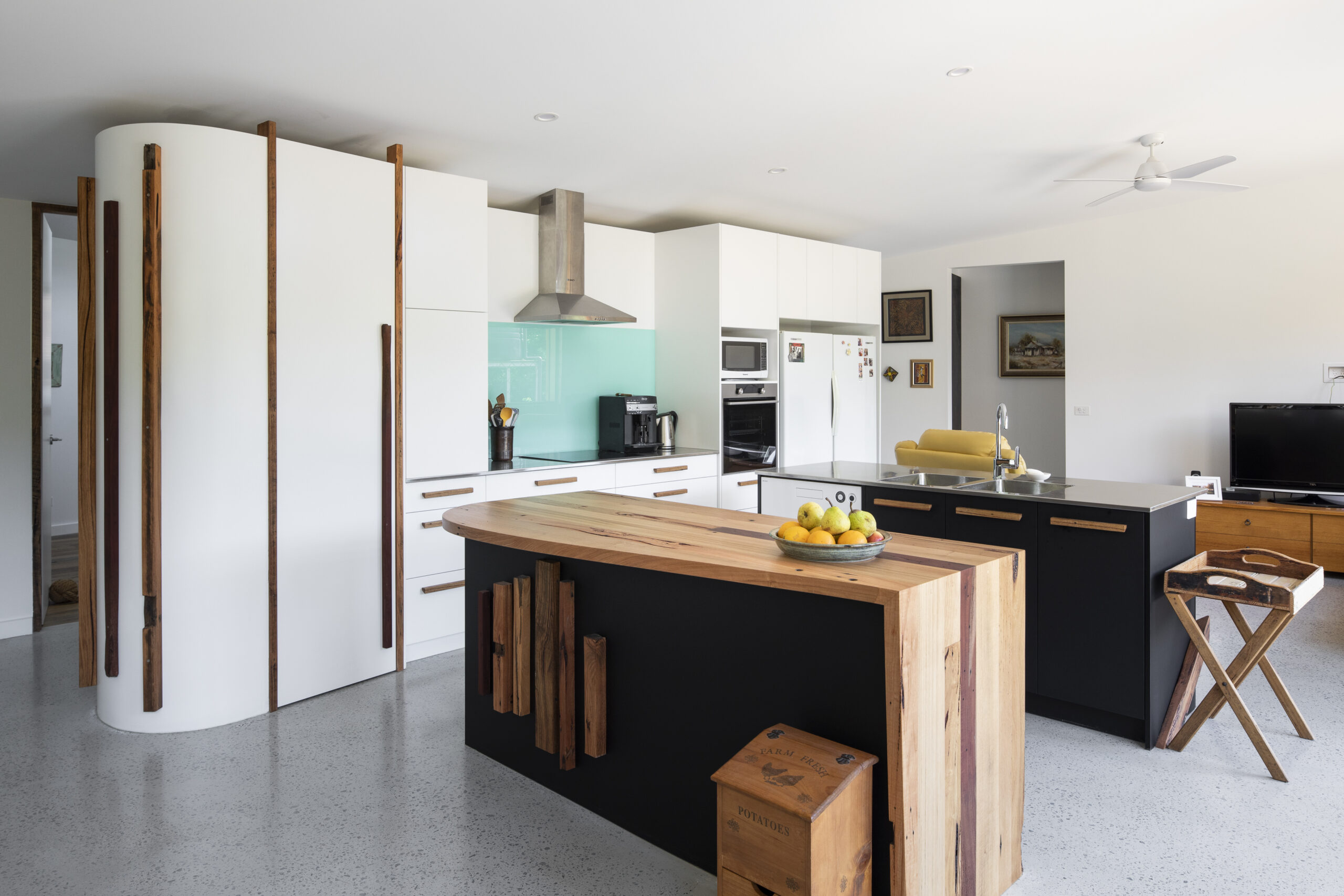
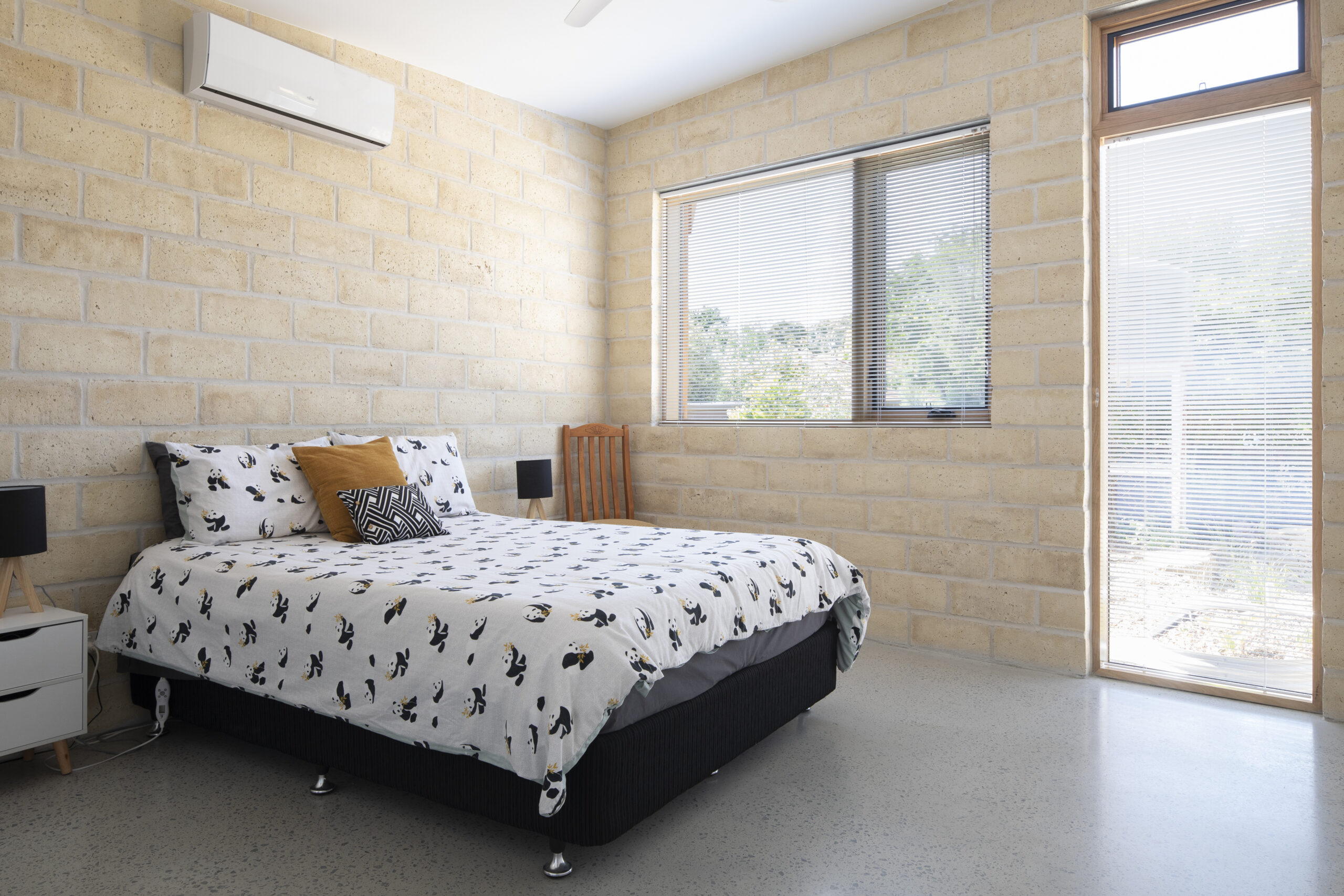
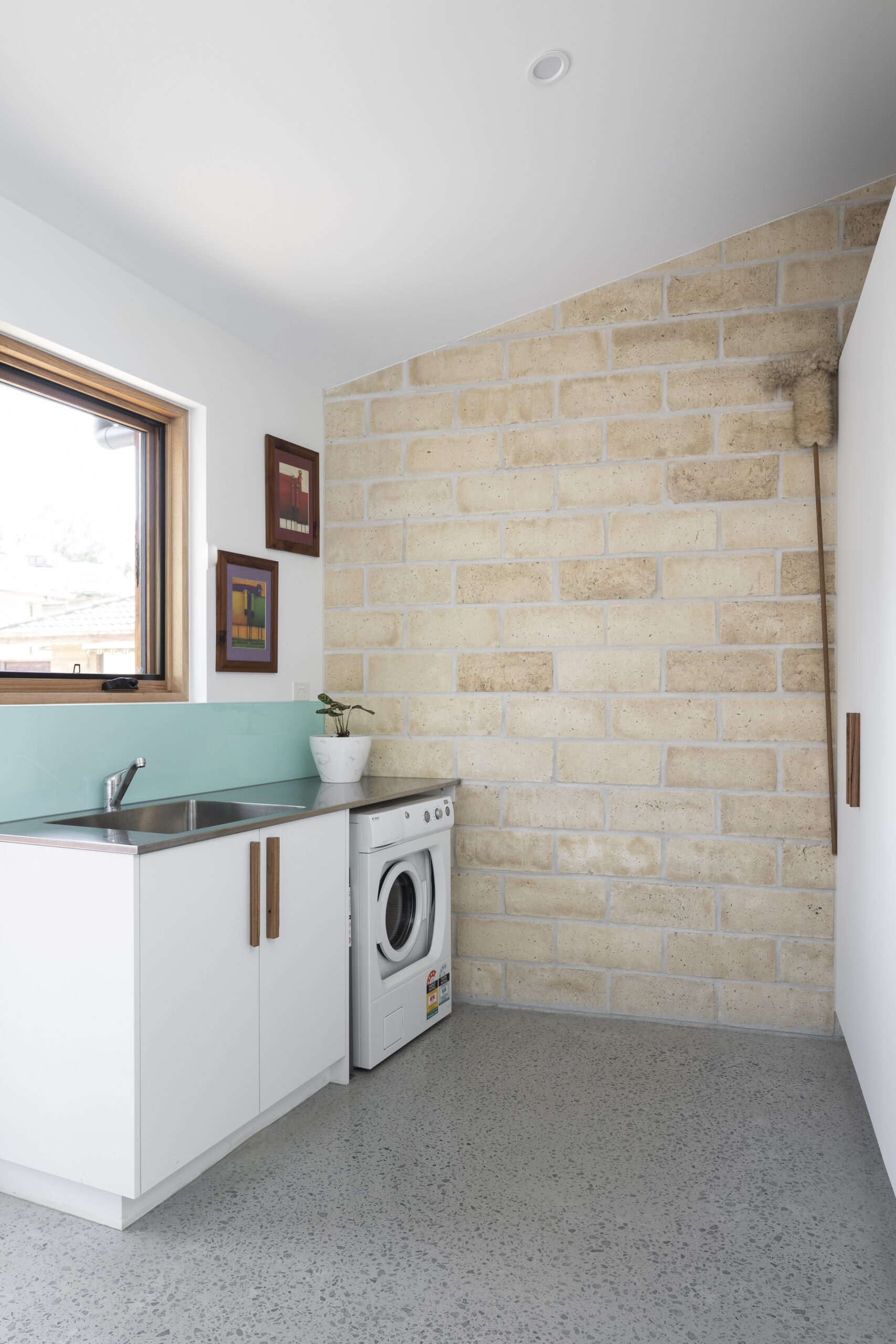
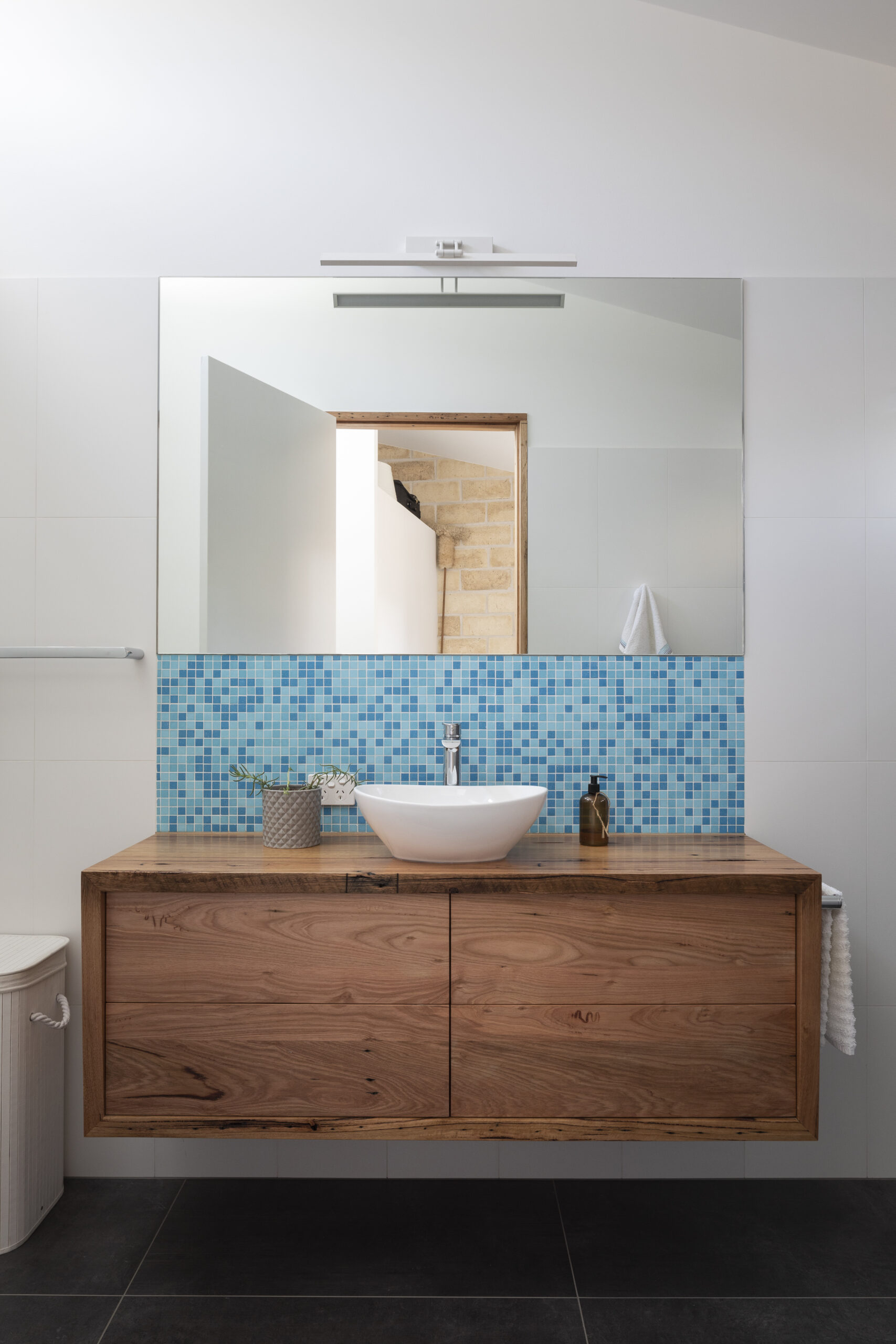
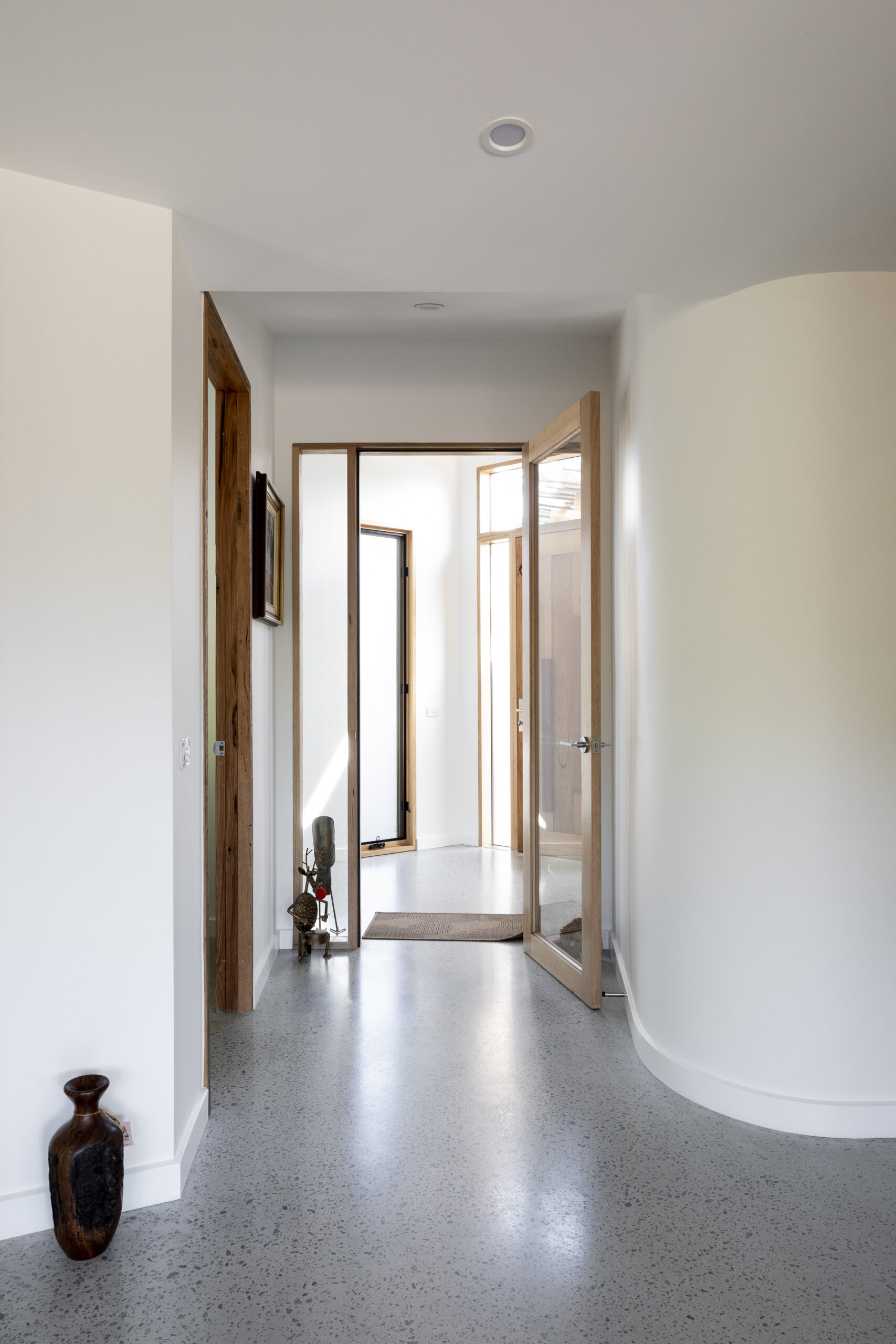
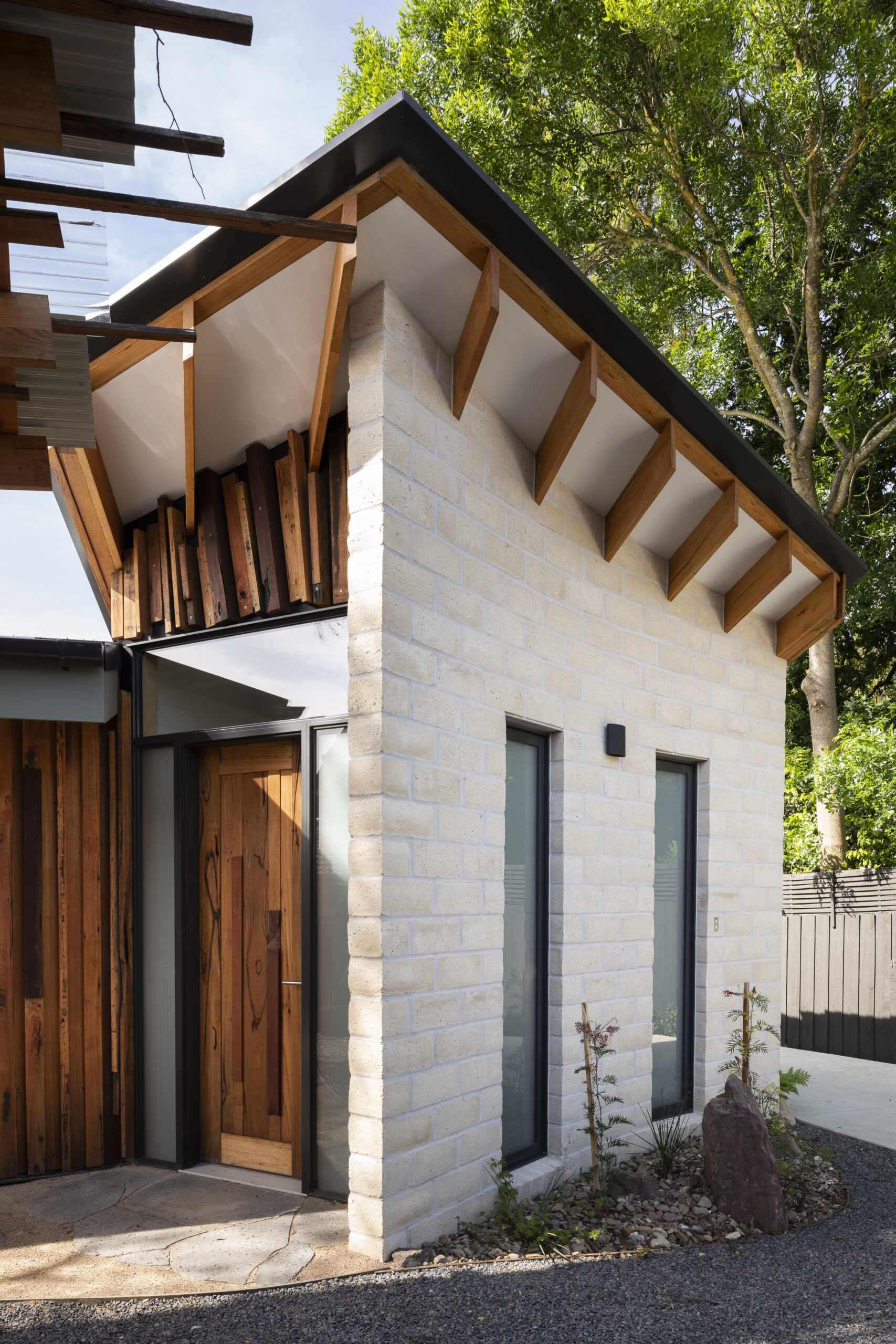
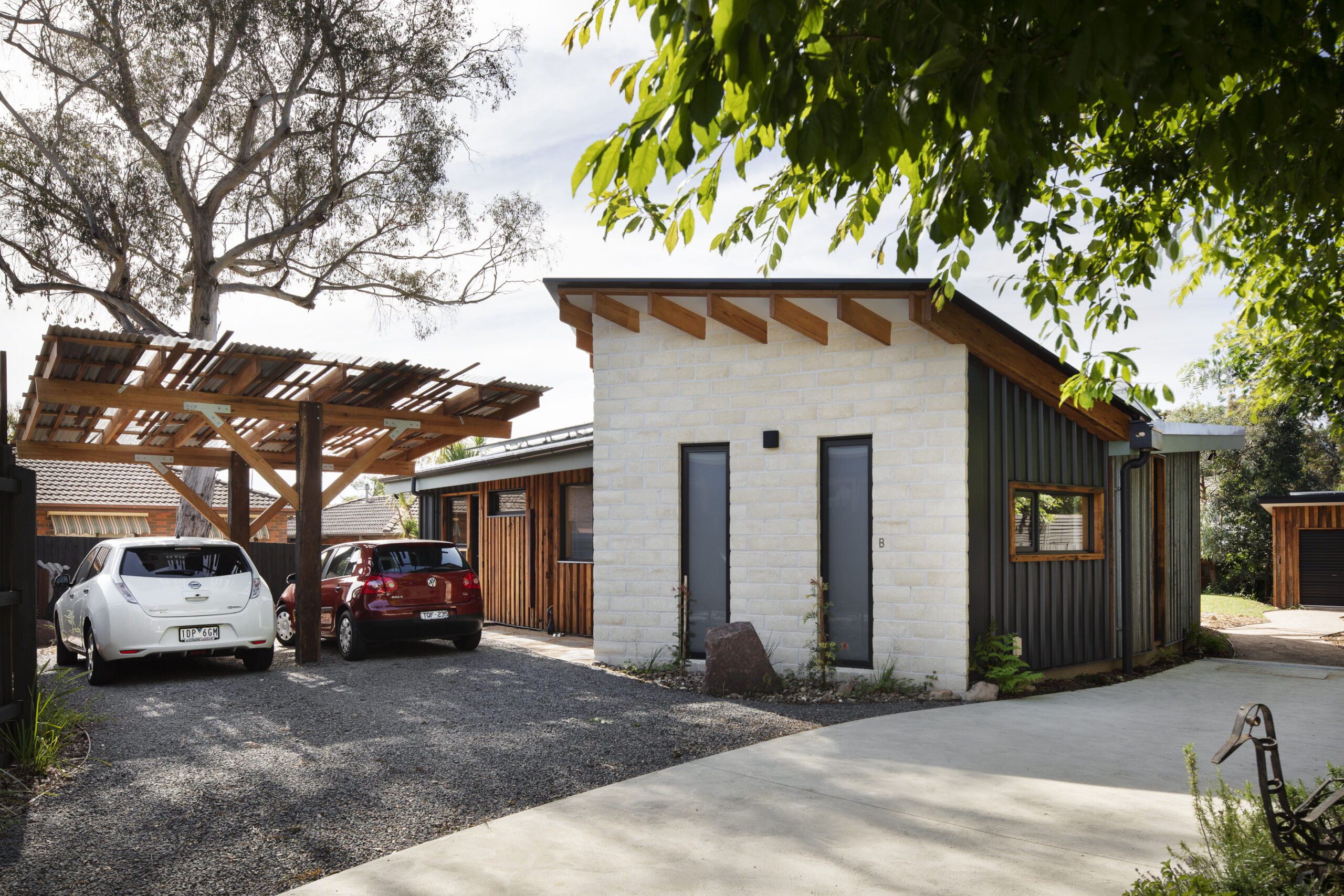
We wanted to create a comfortable, healthy, attractive home with a small carbon footprint and low maintenance requirements. The design evolved over time as specific features of the site dictated which sustainable building ideas were the best fit. Having a block with a north-south orientation is ideal for taking full advantage of passive solar principles. An 8.4 Star NatHERS rating highlights the design’s success.
Other features such as rainwater recovery, indigenous landscaping and walking distance to shops/trains ensured an excellent Built Environment Sustainability Scorecard (BESS) result of 71%.
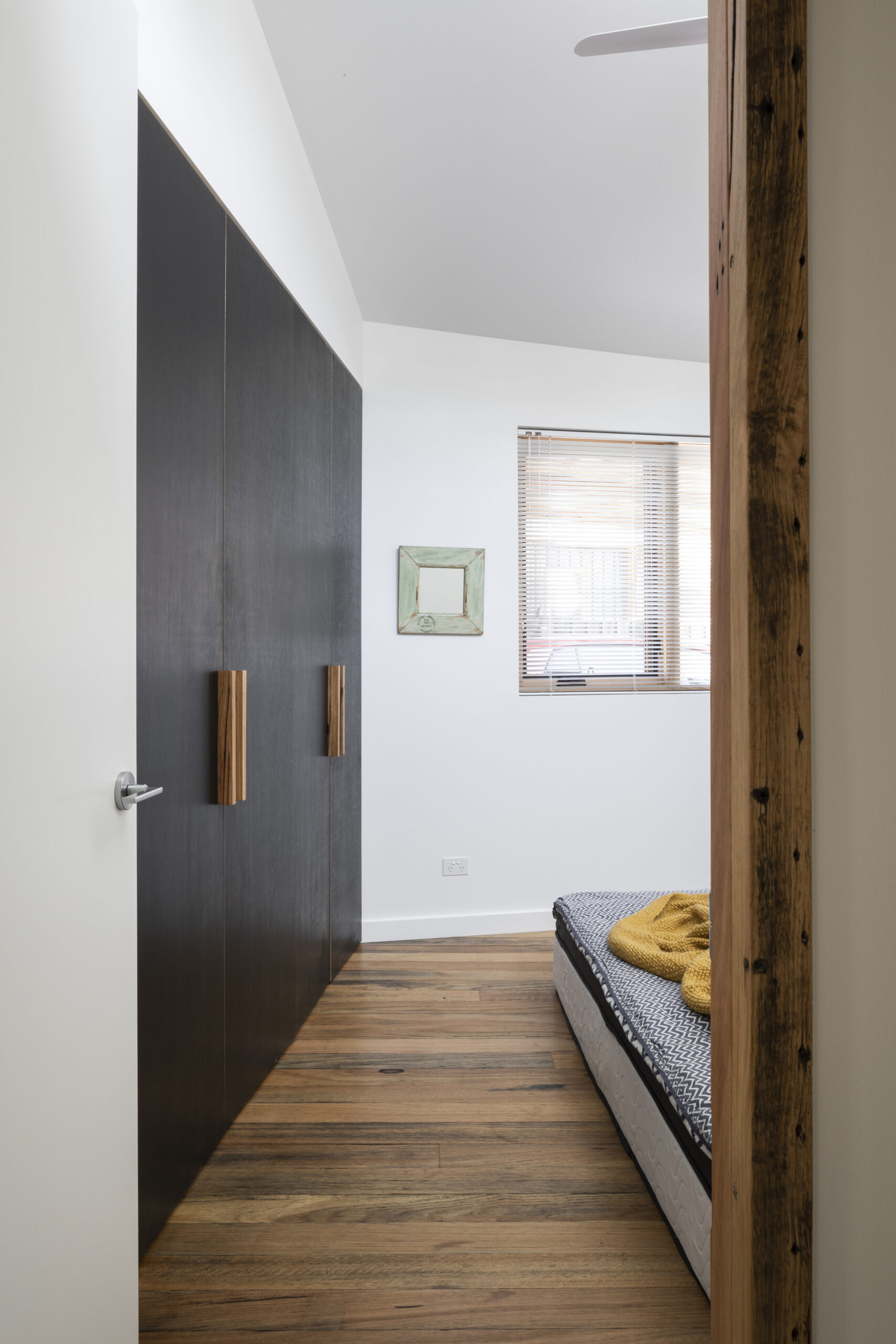
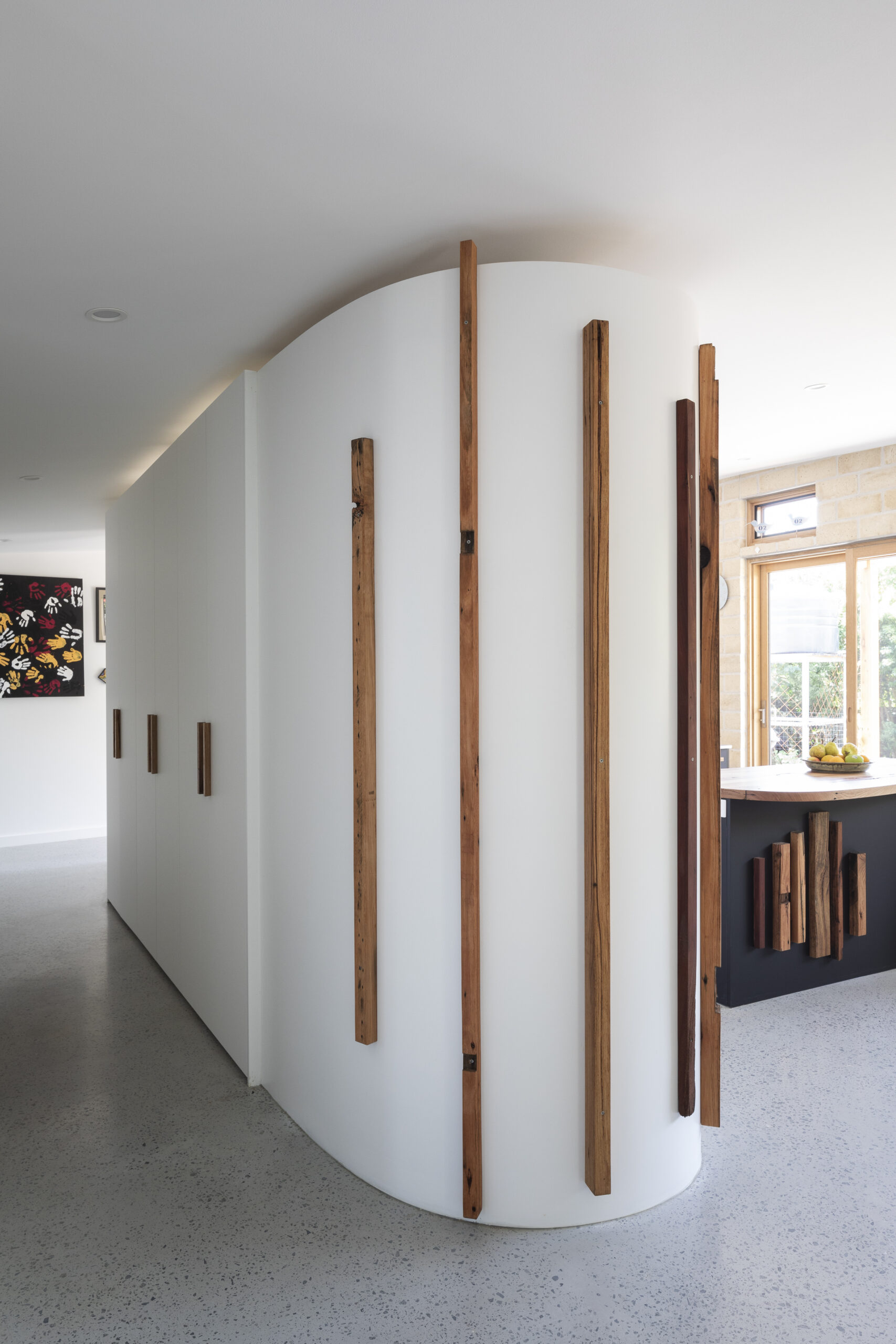
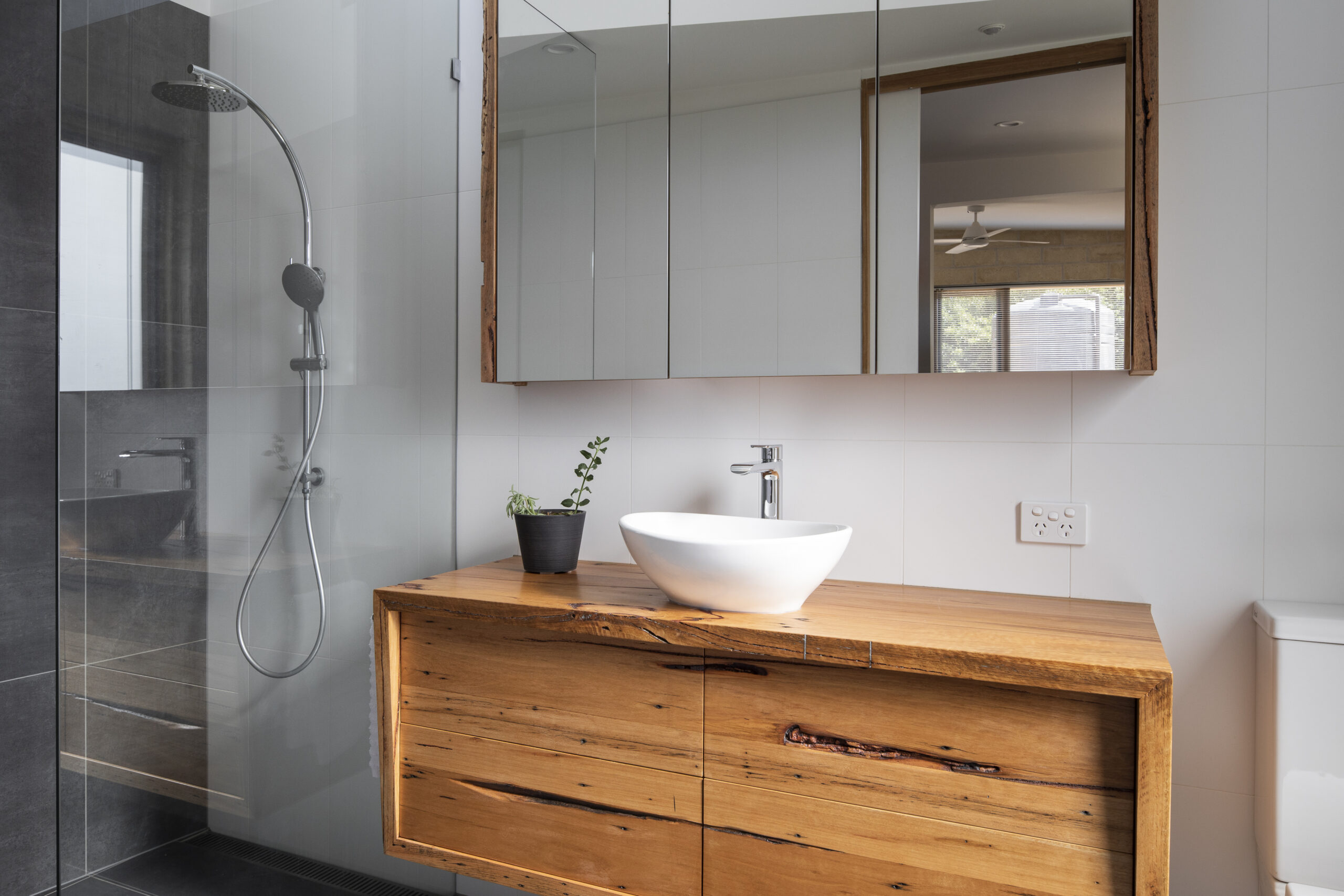
Building the house was another opportunity to act sustainably (Sanctuary 57 “The accidental development”). Dismantling, not demolishing, the old house produced a wealth of hardwood timber to use as cladding, door frames, etc, as well as reclaimed steel roofing for a distinctive, low-maintenance cladding. Thermal mass in the reverse brick veneer construction comes from air-dried Timbercrete blocks. During construction, power tools were supplied with electricity from an off-grid solar power system (Renew 148 “Built with solar, runs on solar”).
Efficient, electrical devices cut electricity demand. A reverse cycle air con meets the minimal heating & cooling needs during extended periods of hot or cold days. A heat pump hot water system provides hot water.
Most of the electricity required comes from the solar panels and battery. The home’s total energy cost for 2025 was $397. Since our EV is usually charged at home from excess solar power, the car’s 2025 “fuel” cost to drive about 10,000km was only $141.
The finished home is a joy to look at and a pleasure to live in. Winning multiple awards in the 2021 Architecture & Design Sustainability Awards showed others agree with us.
Passive solar design demonstrates the benefits of working with Nature, rather than using technology to overcome shortcomings.