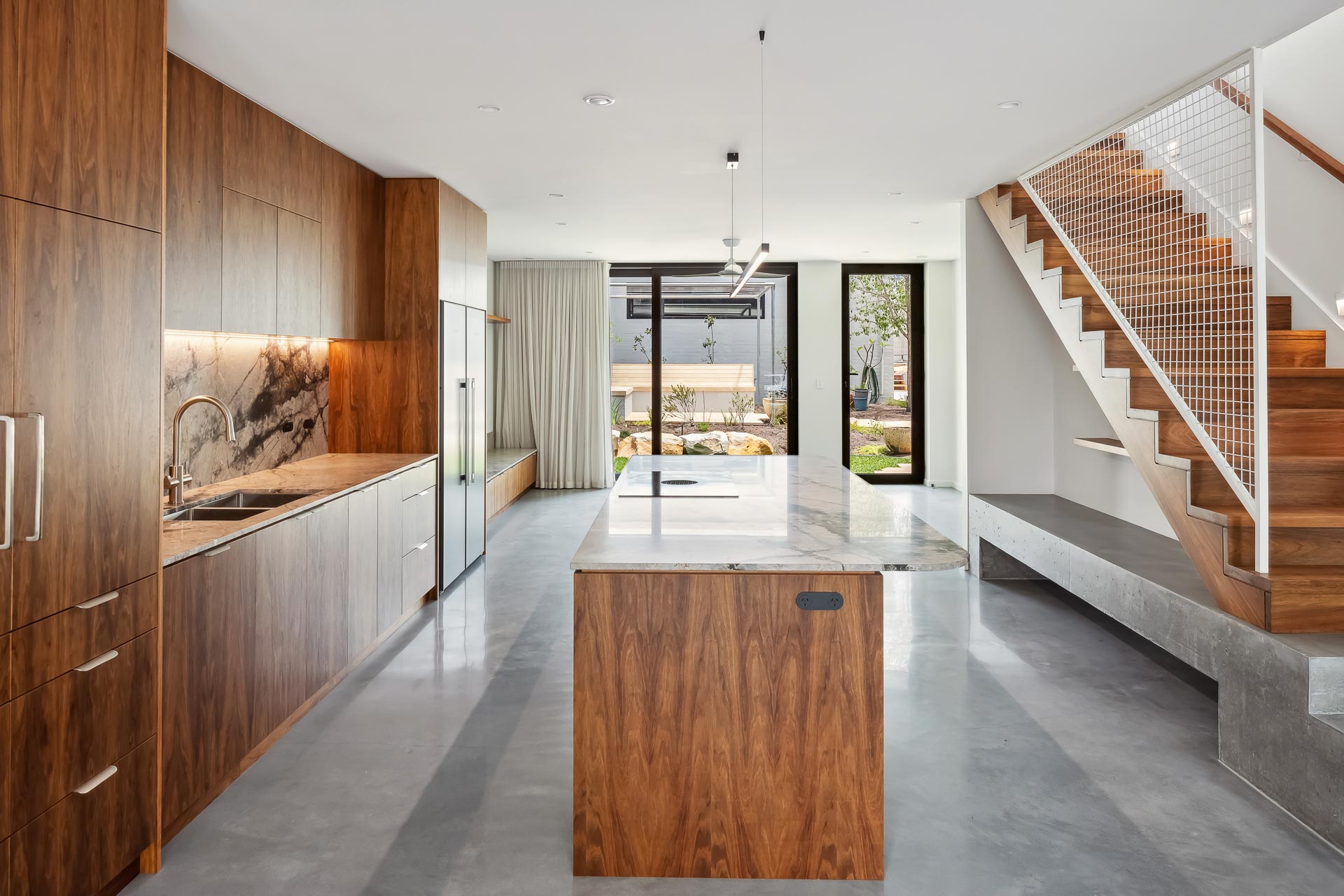
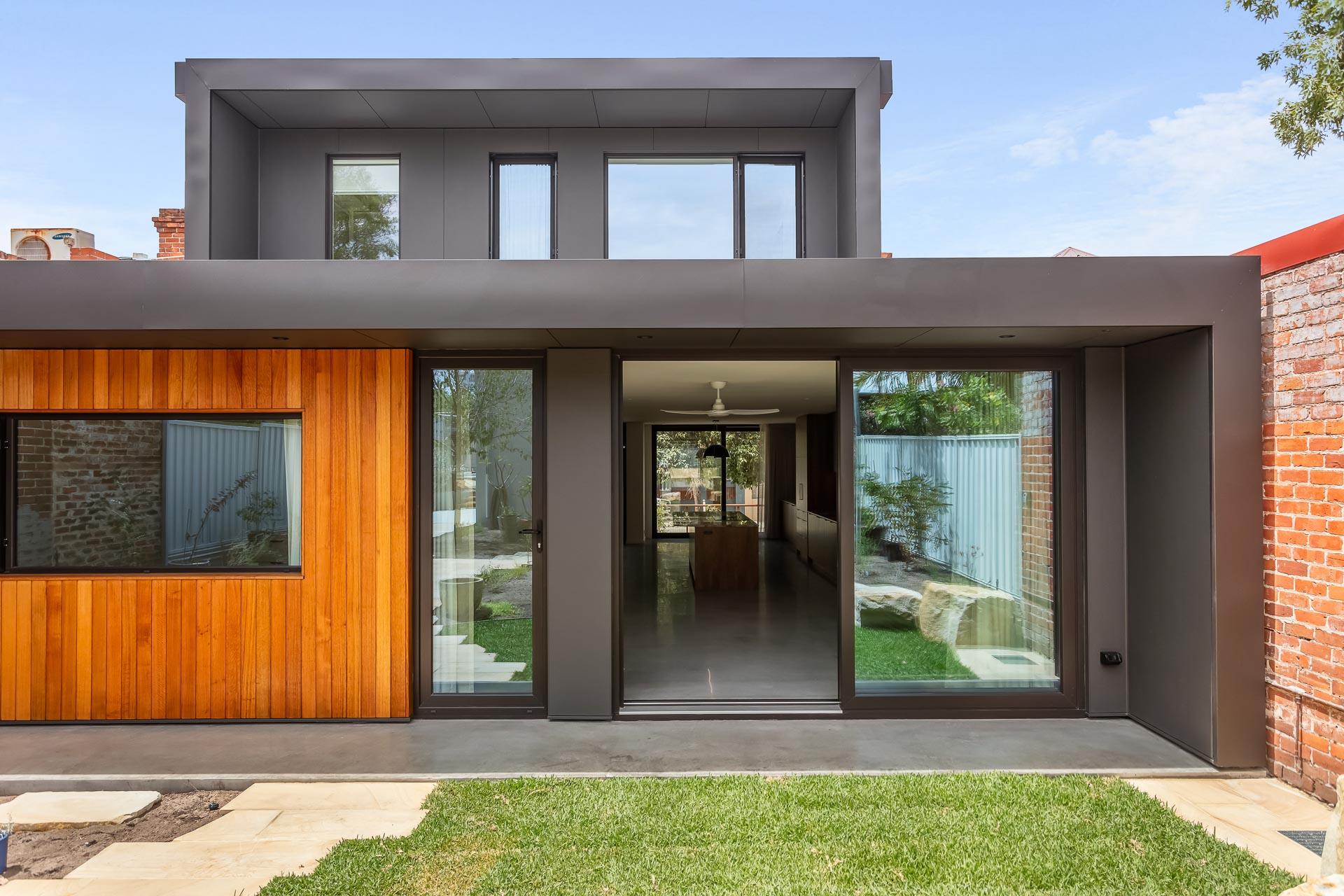
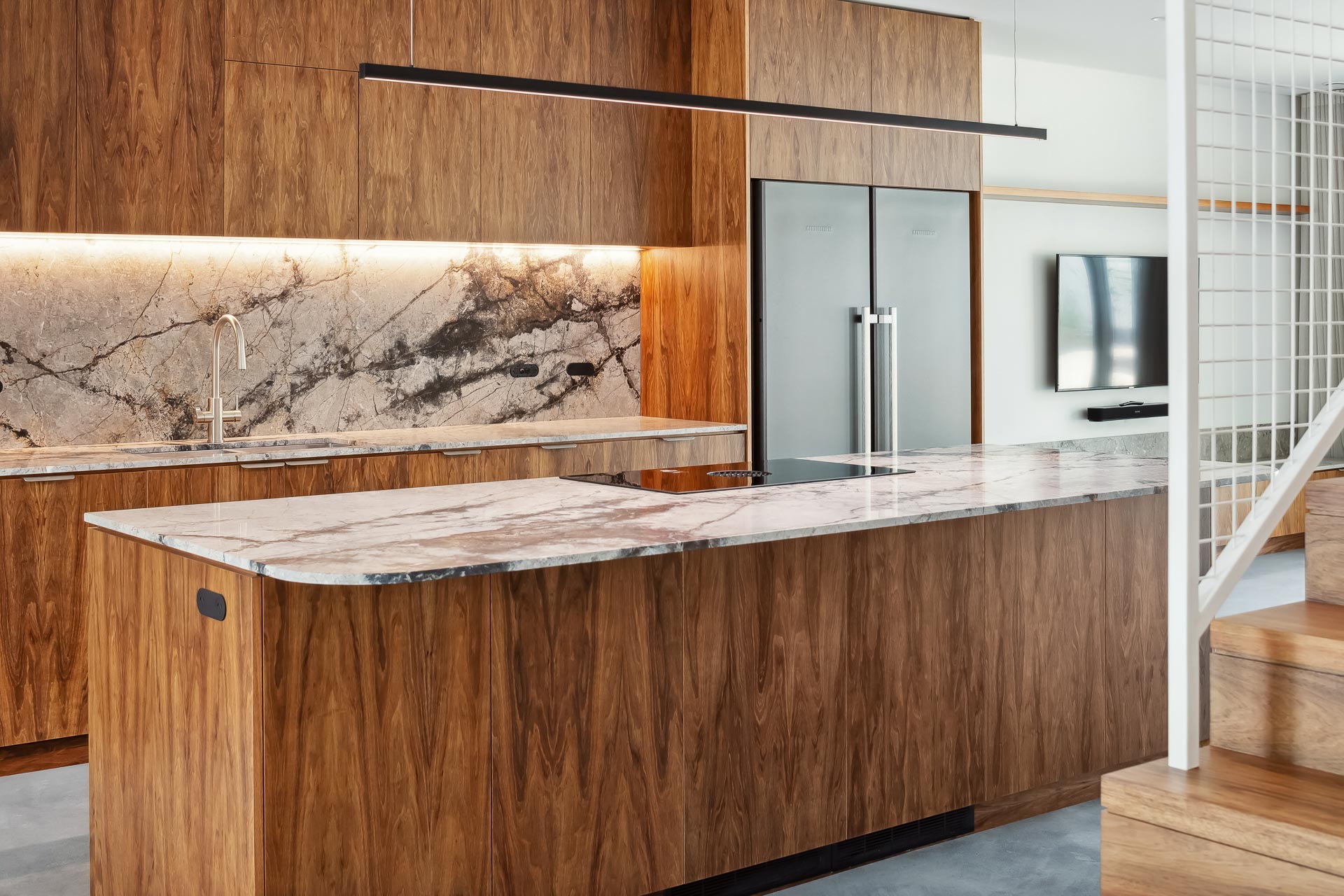
This compact three-bedroom, two-bathroom home demonstrates how high-performance, low-carbon housing can be achieved on a tight inner-city site without sacrificing comfort, liveability, or neighbourhood character.
Designed to target Passivhaus certification, the home is organised around a dual-aspect open-plan living space. This central space captures soft northern light and maintains a neighbourly connection to the street, while also opening to a private rear garden that provides shade, planting, and cooling breezes. The arrangement supports excellent daylight, natural ventilation, and a strong indoor–outdoor connection within a modest footprint.
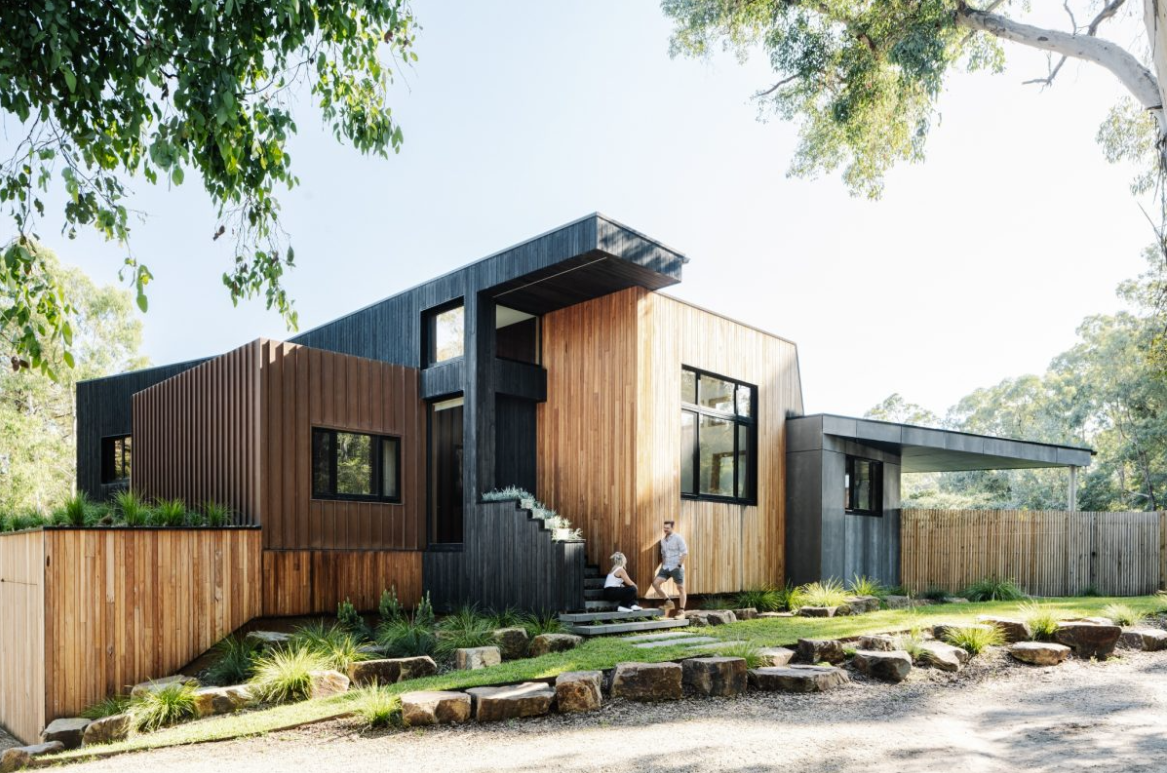
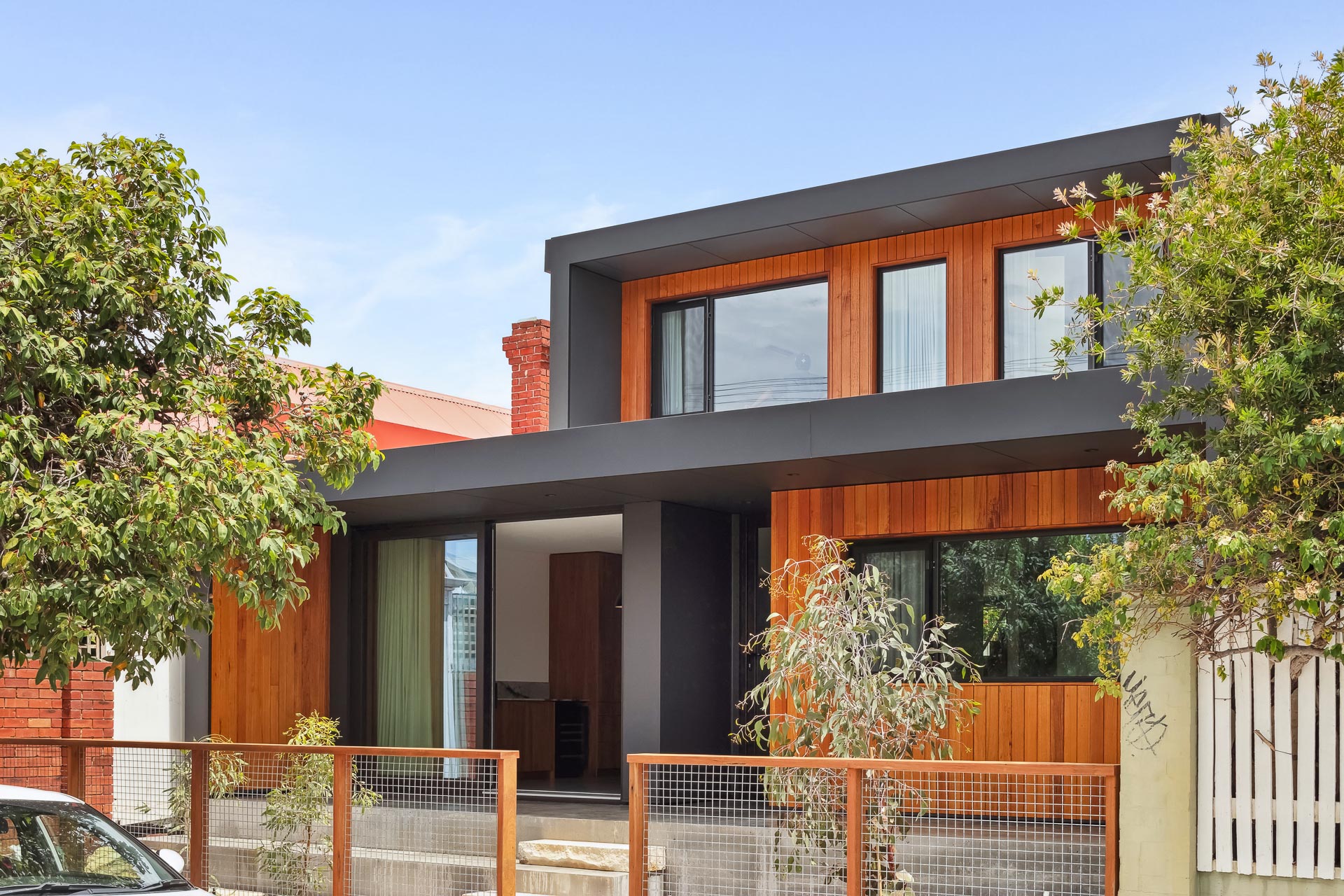
While contemporary in form, the house is carefully scaled and set back to reflect the existing streetscape. Its understated presence allows it to sit comfortably within the neighbourhood, revealing itself gradually rather than drawing attention to its performance credentials.
The building is timber-framed and clad in a combination of Colorbond and timber, selected for durability, low maintenance, and reduced embodied carbon. High levels of insulation, a continuous airtight layer, and high-performance windows deliver stable indoor temperatures and a quiet, draft-free environment throughout the year. Mechanical ventilation with heat recovery provides constant fresh air while minimising energy use.
A full Life Cycle Assessment was undertaken for the project, demonstrating a 96% reduction in global warming potential compared to a standard benchmark home. This highlights the impact of early design decisions in reducing both operational and embodied carbon over the building’s lifetime.
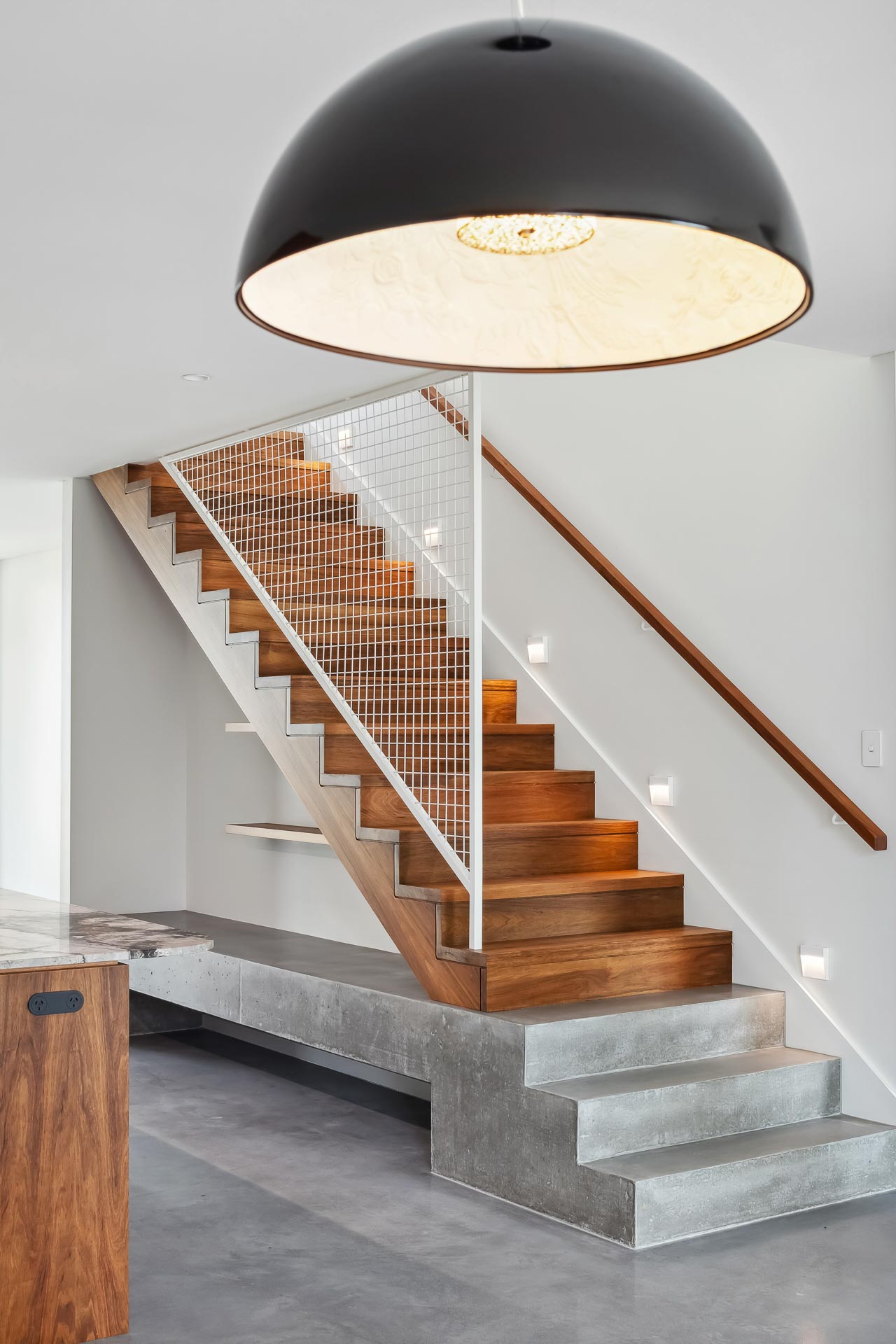
Above all, this is a home designed to feel good to live in; calm, light-filled, and comfortable:
“It’s just nice to look at. It’s nice to come home to. It’s nice to walk up to. It sits really nicely in the street. You can’t tell this house is here until you’re right out the front of it.” DR, Owner