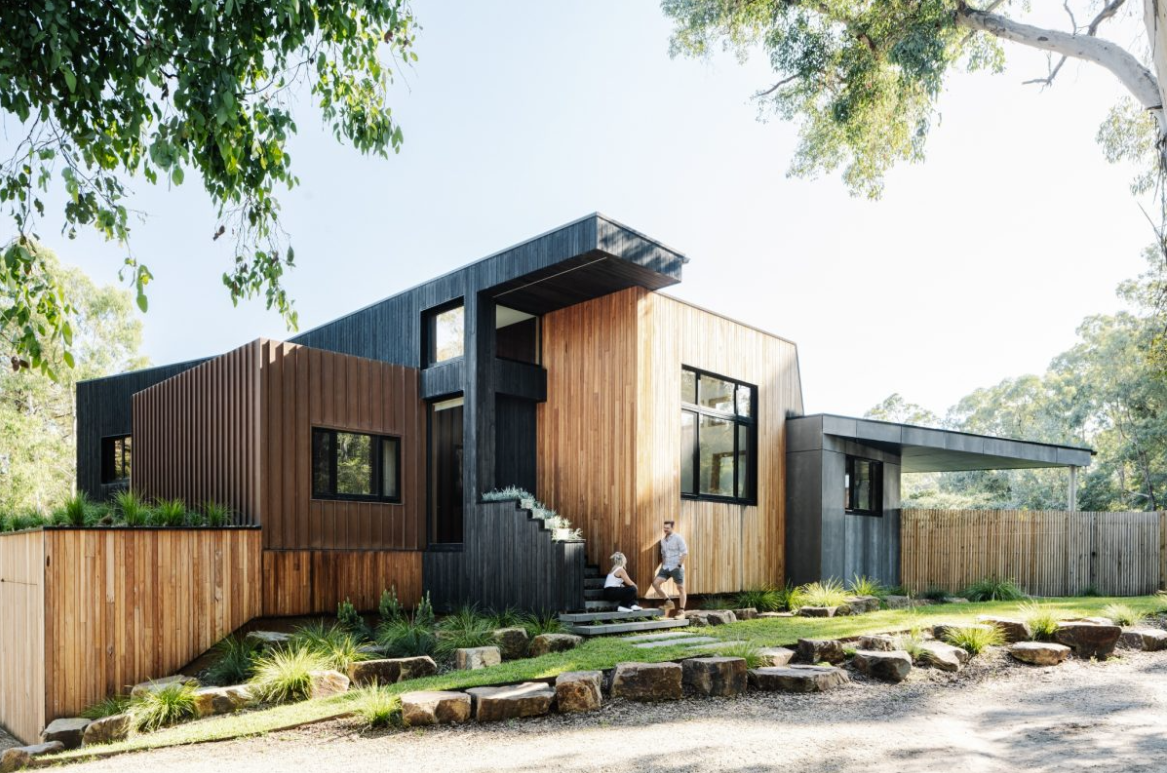
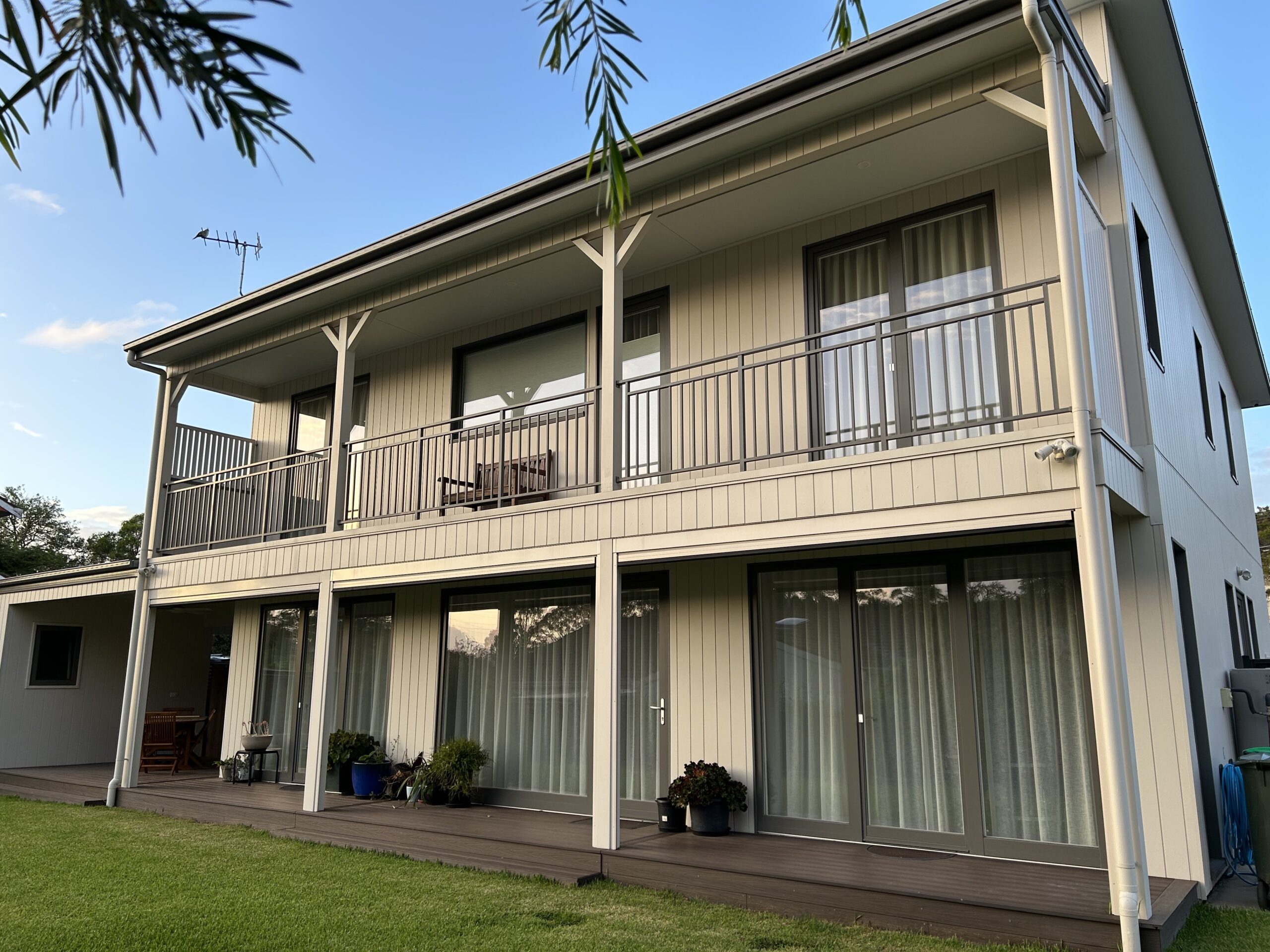
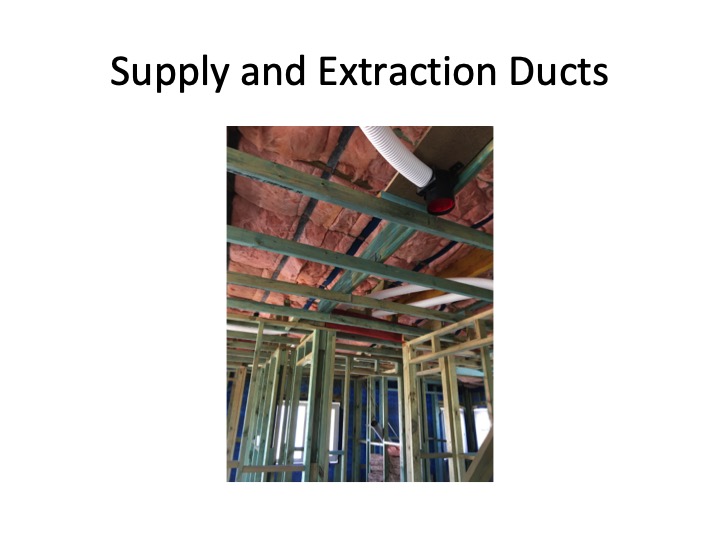
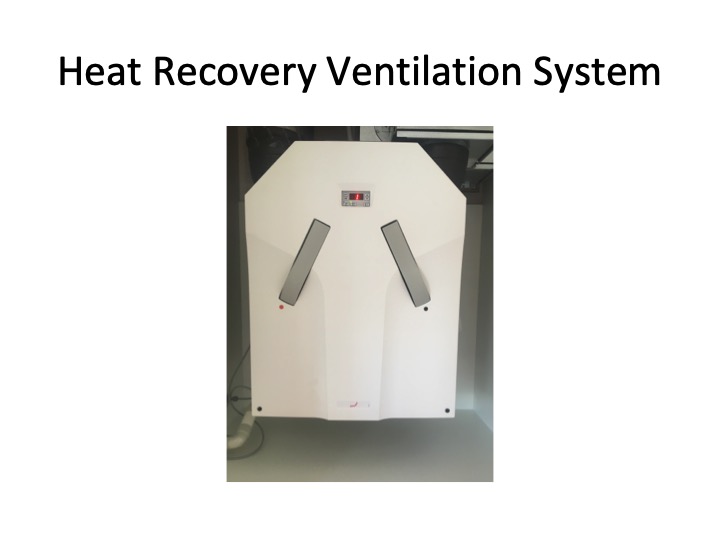
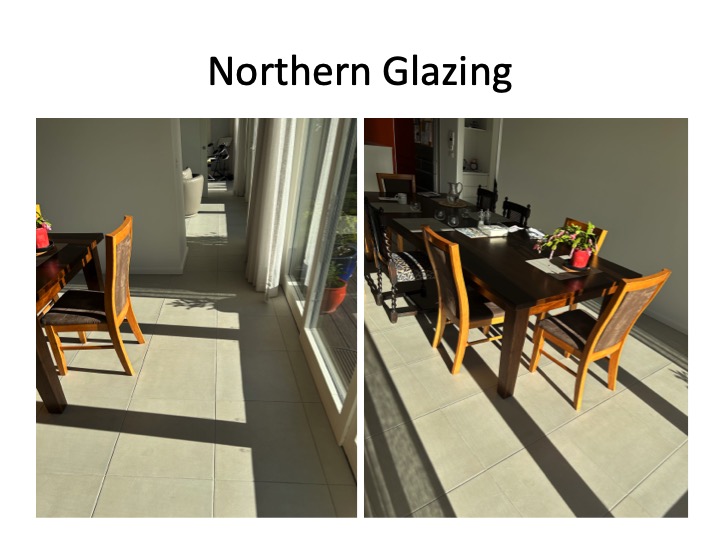
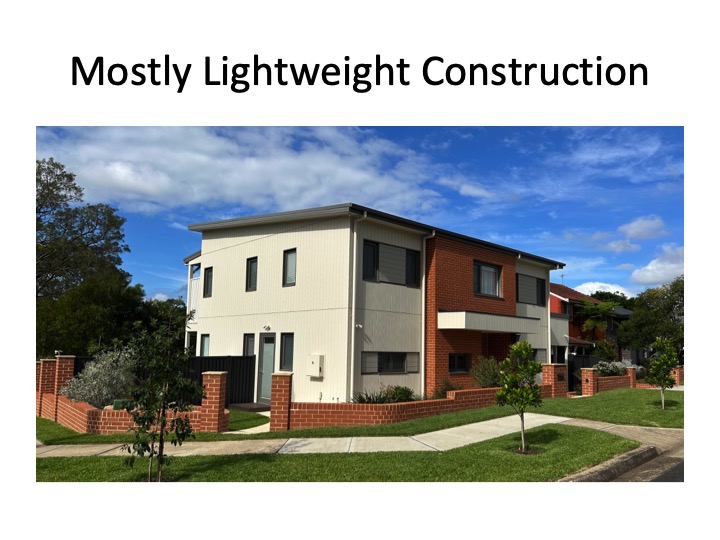
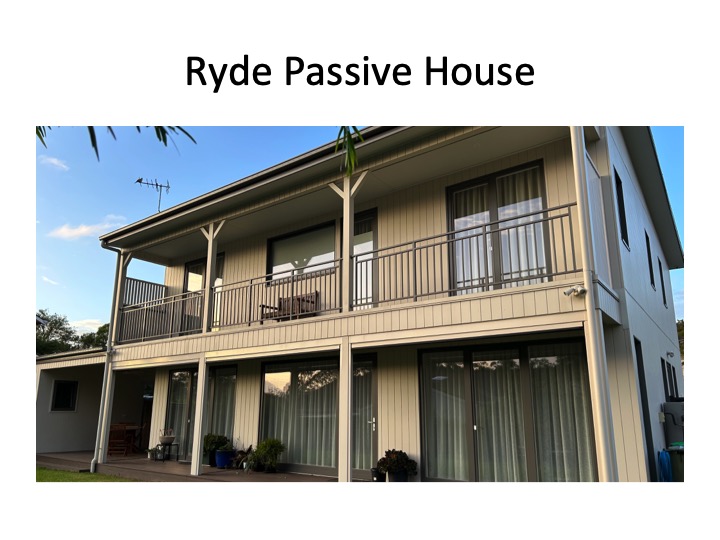
Ryde Passive House is a 2-storey home on a corner block in suburban Sydney. It was designed to take advantage of a long boundary on the northern side of the block and lend itself to passive house construction. Bedrooms and living areas are arranged on the northern side to attract light all year round and maximise solar heat gain in the colder months. The prominent balcony to the north is 1.5m deep and provides excellent shading during summer, whilst allowing plenty of light into the house.
Design was used to treat the glazing on the southern side of the house. Windows in this area were deliberately kept small for thermal performance reasons. To balance the aesthetics, recessed panels and flashing were used to create a visual connection and provide an overall impression of larger window openings. The house takes a simple form and is intended as a backdrop to extensive native gardens and trees.
This house is a very easy and comfortable place to be. The temperature is stable within a narrow range and all rooms are roughly the same temperature. Our new air-conditioning unit is the same size as the one in the previous house, which was half the size. It worked very hard to keep us comfortable(ish). The unit in this house seems to do far less work, even on very hot days. We have not used it at all for heating so far. It is a quiet house. We were becoming very aware of increasing urban noise, so it has been delightful to close the doors and windows to keep out unwanted noise.
The project aimed to achieve Passive House certification in the most cost-effective way. This required a lean approach to the envelope and a simplification of the construction details. The house uses a single airtightness membrane, which is also the weather resistant barrier. The WUFI analysis for this project demonstrated the applicability of this construction method, which in turn reduced the overall cost of the project. It was certified in June 2023.
No wheelchair access at this property.