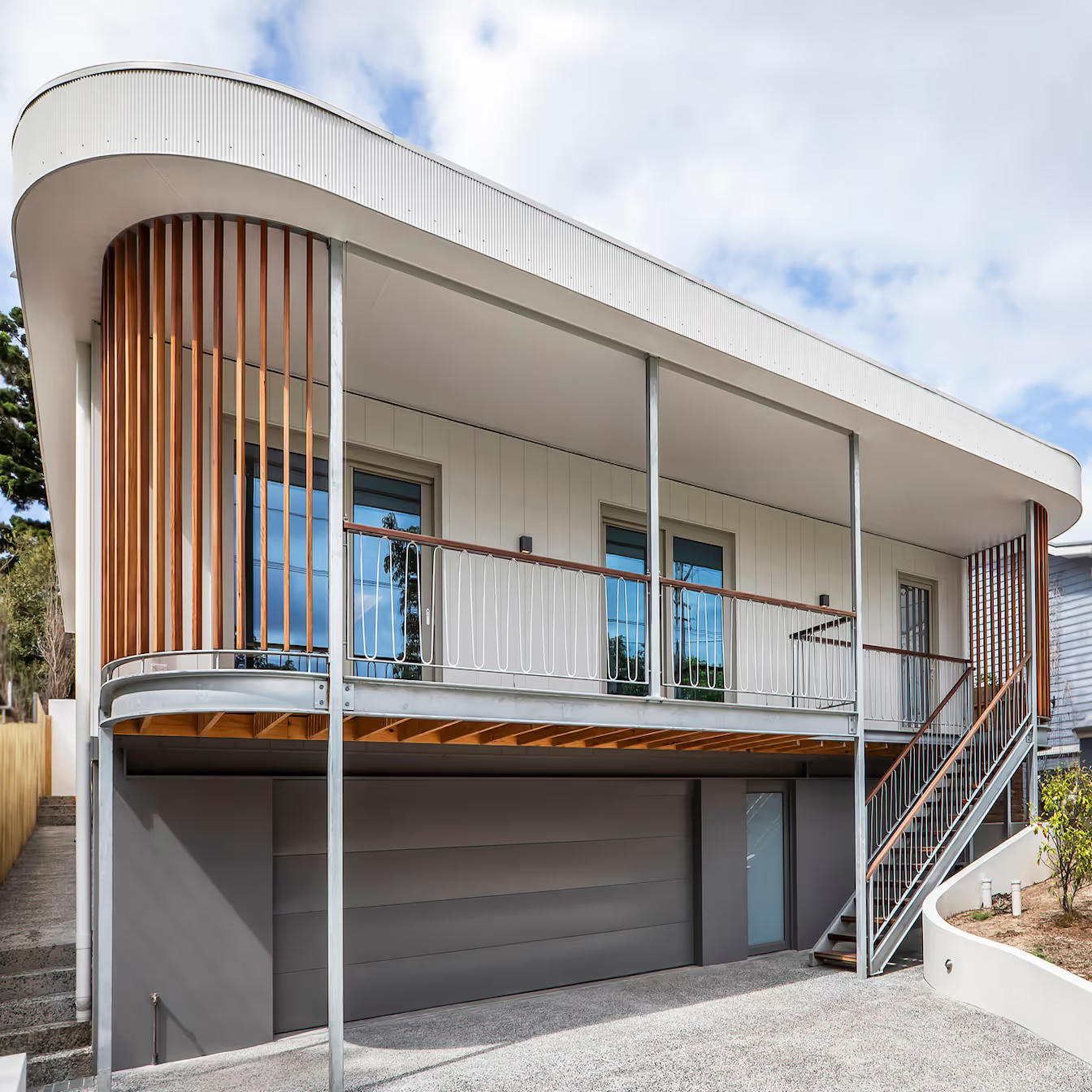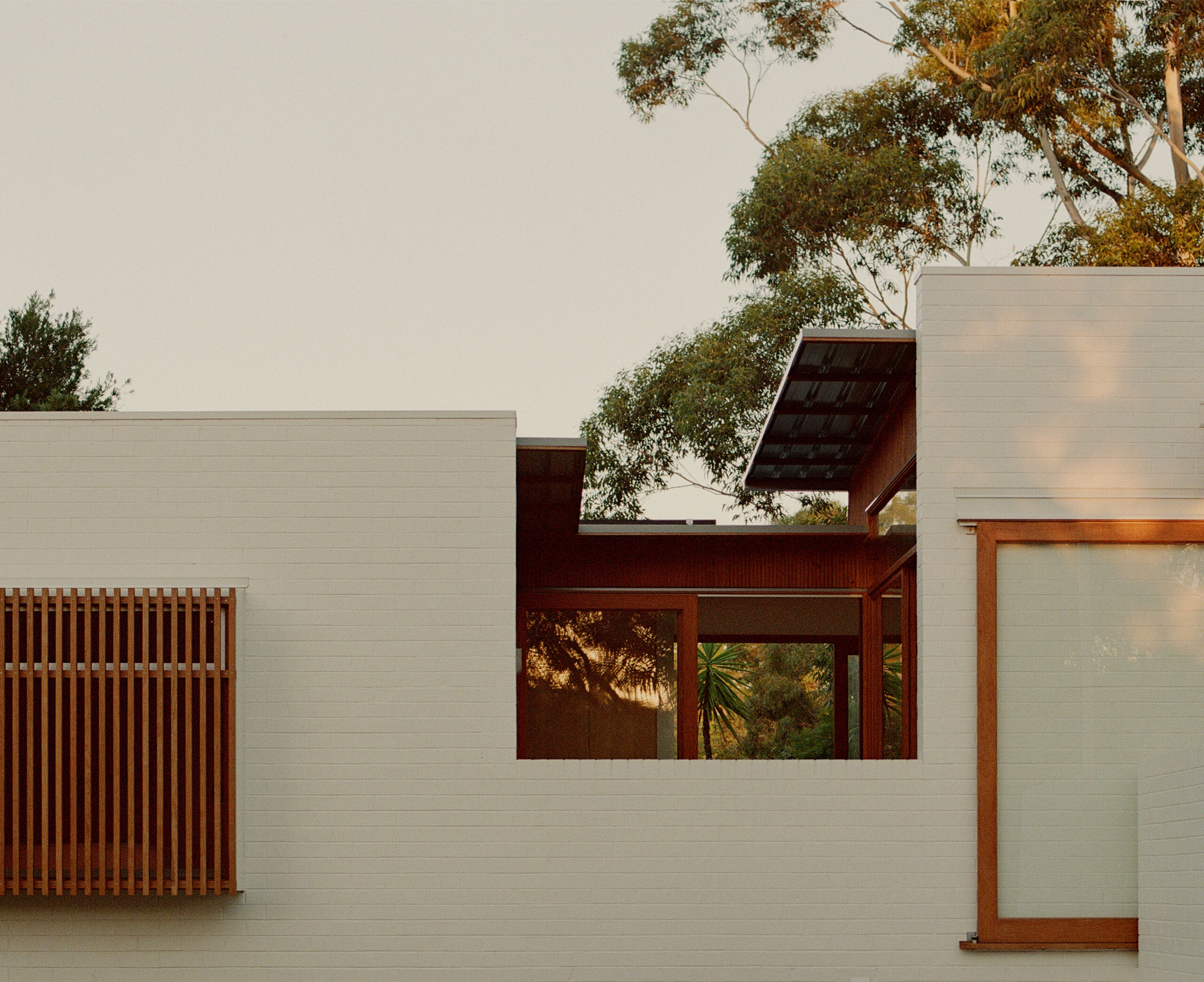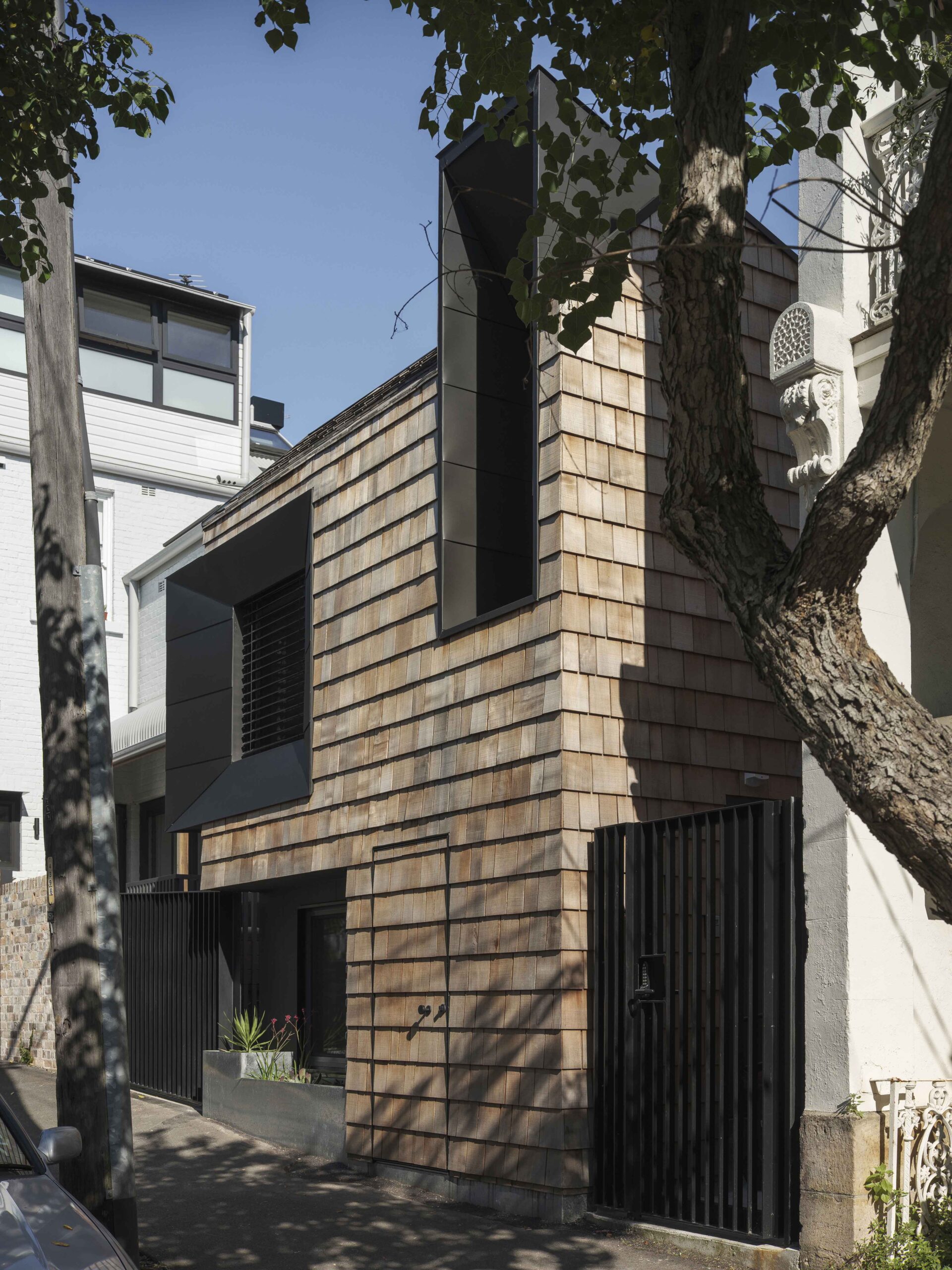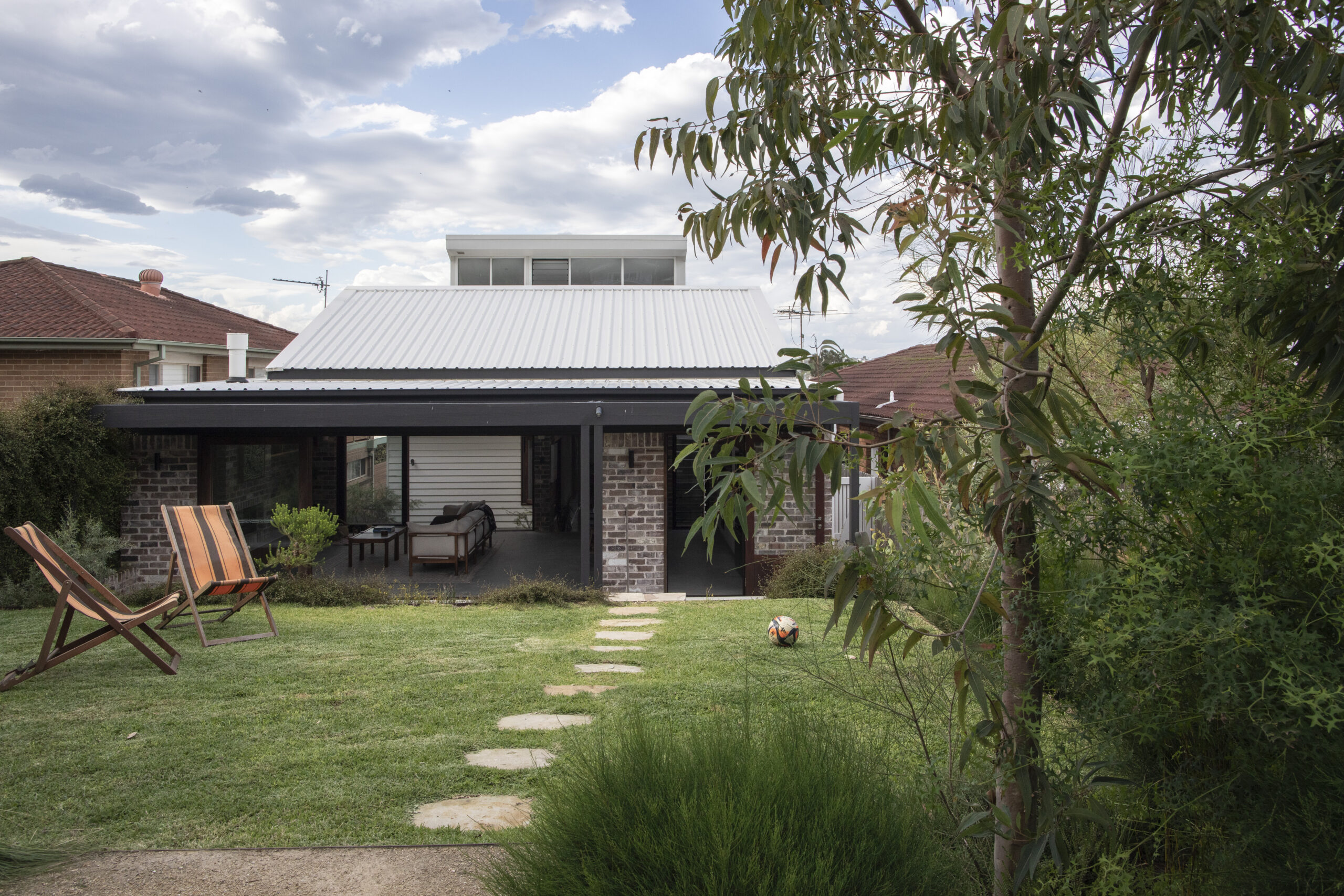
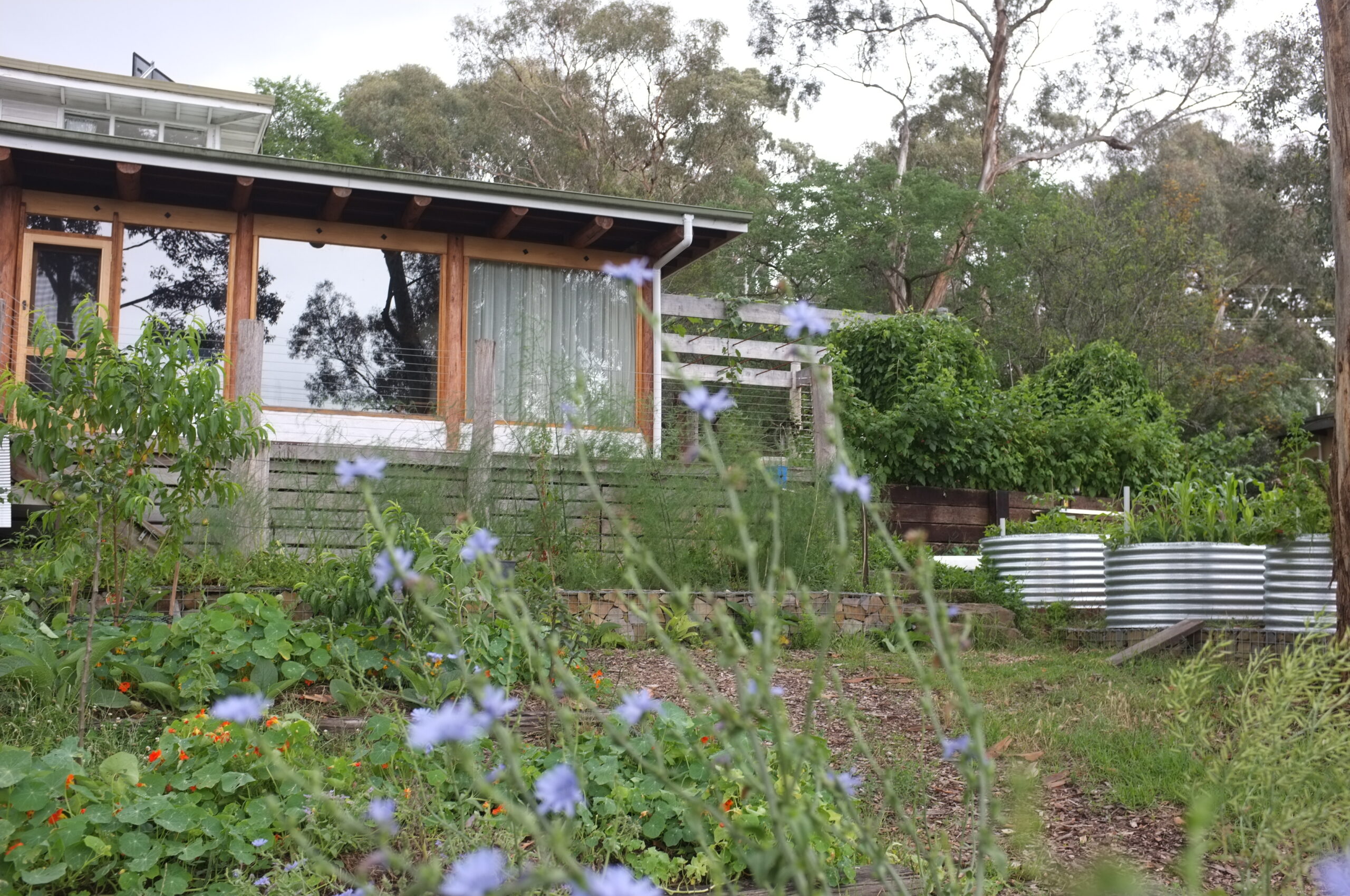
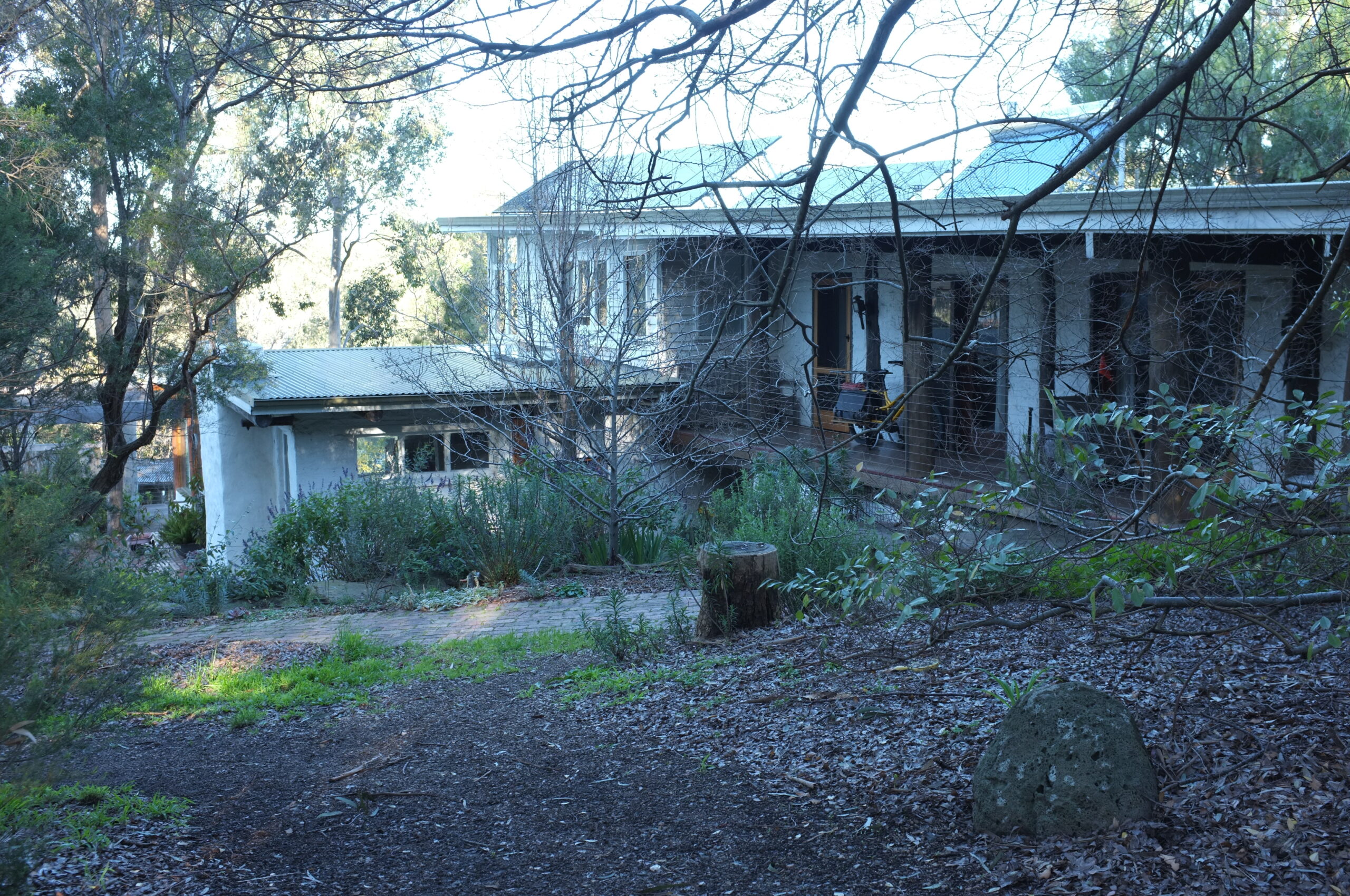
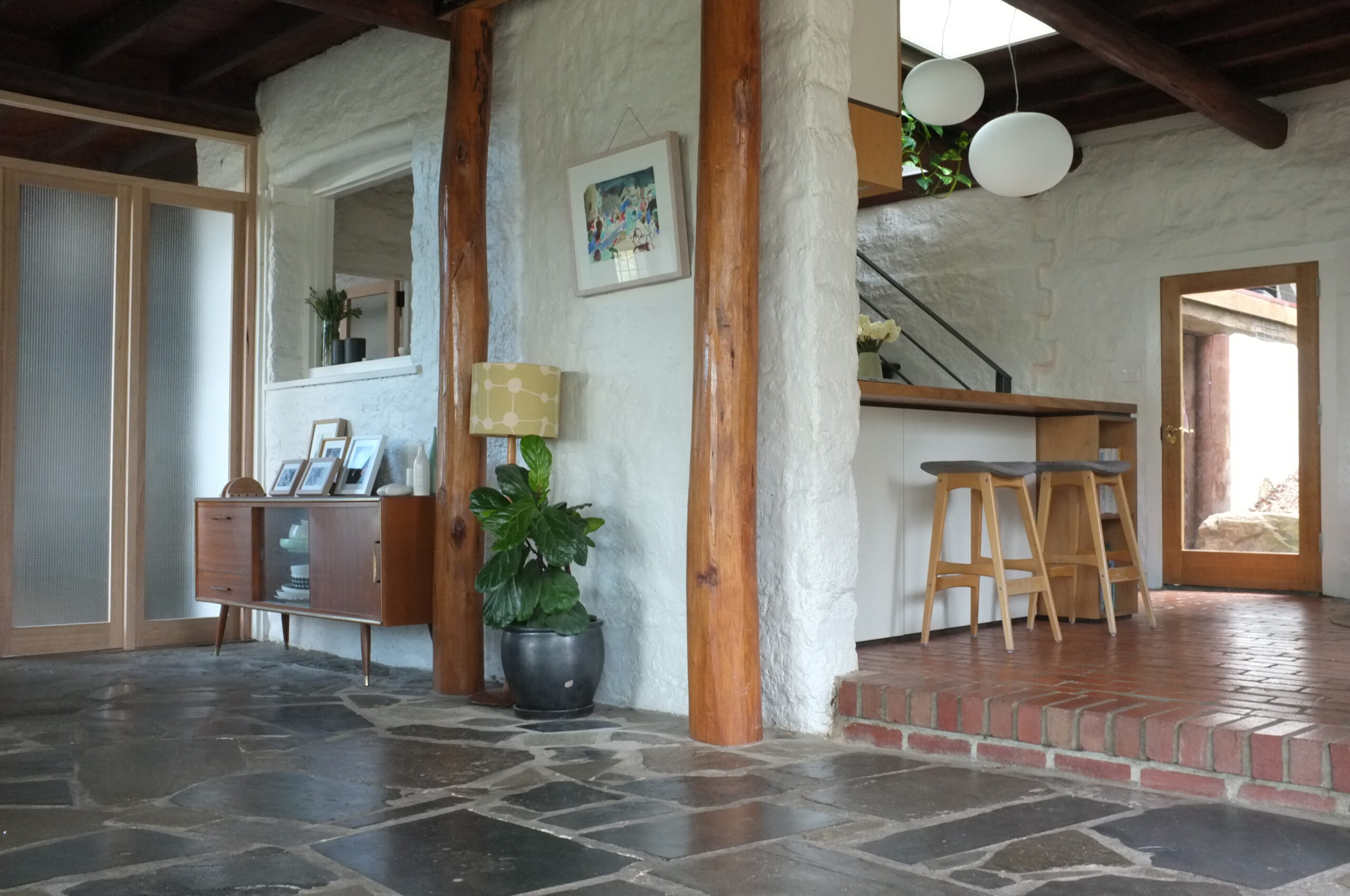

An early Eltham mudbrick home, built by Tim and Betty Burstall in 1948, the house has expanded over the years from a modest cottage to a substantial home. Dan, Liz and their young daughters have lived here since 2016 and have been working in alignment with the essence of the place to bring more life and comfort in ways which consider the world as a whole. Sustainability informed by history, permaculture, downshifting, appropriate technology and behavioural approaches.
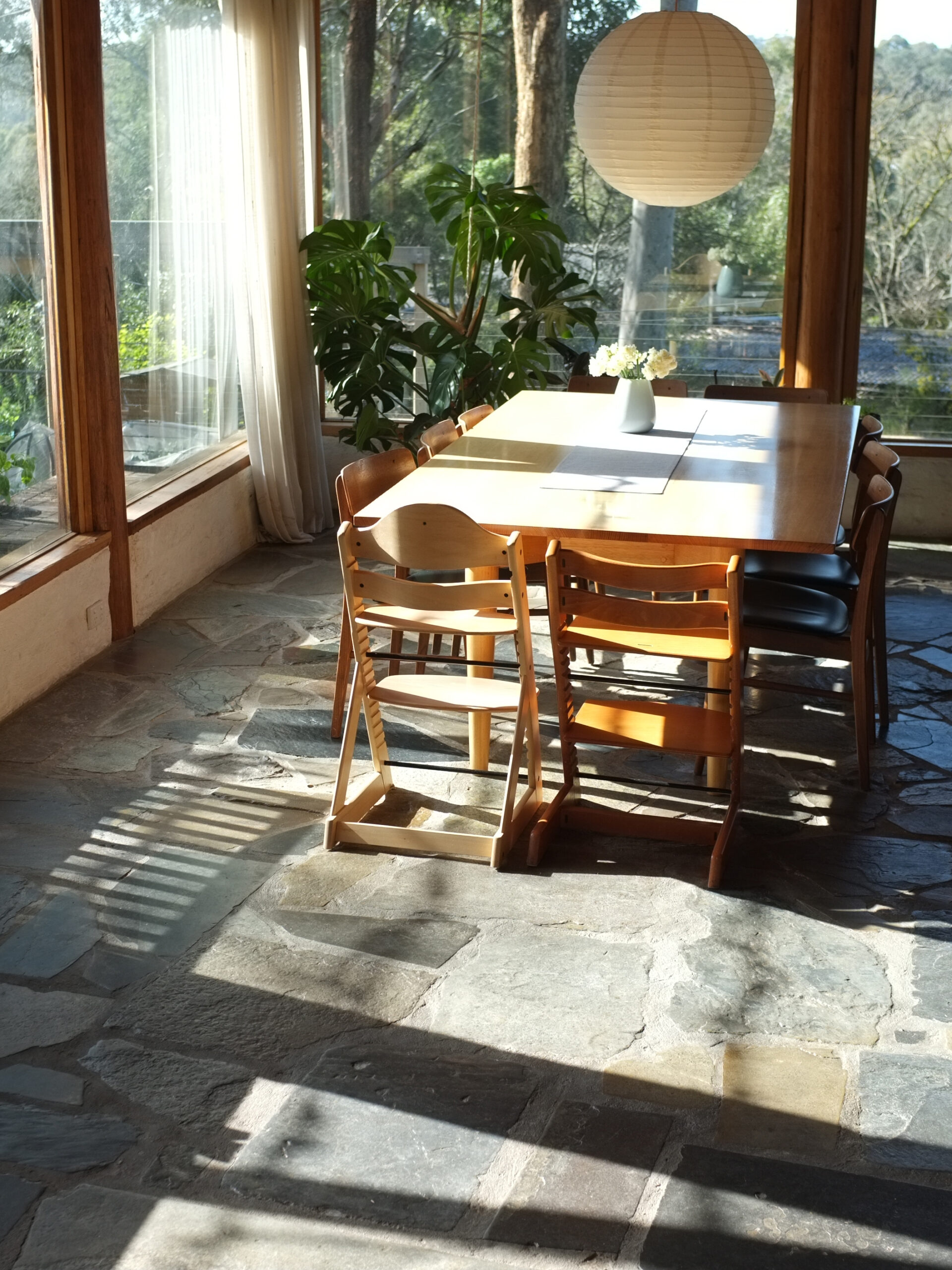
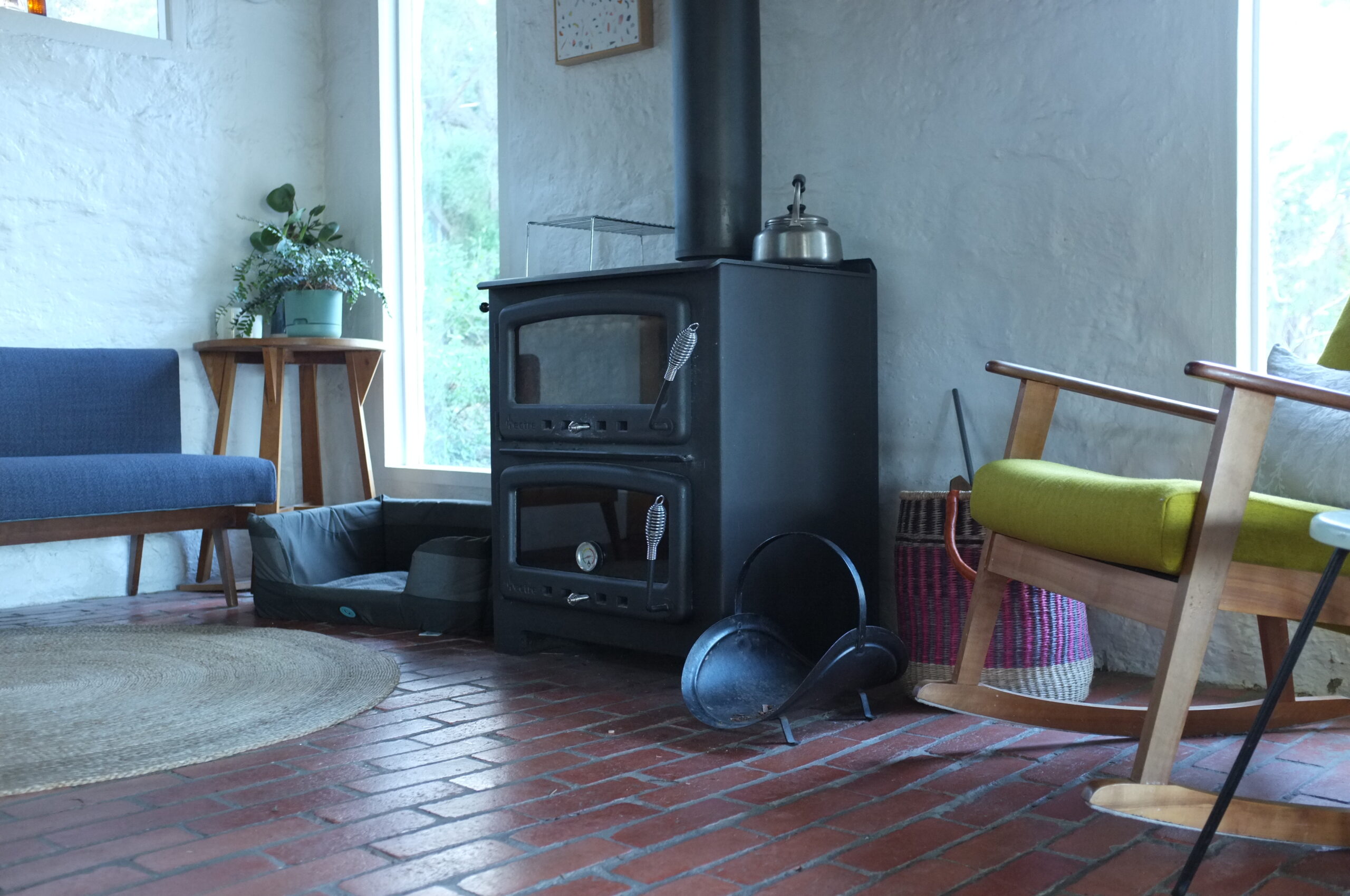
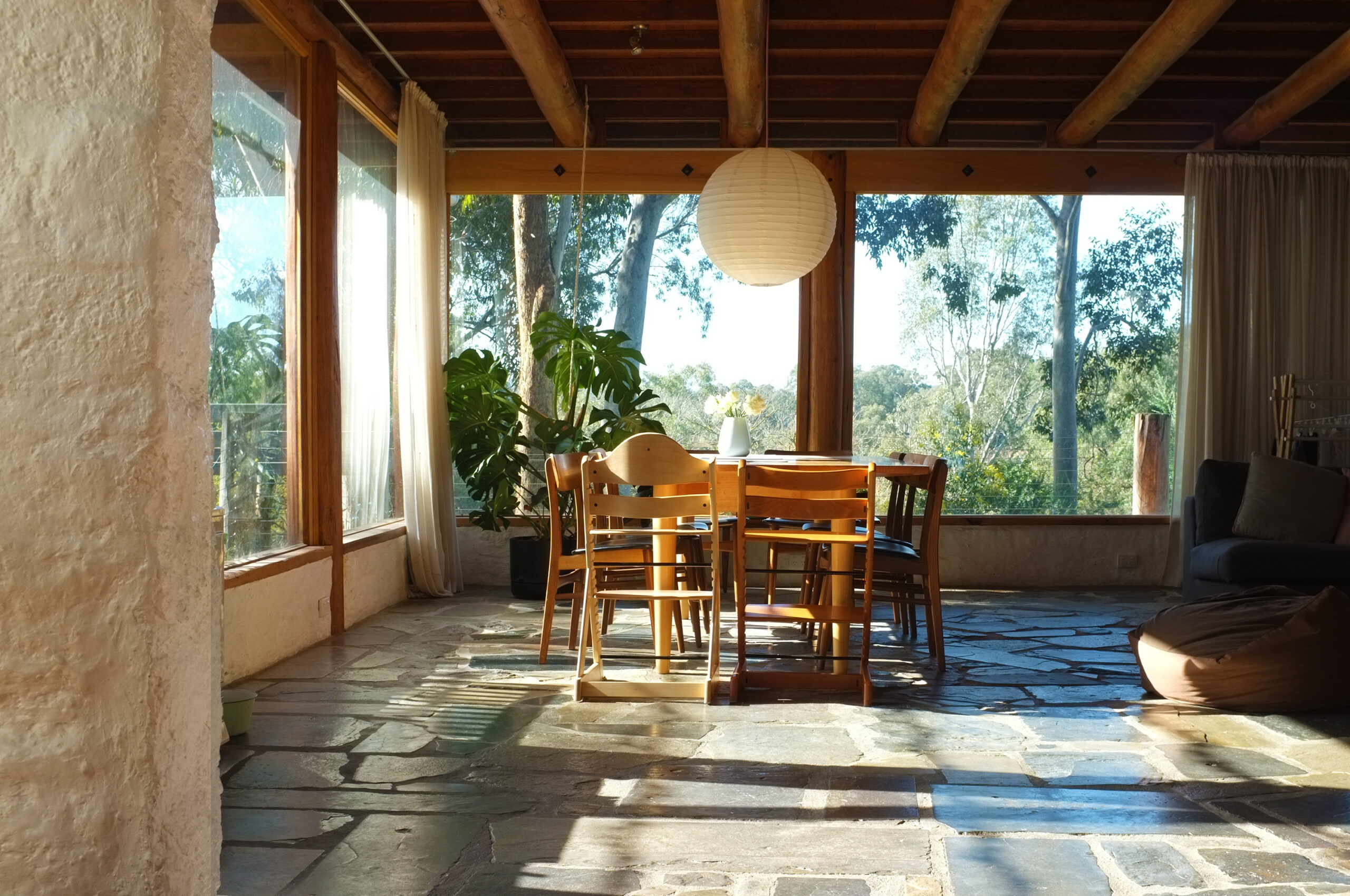
Generously proportioned rooms with large areas of glazing and mudbrick walls make thermal efficiency a challenge here. A Nectre wood heater and oven, thermal mass, northern orientation of living areas, and careful management of window coverings and internal spaces help to make (most) areas of the home comfortable over winter.
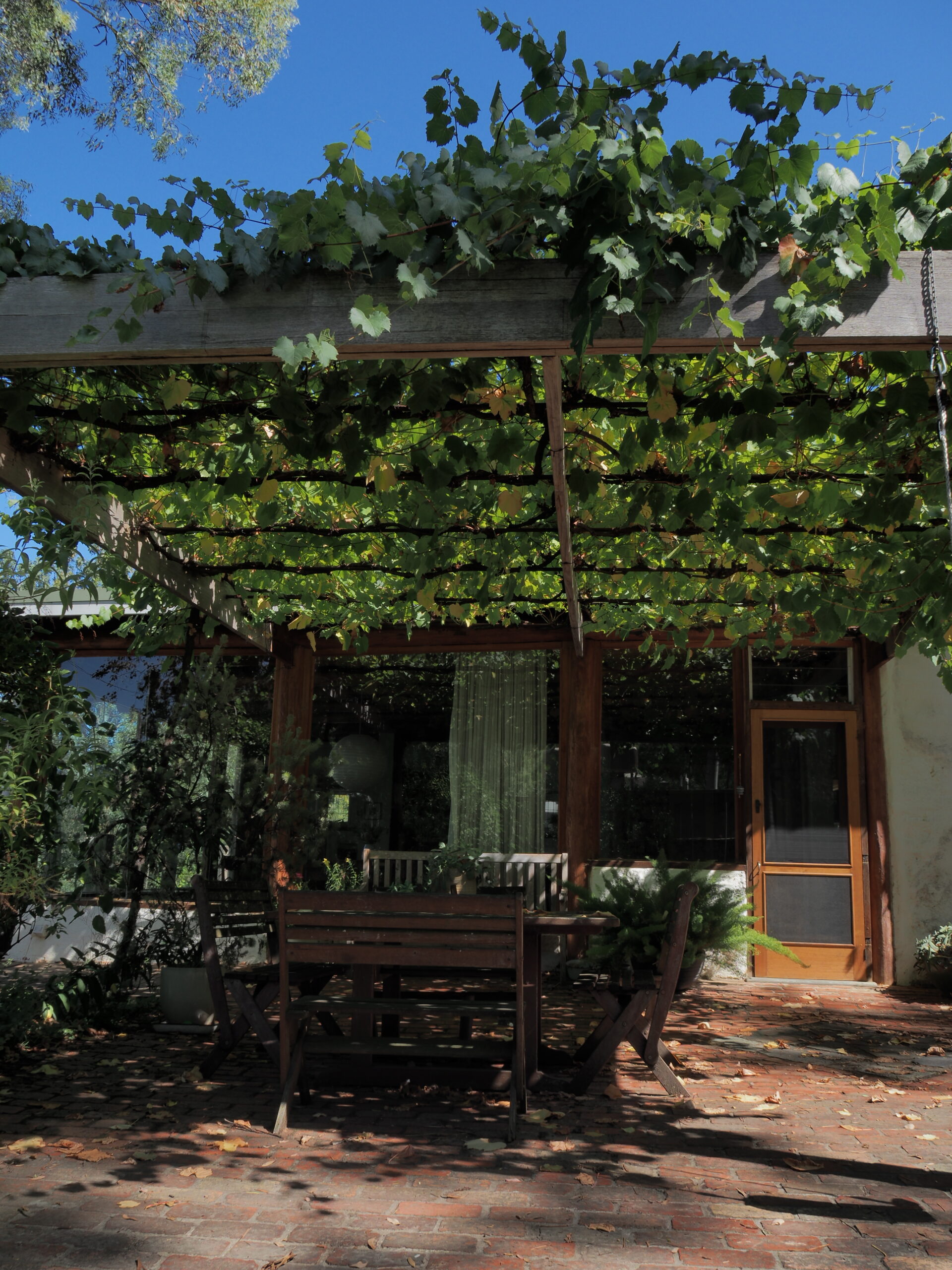
An easterly aspect and mudbrick thermal mass help to keep the home relatively comfortable through hot Melbourne summers. Current strategies include a grape-covered pergola, plantings and pruning surrounding the home, careful management of curtains and ventilation and regular splashes in the river!
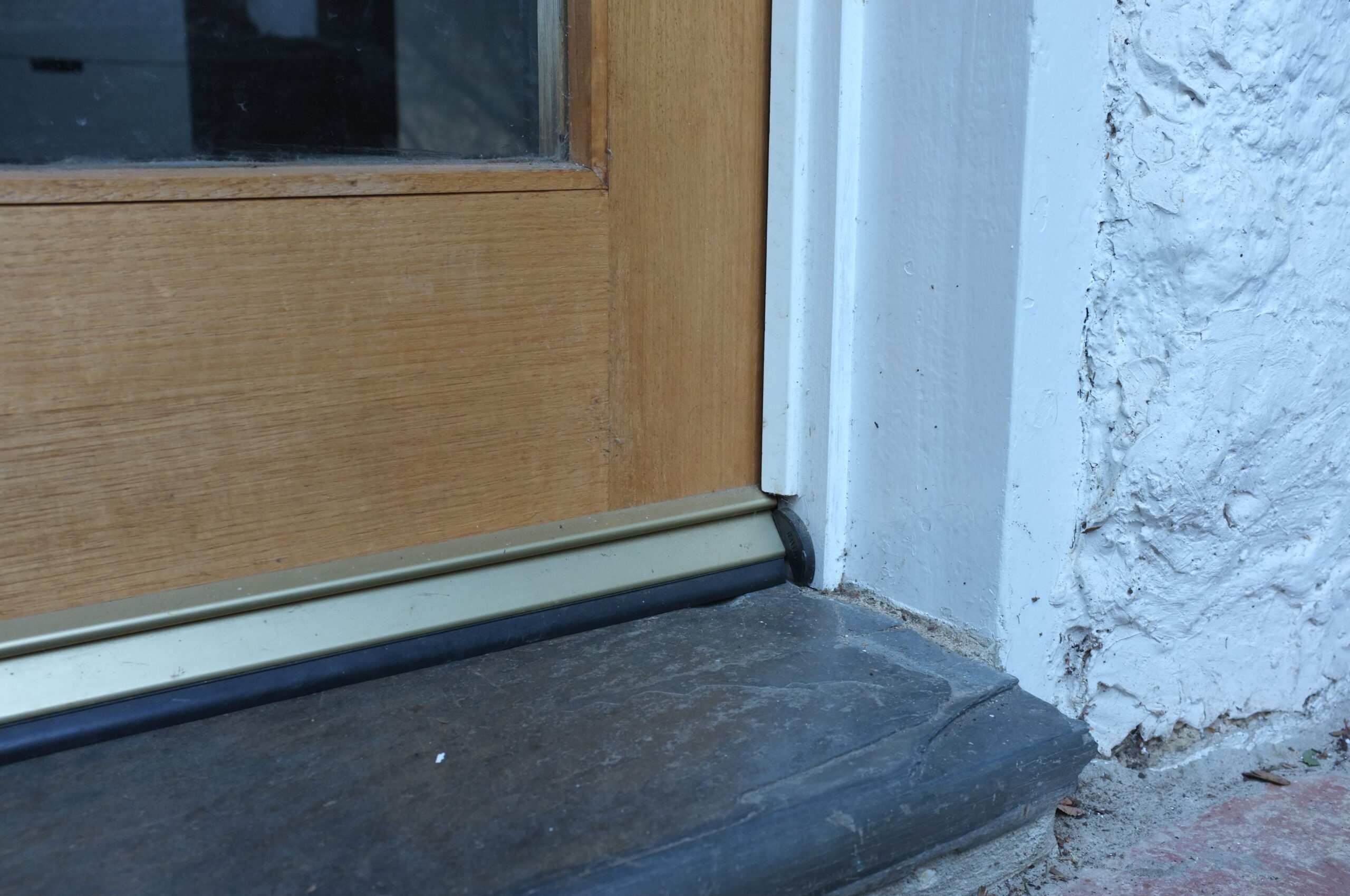
A mudbrick home built over several generations of owner-builders calls for many unconventional approaches to retrofitting. Lots to discuss about floor and ceiling insulation, pelmets, vent covers and sealing of draughts. With so much glazing in the home, we're keen to make space for dialogue with visitors around double-glazing and other approaches to management.
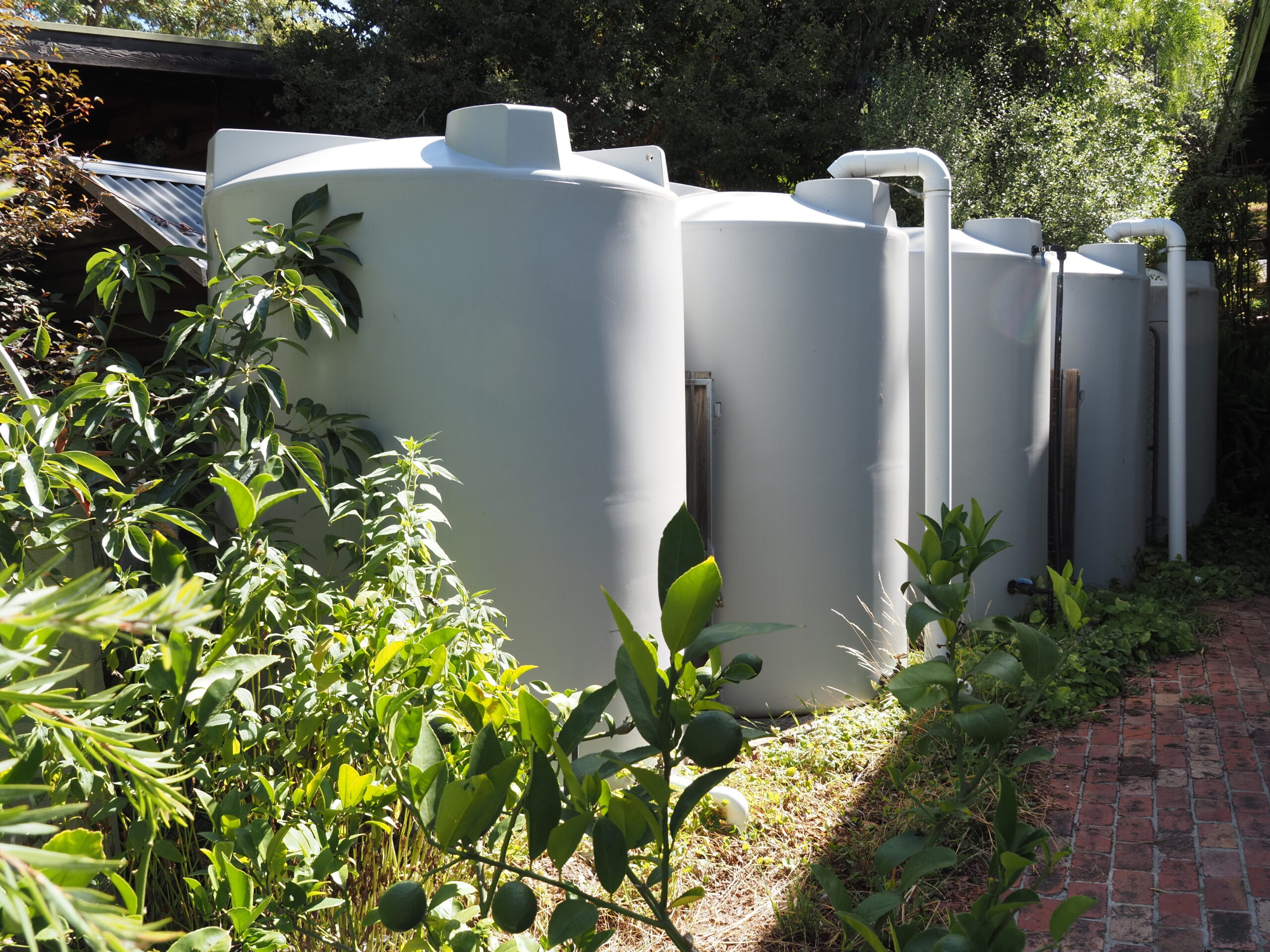
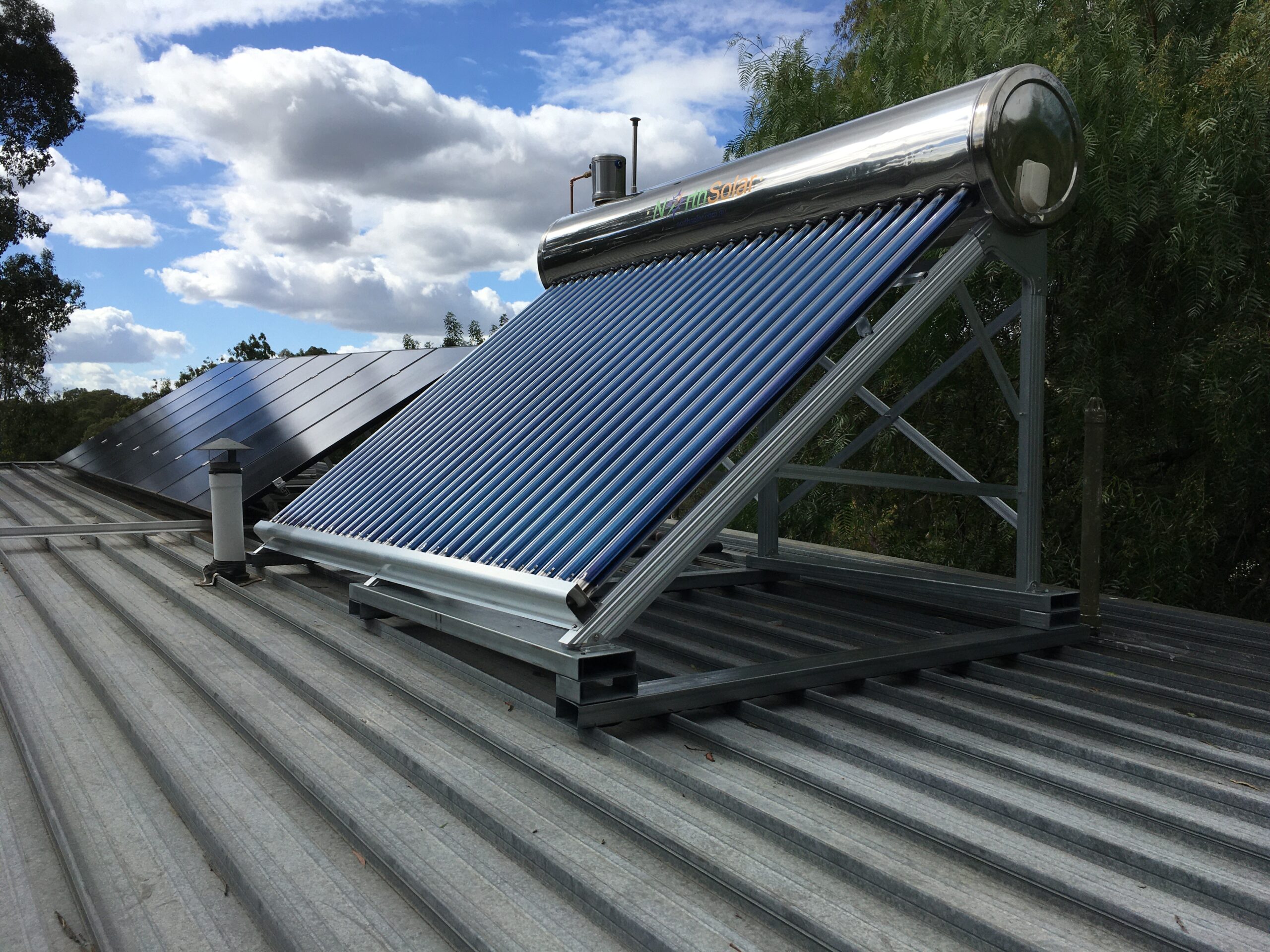
Nillumbik's ubiquitous Yellow Box (Eucalyptus Melliodora) is vital for the sugar glider, the lorikeet, the local light and the air we breathe, it does little for one's solar curve. We'll share our experiences with solar panels, evacuated tubes and other ways to harvest flows of energy, including wood, water and nutrients.