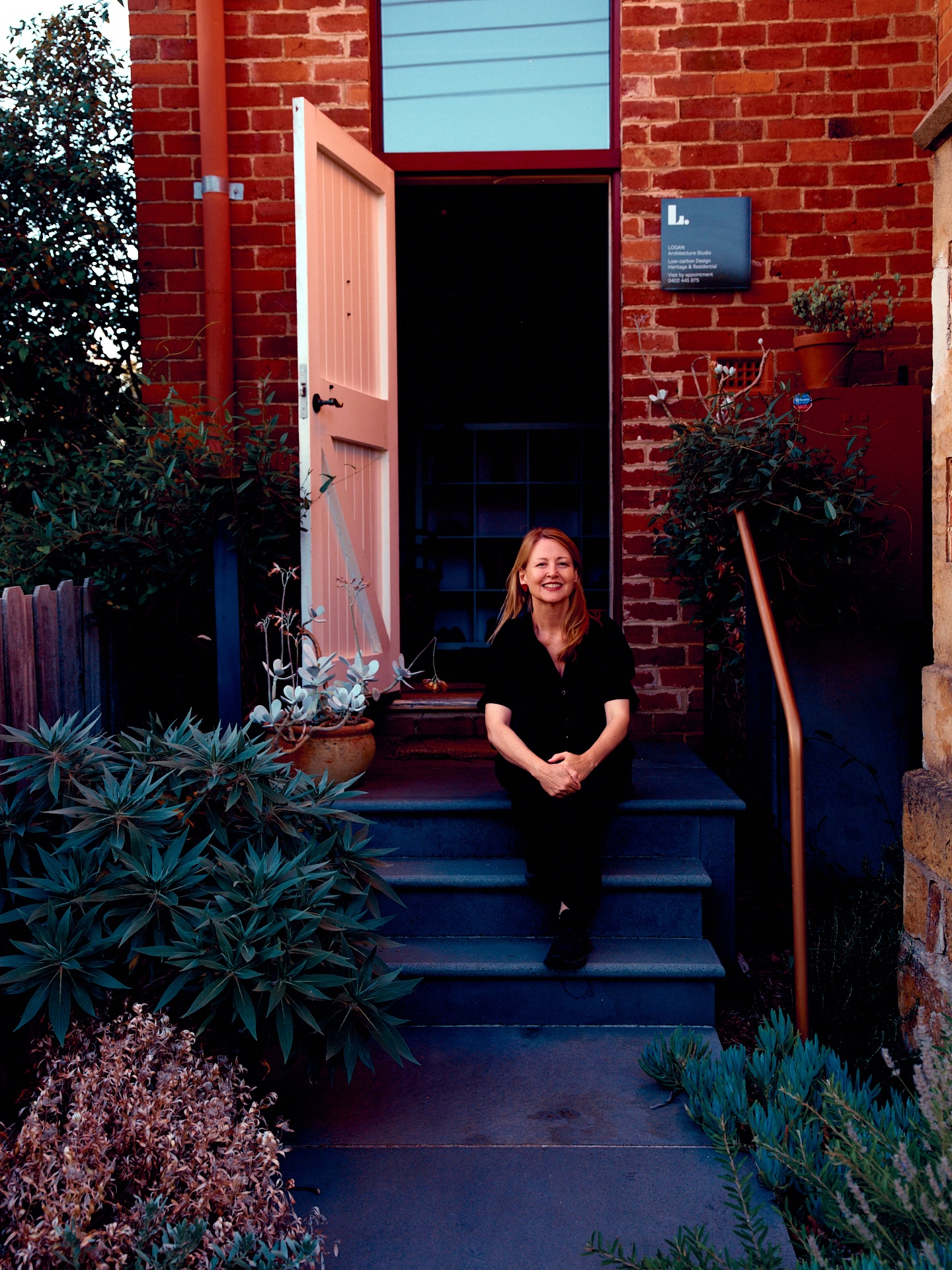
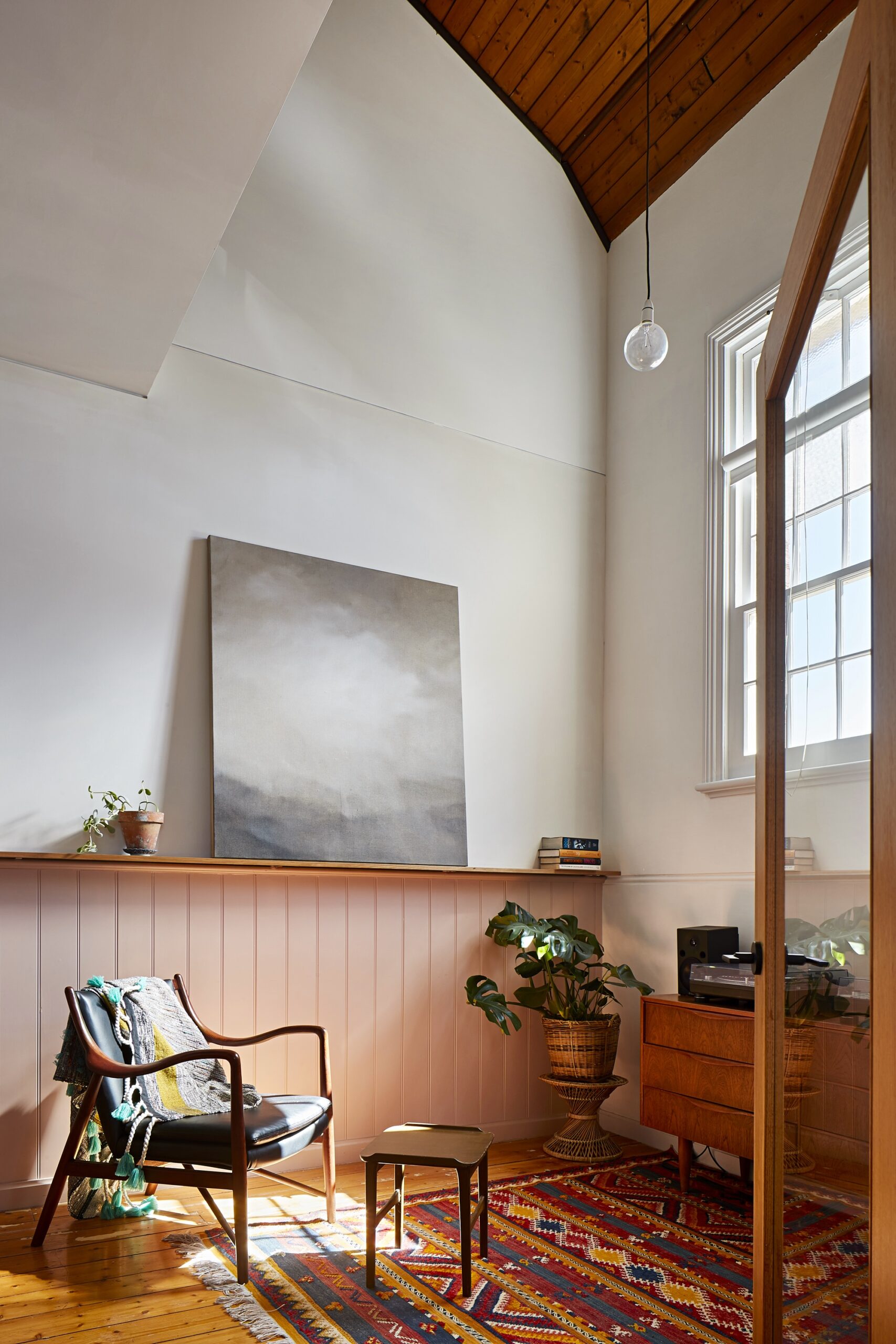
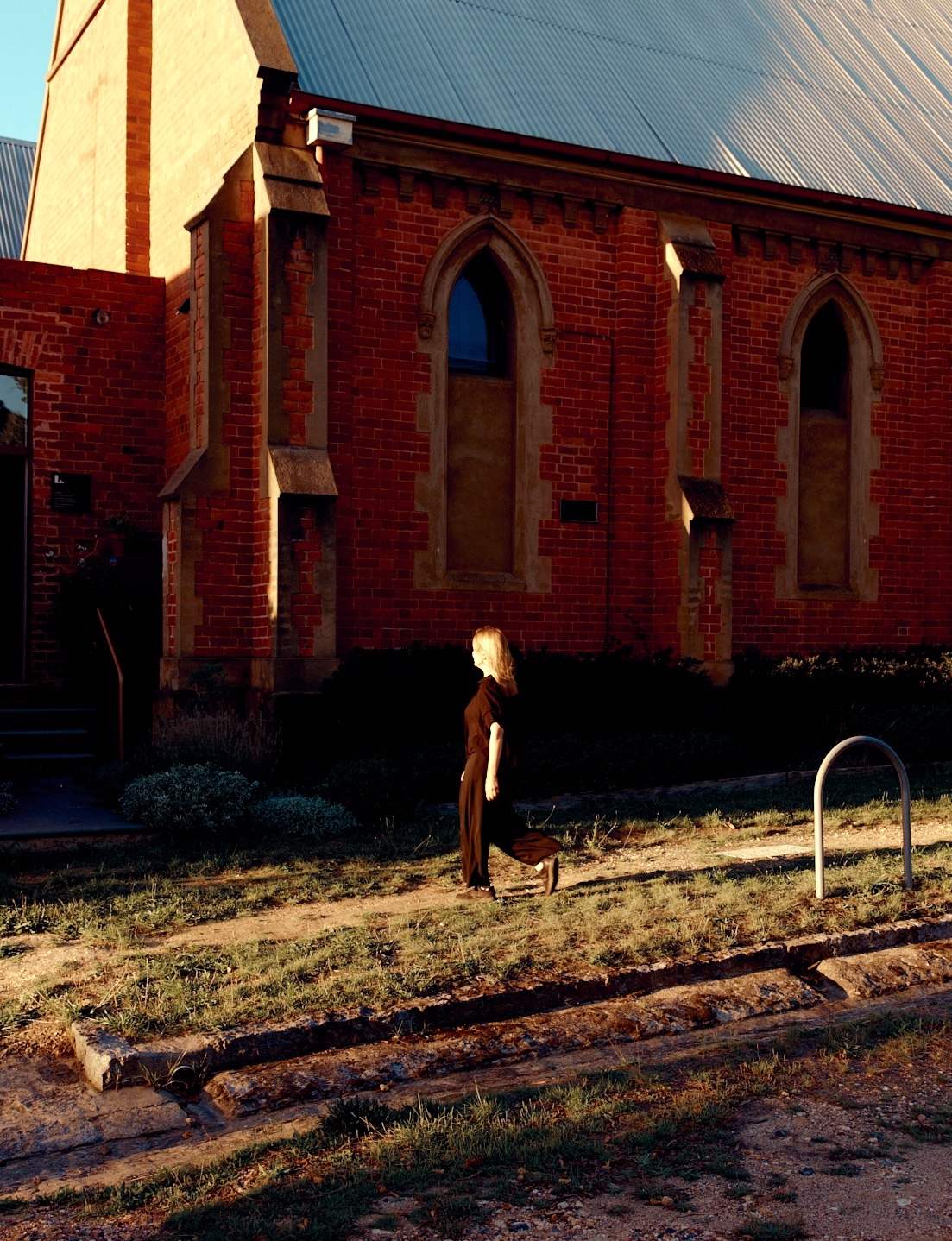
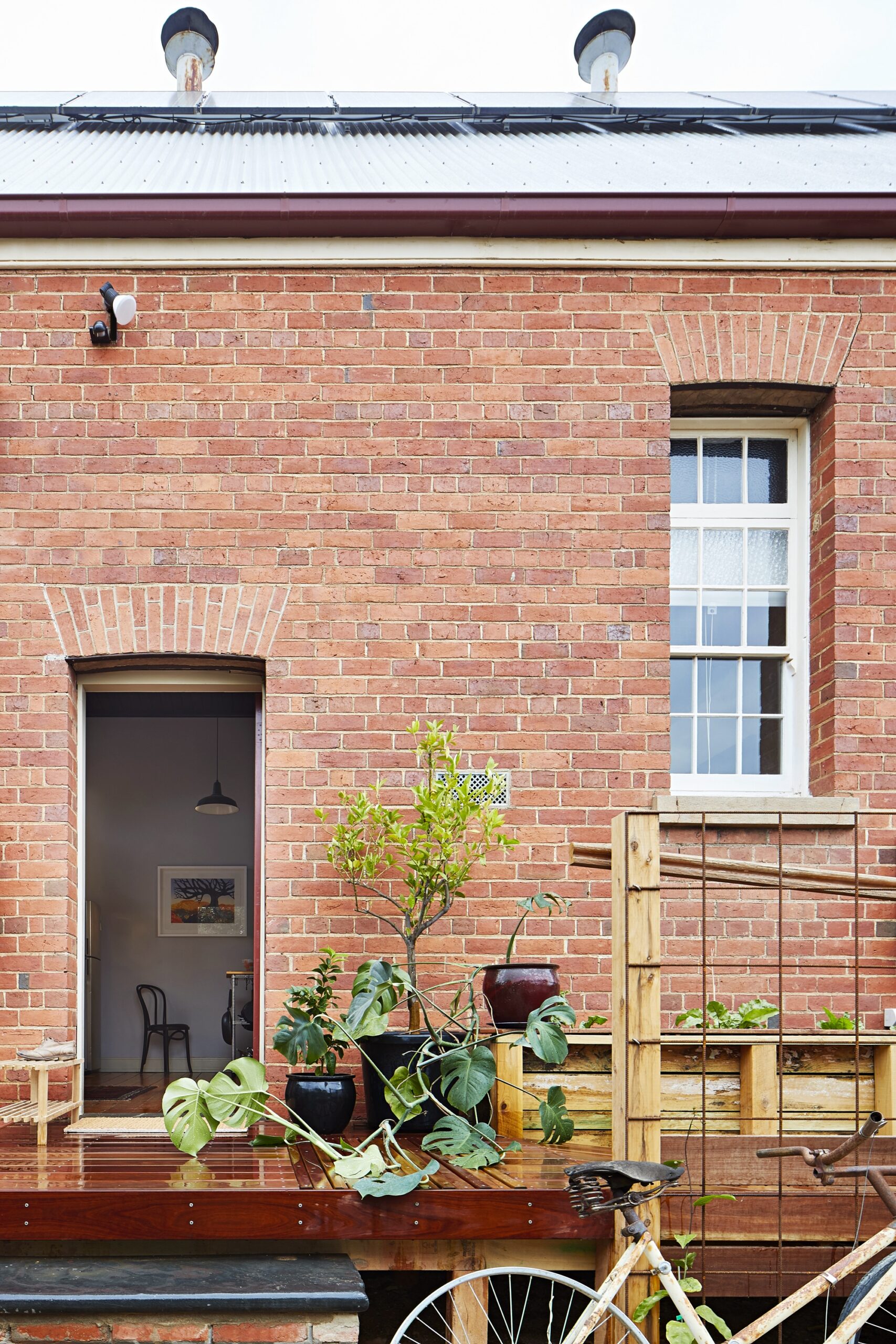


School House Town House showcases an 1885 school hall repurposed as two small footprint residences with a communal kitchen garden.
The project is founded in the philosophy that the greenest building is the one already built. The masterplan included the reconfiguration of the school interior into two north-facing residences connected to the available outdoor space, while retaining the spectacular church interior next door. The strategy was to change as little as possible, working creatively with the existing structure, nooks and crannies.
The conversion exemplifies the sustainable benefits of repurposing a heritage building and the low carbon footprint of already having the building bones in place. Use of concrete, for example, was limited to the footings for new internal columns and the internal separating wall - a total of 2m² compared with approximately 30m² for a new slab for a comparative floor area.
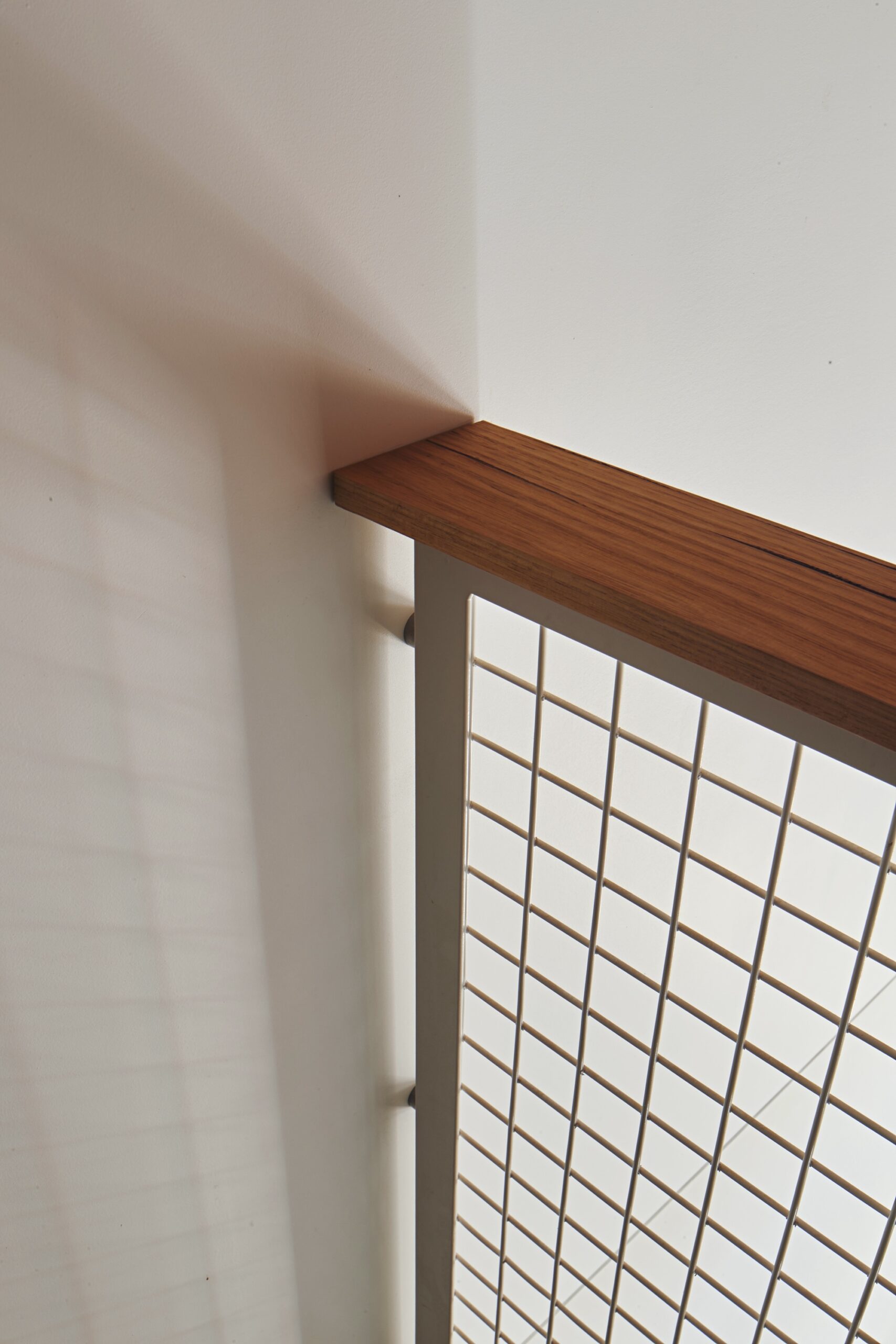
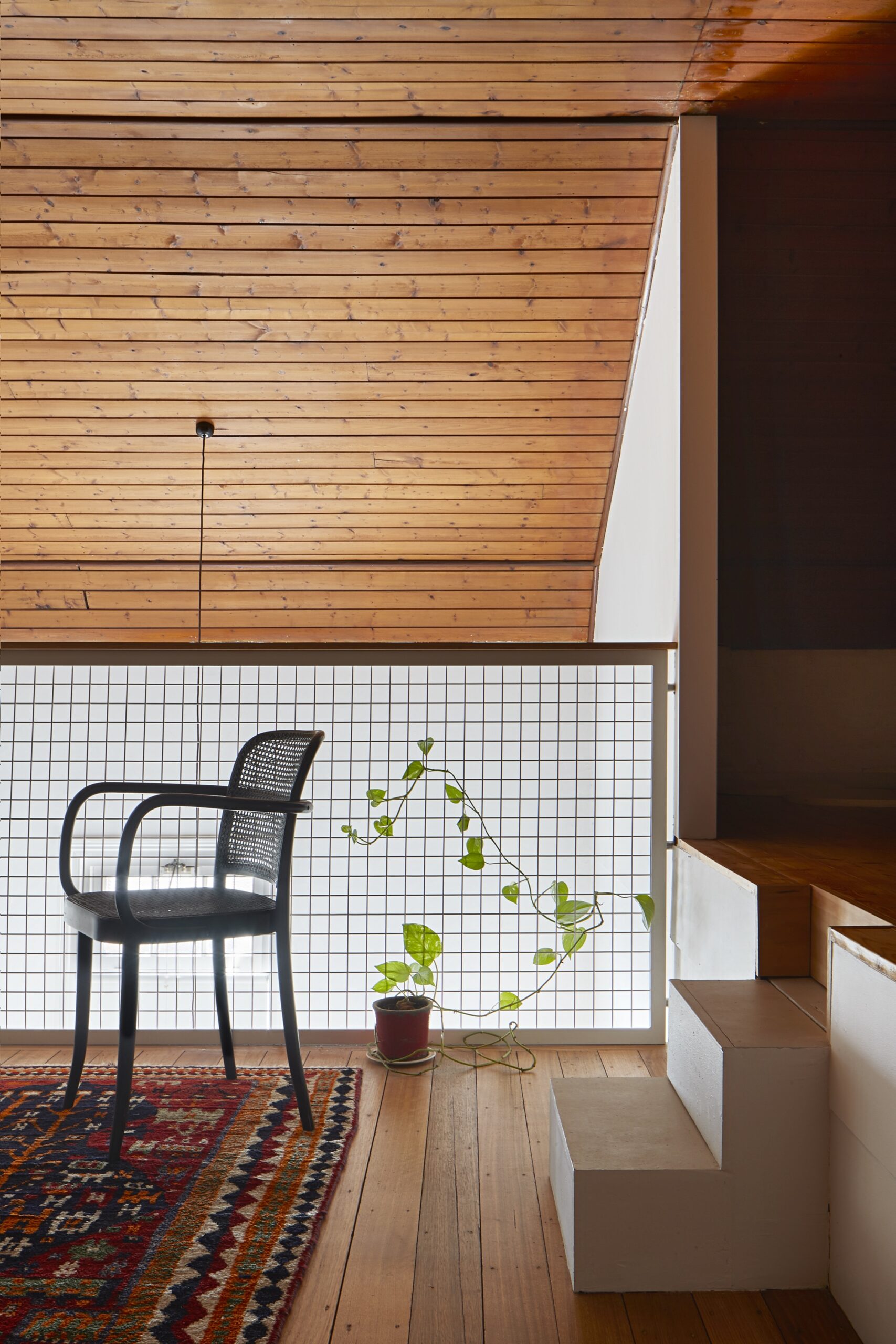
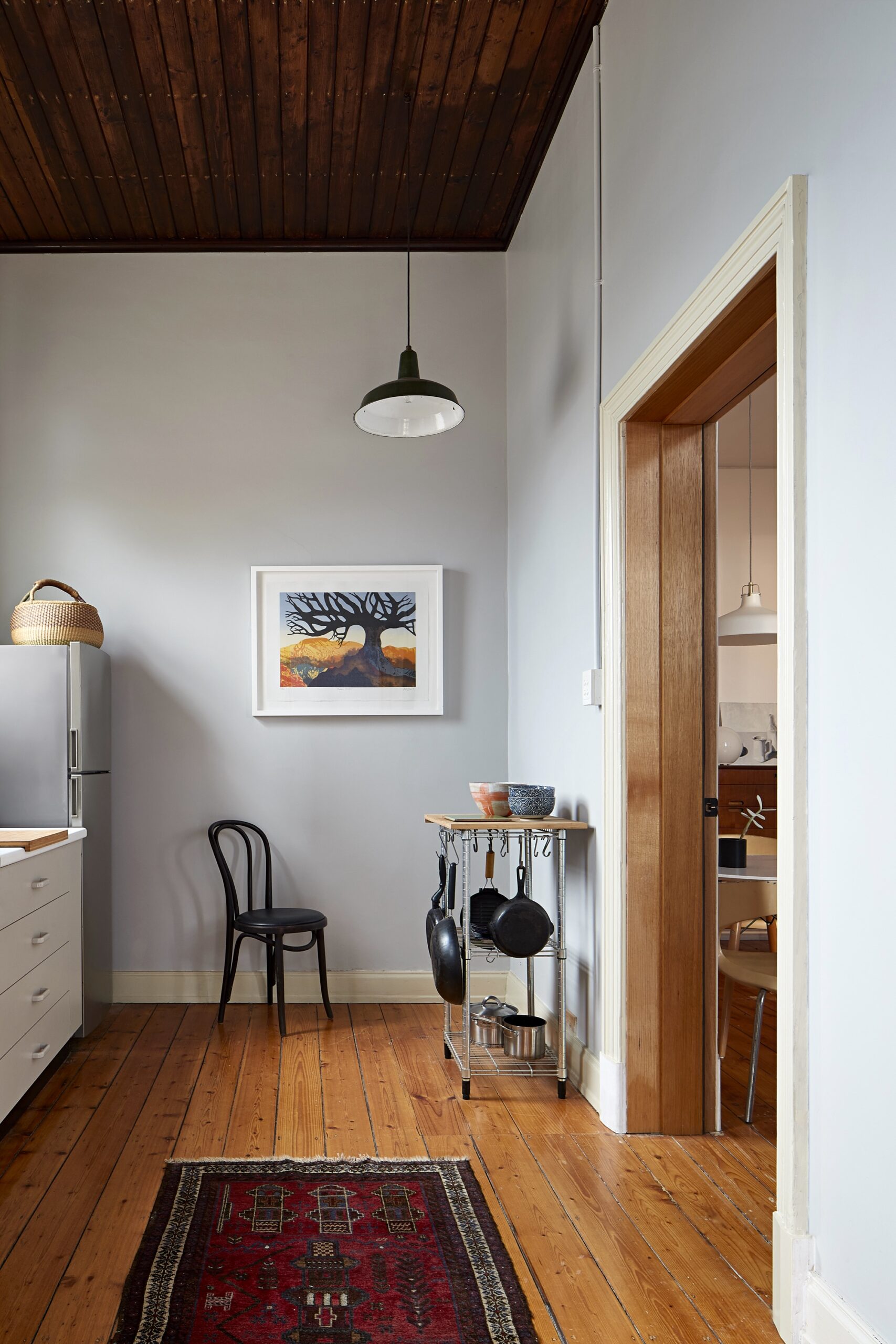
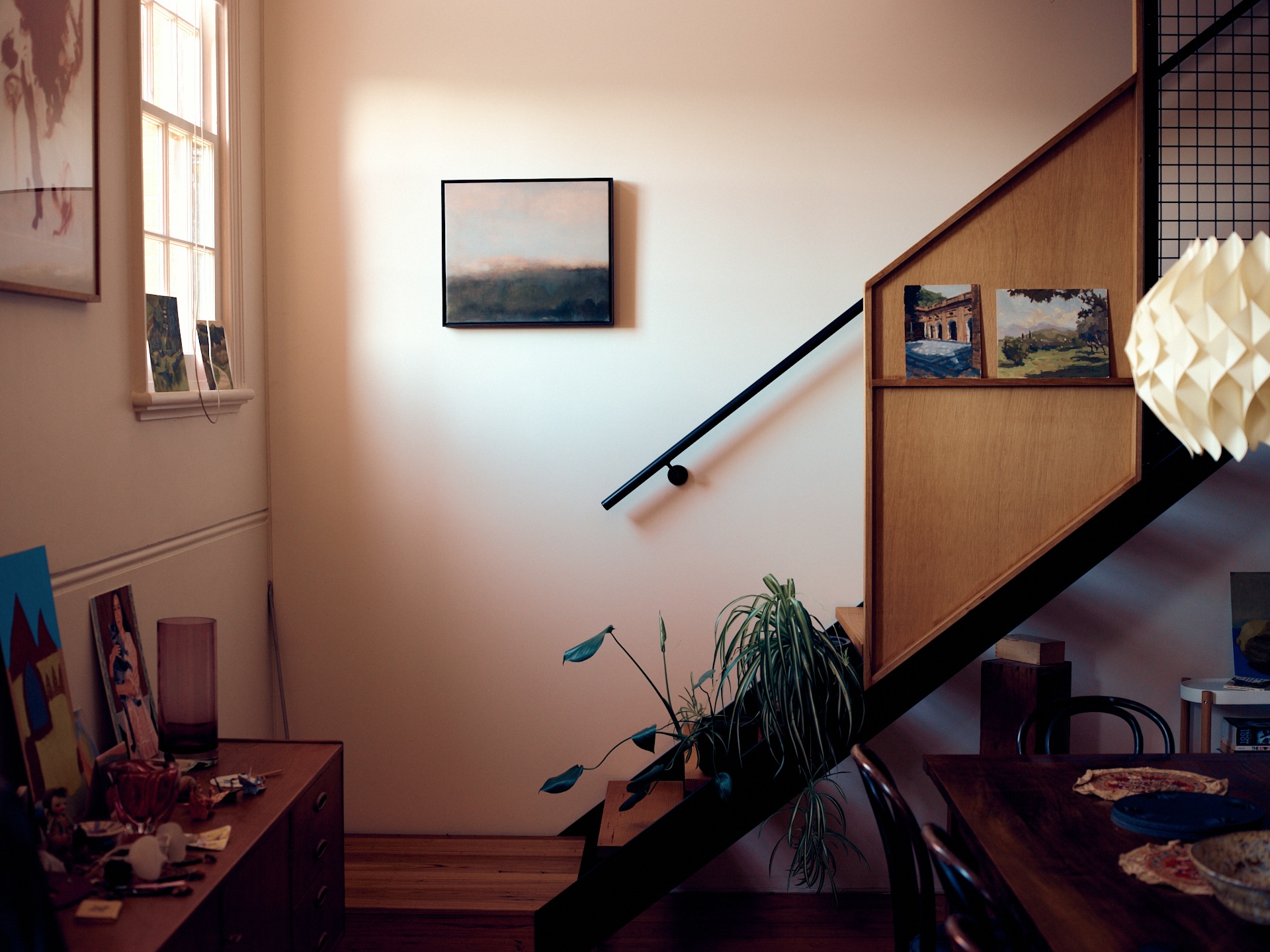
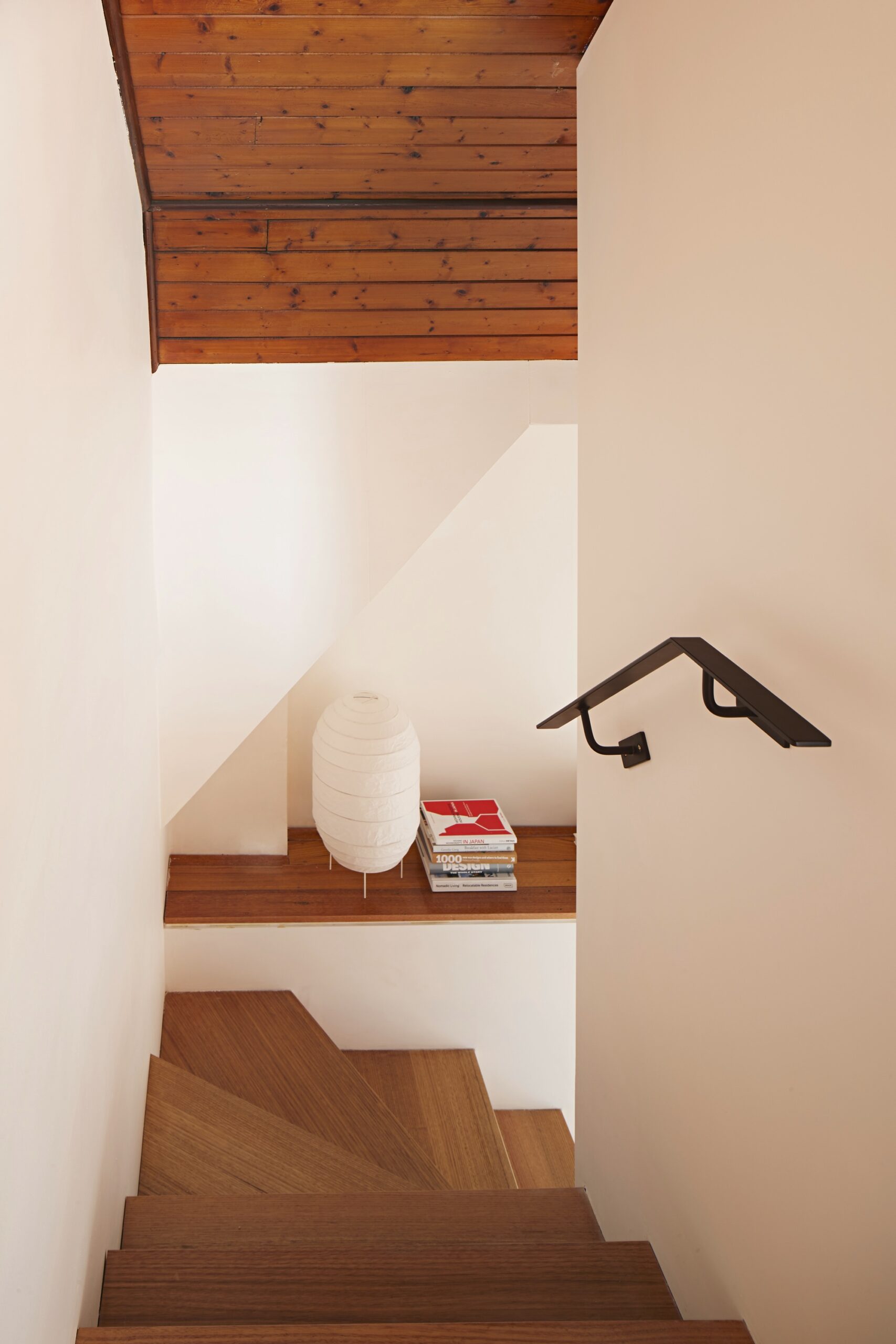
Upstairs floors were added using reclaimed timber and recycled floorboards, while pine framing was salvaged from demolished office partitions. Both kitchens are recycled and creatively reconfigured to fit new appliances.
The design takes advantage of the north orientation allowing north light to penetrate the space in winter, while in summer the insulated roof cavity and triple brick walls ensure a comfortable indoor temperature. The building has no west-facing windows. The window to wall ratio is lower and the thermal mass is much higher than the average new house. Steep pitched roofs and elevated ground floor protect the building from flash flooding.
Energy-saving measures include solar panels, induction cooking, insulation, double glazing, gap sealing and blockout blinds.
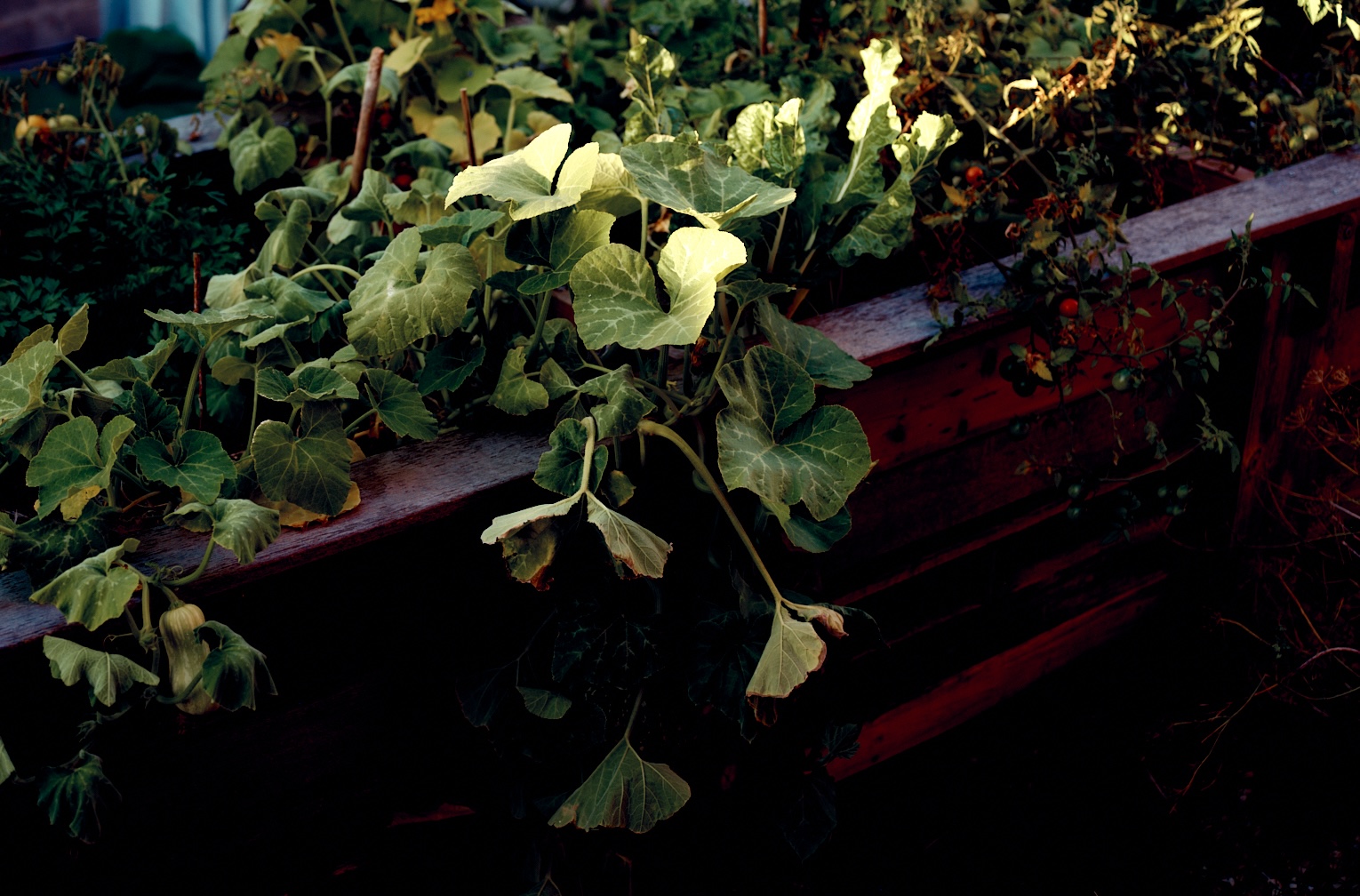
The original driveway has been converted into the kitchen garden. A work in progress, the garden works on a closed loop system with many plants self-seeding or growing from harvested seeds. A worm farm processes kitchen compost, returning nutrients to the soil to nourish new growth.