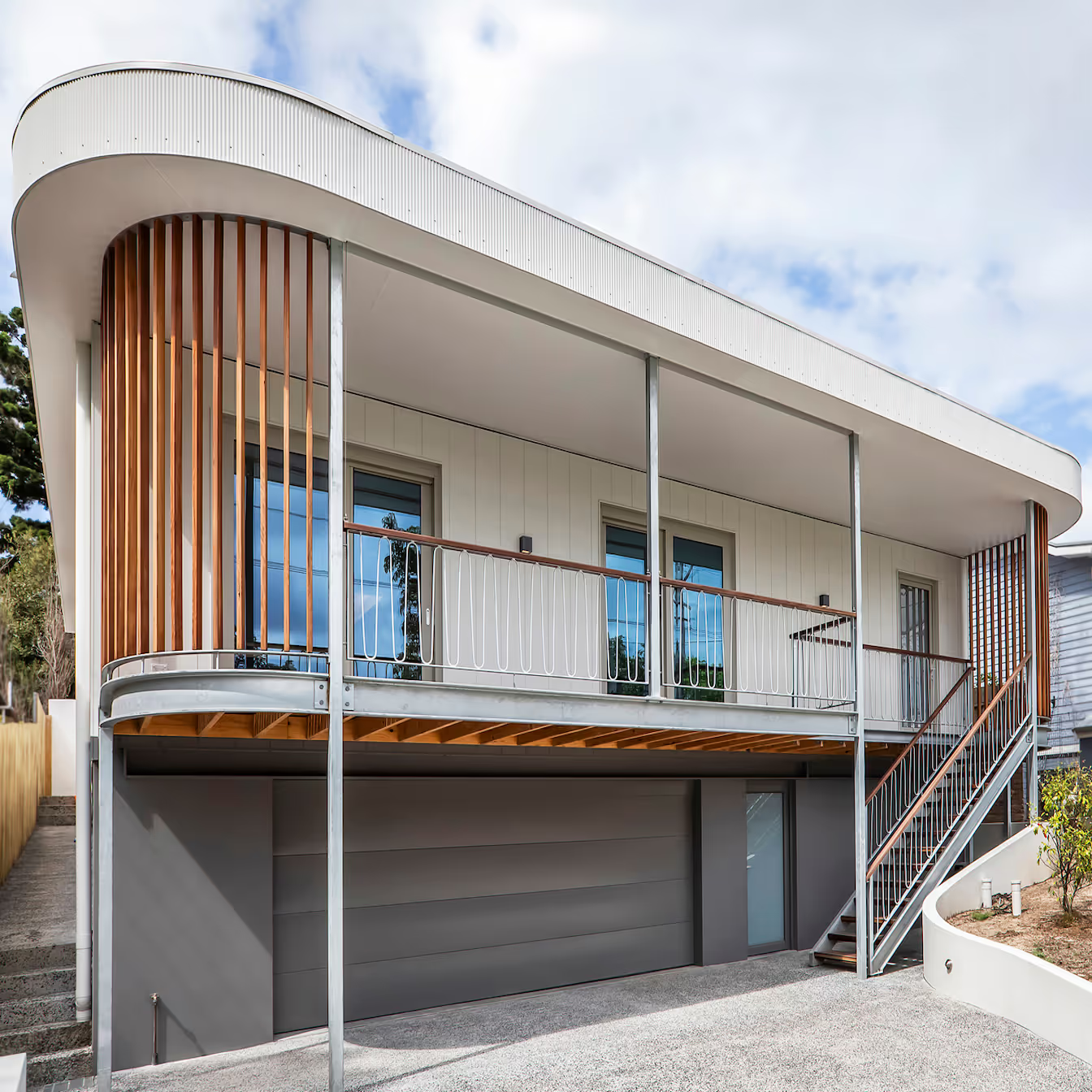
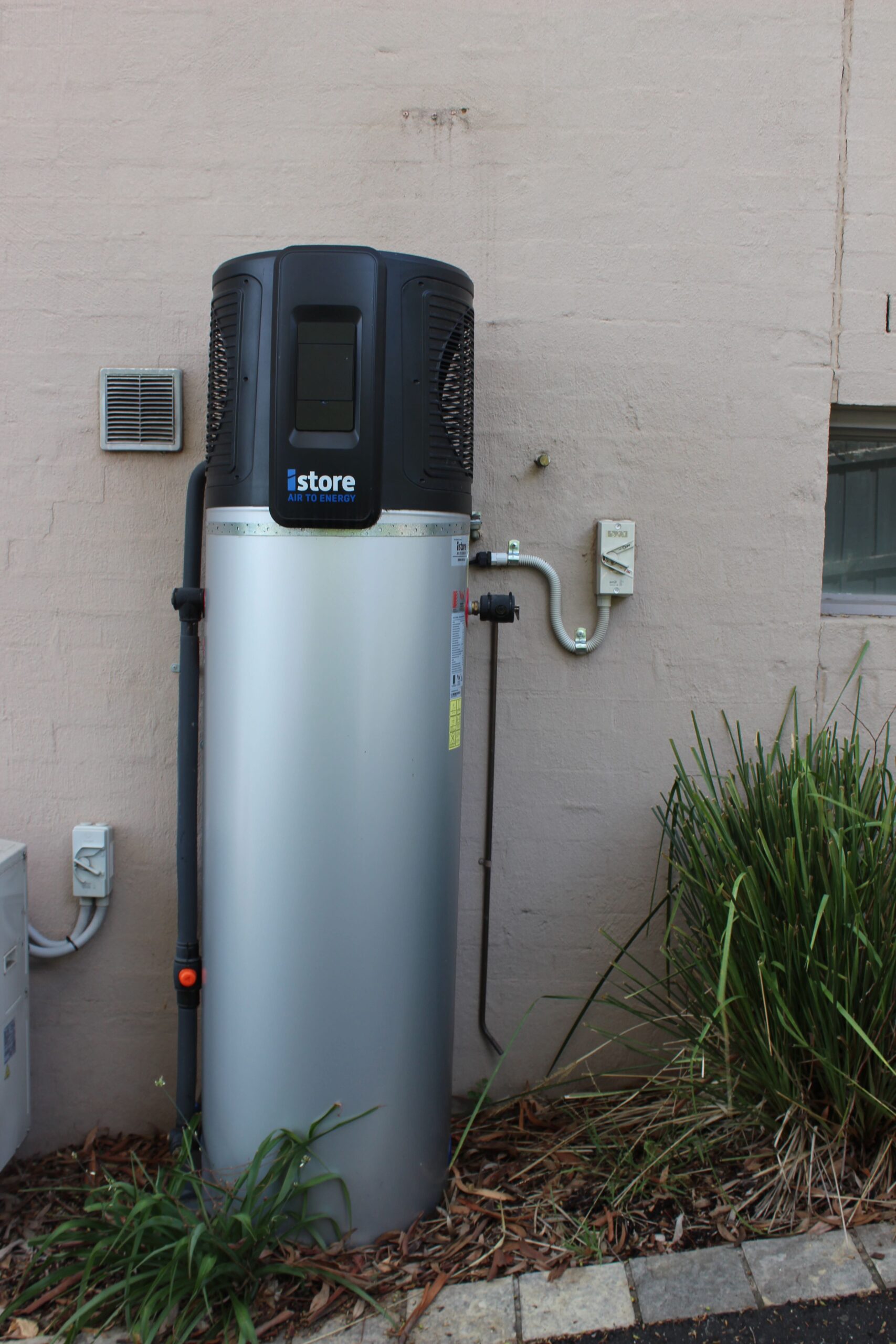
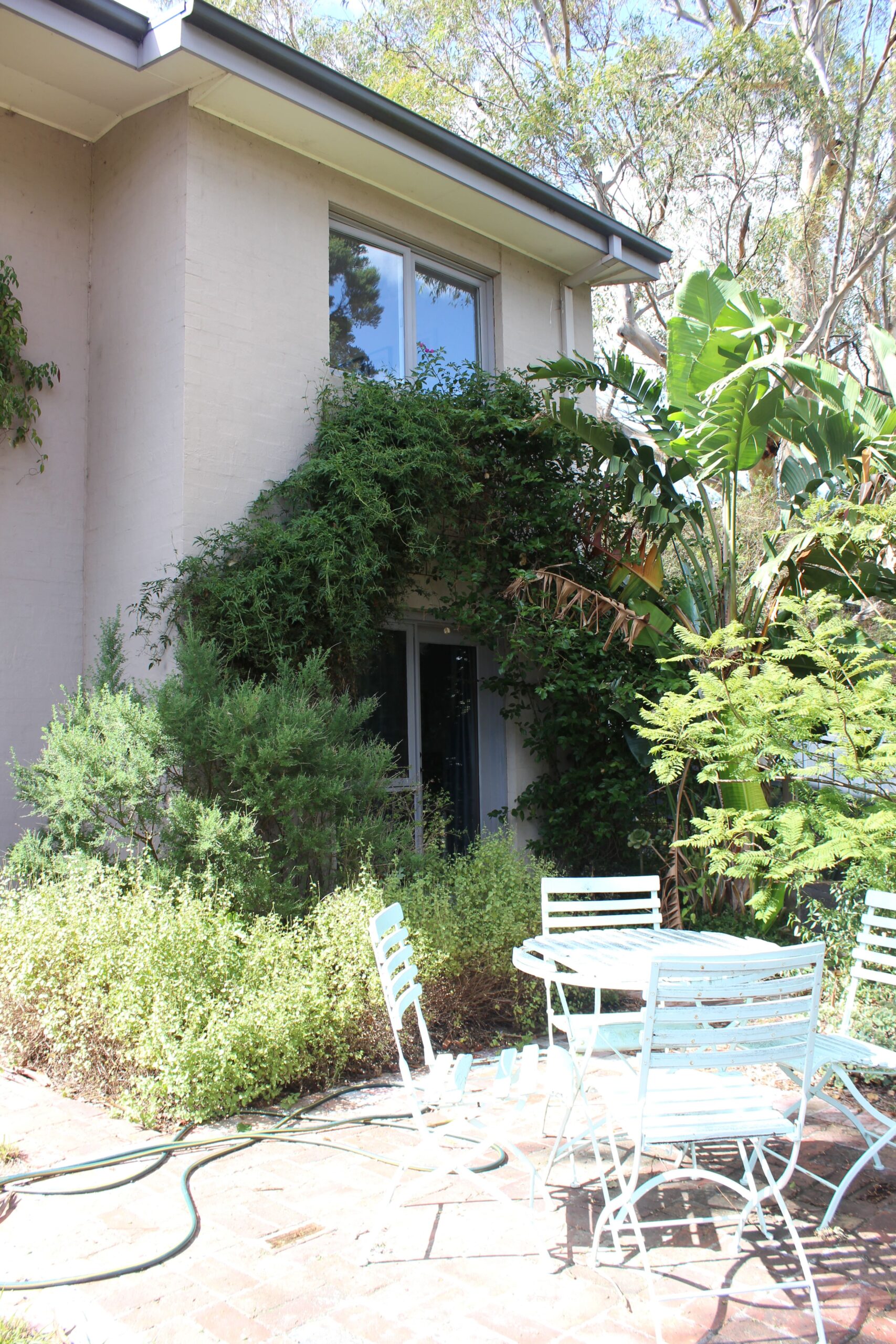
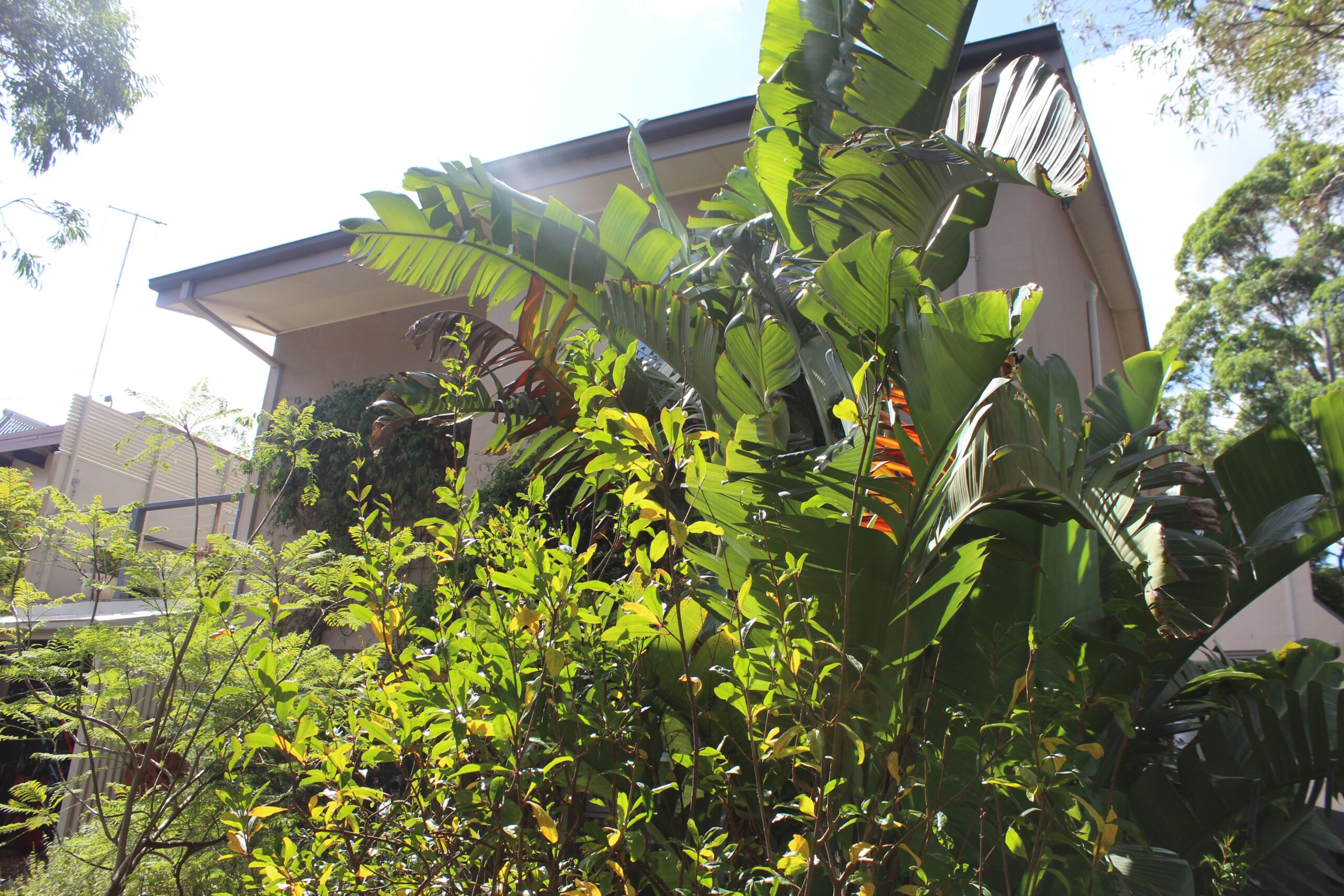
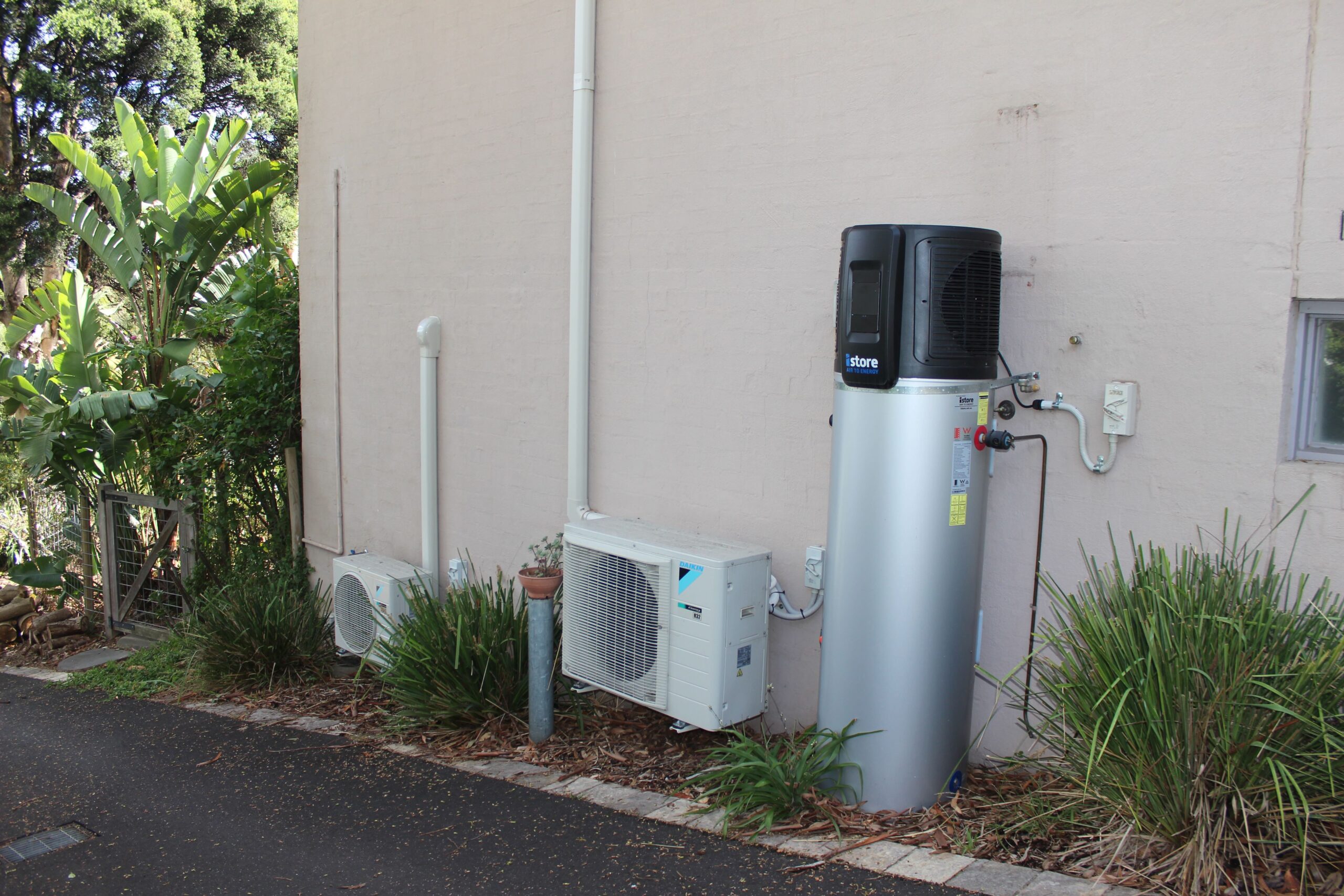
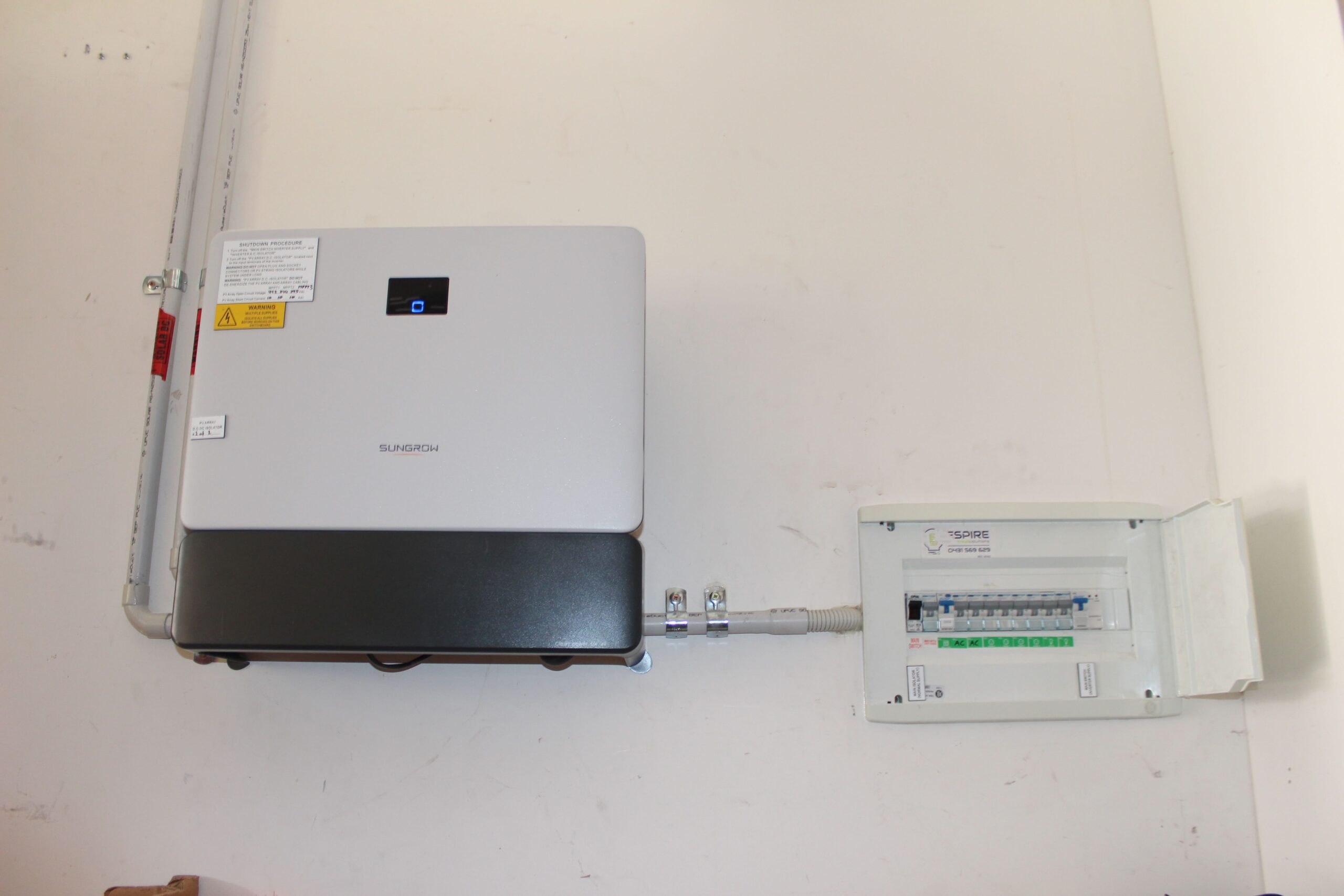
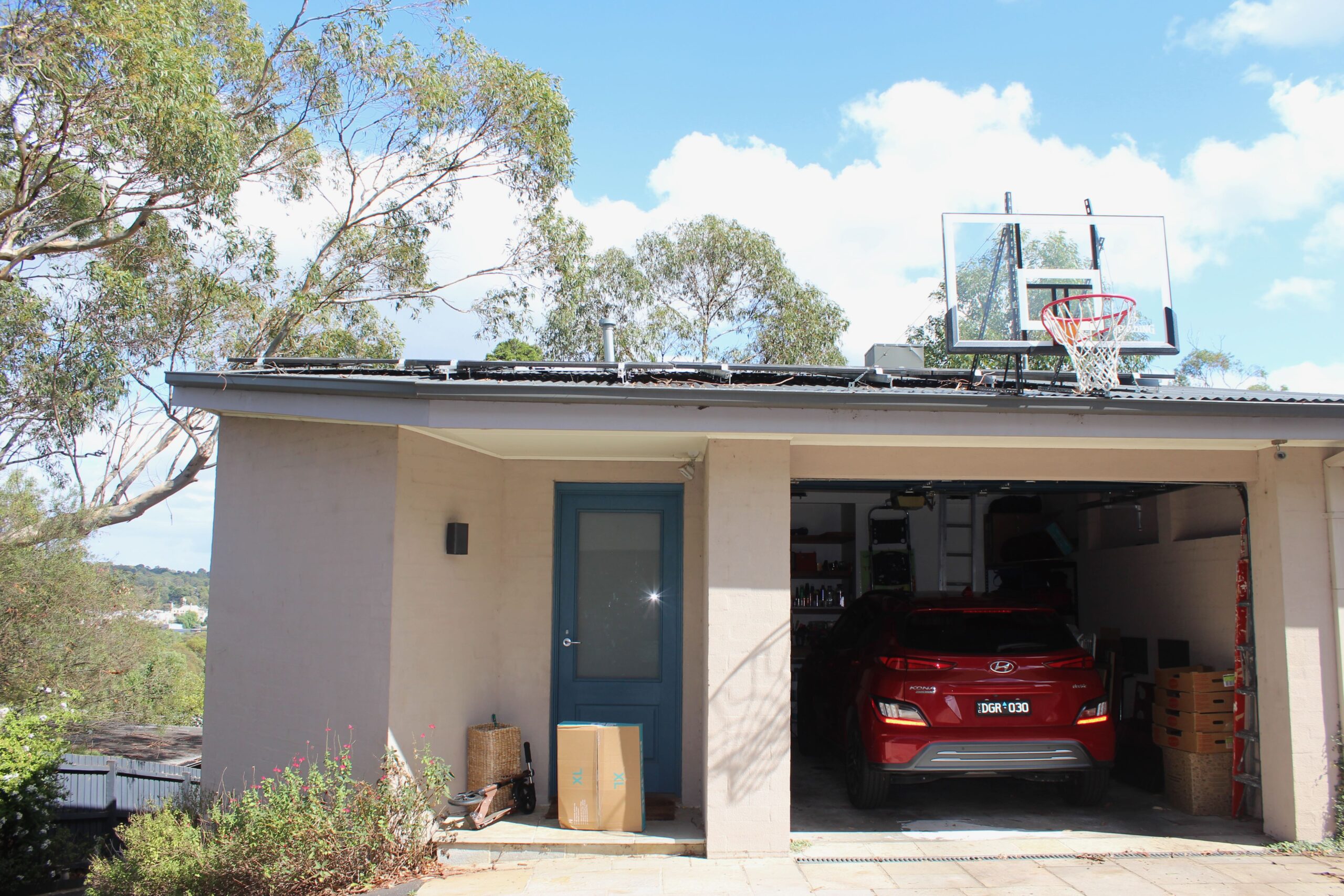
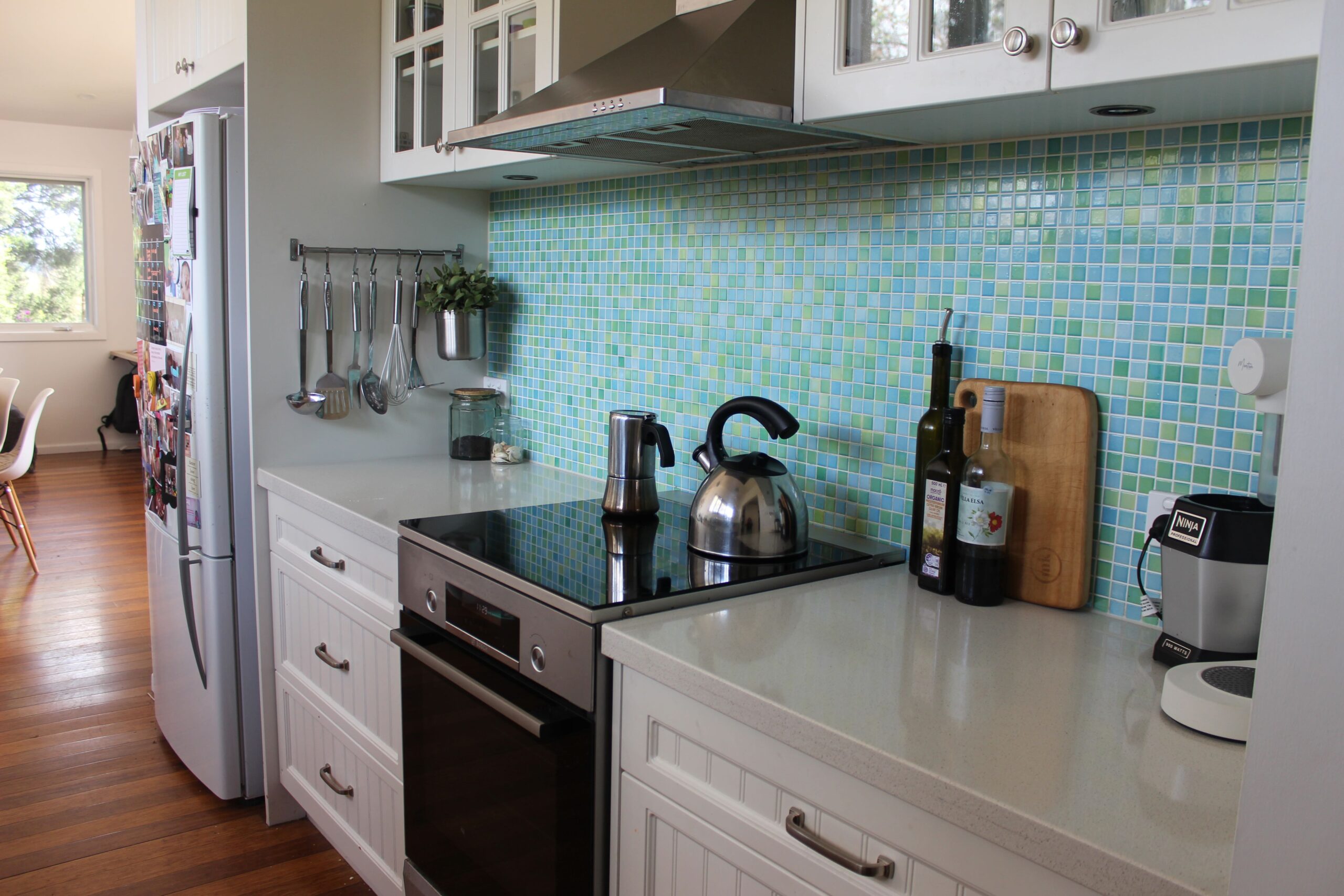
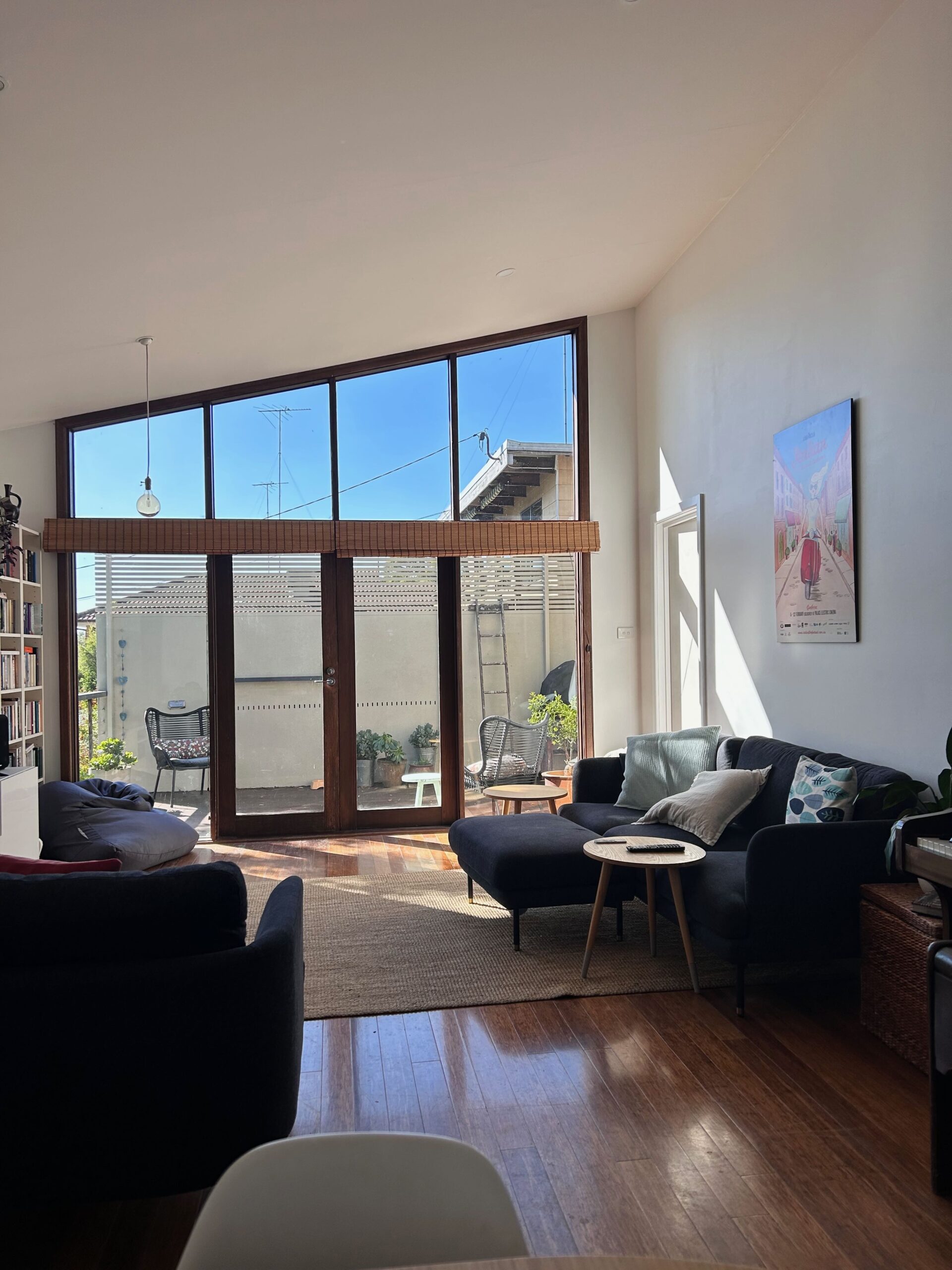
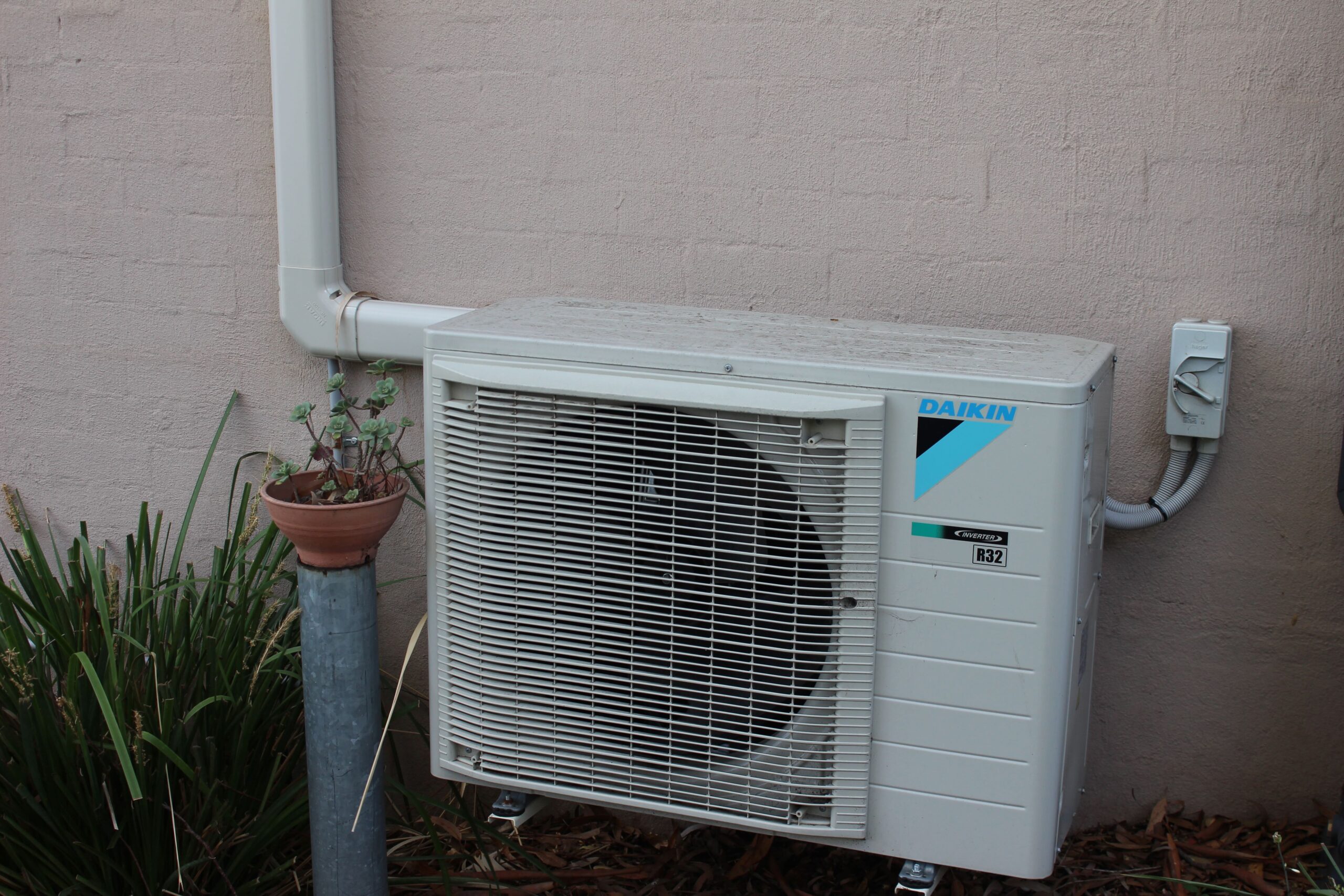
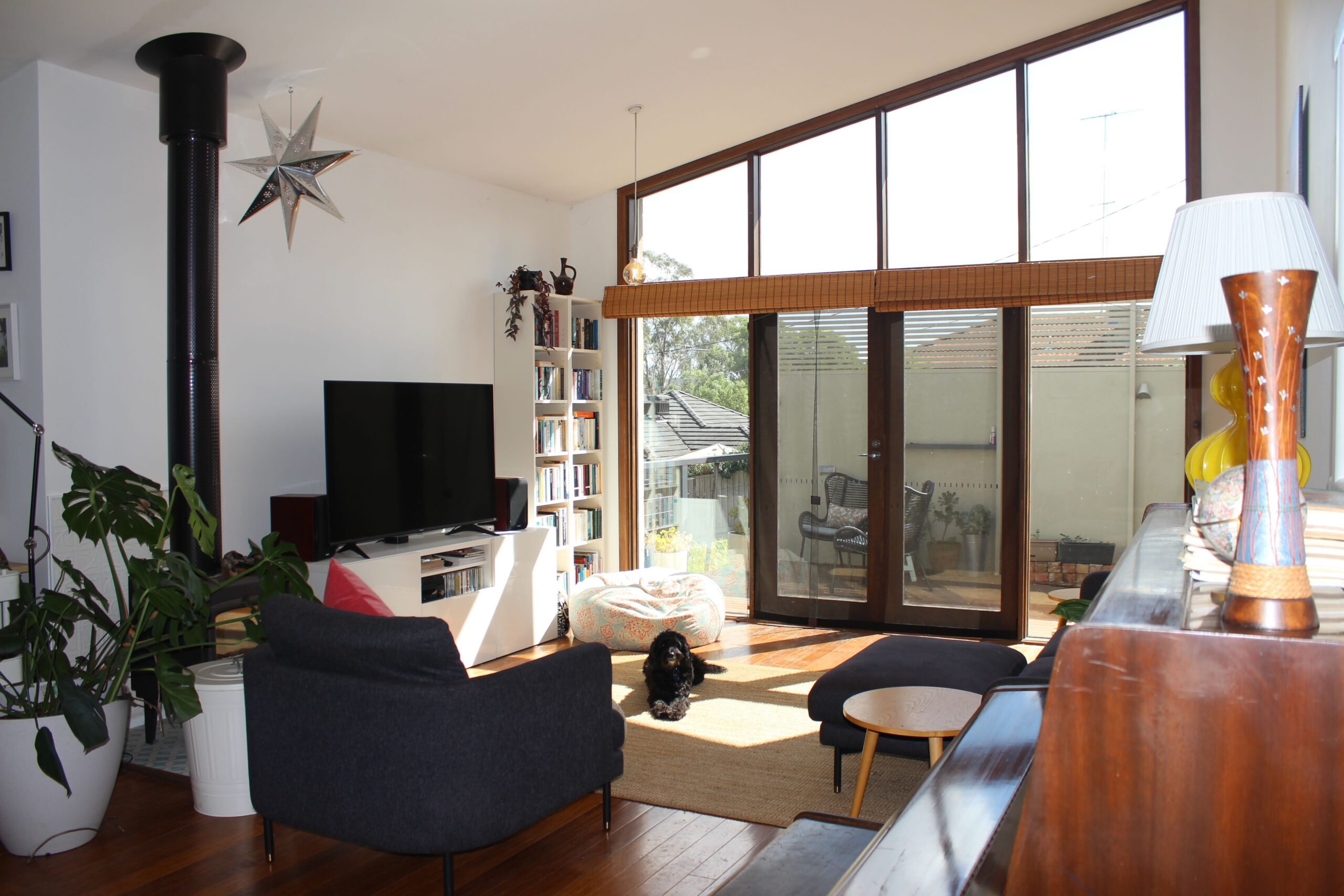

We bought this architecturally-designed 2 BR townhouse when relocating to Melbourne in late 2022. Constructed in 2009, it is the second on the block, thoughtfully designed, with a north-facing lounge and verandah, well-insulated and sealed. But the house was still using gas for heating, cooking and in the gas-boosted solar hot water system. I wanted to get off gas and utilise the large east-west roof space for solar. Appliances were replaced with energy-efficient electric appliances – 3 split systems for heating and cooling, a heat pump hot water system and an induction cooktop & electric oven – and finally the solar was installed. The ducted gas heating was removed, ducts plastered up, and the property disconnected from the gas network. We now charge our small EV from the solar during the day, and we are cool in summer and cosy in winter.
The temperature downstairs stays very steady - never too warm or cold due to being built into the hillside. This means that the bedrooms are always cooler in summer, and that the load on the split systems is small.
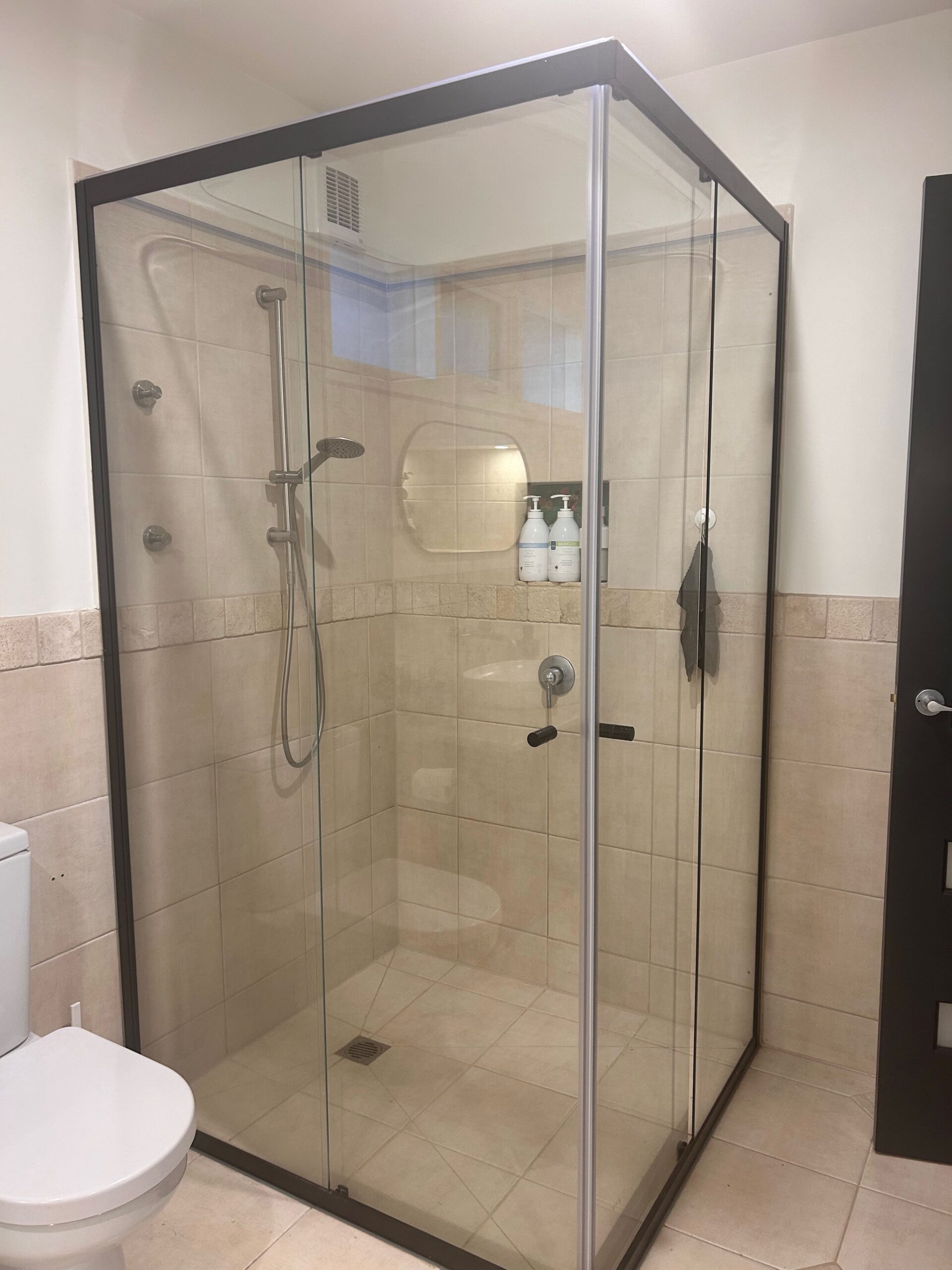
We installed a shower dome in our south-facing bathroom which negated the need to upgrade the extraction fan and means the bathroom stays warm and dry in winter - it's a game-changer!
There were a few lessons along the way. Firstly, best not to transition off gas in the middle of winter, otherwise you might need to find a new heating source for a week or two, depending on the sequence of the changes. Secondly, consider replacing just the cooktop on a gas/electric unit and setting an induction cooktop into the top of an existing electric free-standing oven. There are some downsides to the all-in-one induction cooktop & oven units. And thirdly, sometimes the cost of removing things can be significant, which is why we still have a slow combustion wood heater in our living room – although we don't use much at all as it makes the house insanely hot, even in the depths of winter.